
Tunisian Media's Allegations Against Morocco
Recently, certain Tunisian media outlets have seemingly transformed into spokespersons for the Algerian government, launching targeted campaigns against Morocco. These media have accused Morocco of inundating Tunisia with irregular African migrants and allegedly facilitating the influx of these populations originating from Sub-Saharan Africa. However, geographic realities quickly reveal the extent of misinformation propagated by these Tunisian voices. The media's narrative appears to be an attempt to find a convenient scapegoat to justify internal failures and the political and security choices made by the Tunisian government.
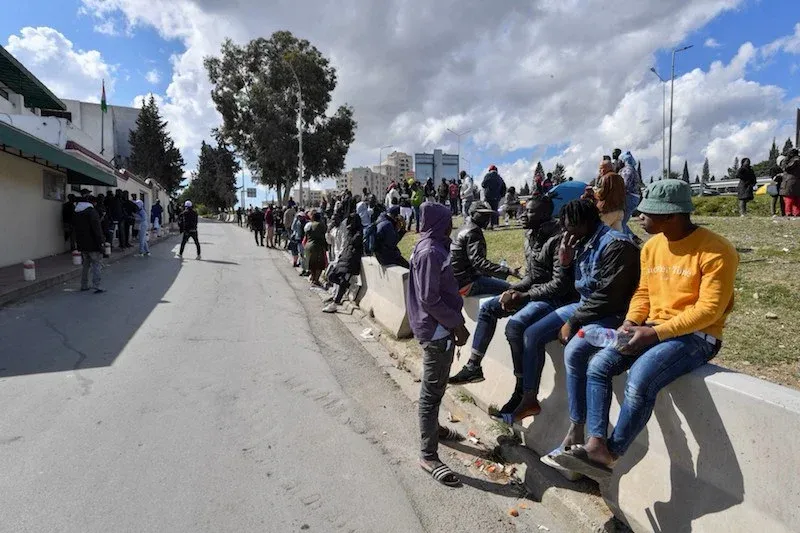
In response to these accusations, a number of Tunisian academics and human rights advocates have categorically rejected the claims, emphasizing that such allegations stem from a lack of realism and are part of a broader propaganda effort aimed at settling regional scores while deflecting criticism from Algeria. The borders shared between Tunisia and Algeria are experiencing a daily flow of African migrants aspiring to reach Europe via Italy, and the real crisis facing Tunisia concerning migration is not a Moroccan conspiracy but rather an internal issue stemming from inadequate border control and attempts to settle these migrants on Tunisian soil.
Media Propaganda and Its Implications
Tunisian academic and political analyst Sami Jallouli has stated that the accusations emerging from some private Tunisian media regarding Morocco's involvement in the entry of irregular African migrants into Tunisia are nothing more than sensationalized media rhetoric. He highlighted that the geographical and logistical aspects of migration flows are clear to anyone familiar with an African map. Migrants from Sub-Saharan countries aiming to reach Tunisia, Libya, or even Algeria do not pass through Morocco; instead, they traverse land routes through other countries that share direct borders with Tunisia, given the extensive and challenging nature of these borders.
Jallouli further articulated that Morocco's geographical location does not afford it the capacity to direct migrants eastward, as it is situated at the far western side of North Africa. The country faces significant challenges similar to those of Tunisia, being a transit and settlement point for migrants seeking to cross into Spain via the Mediterranean Sea or the Canary Islands across the Atlantic Ocean. He emphasized that the migration crisis in Tunisia is fundamentally internal and linked to border management issues. The rising numbers of migrants in cities such as Sfax have led to increased public discontent and calls for deportation, which may explain why some private Tunisian media are seeking external scapegoats to blame for the situation.
Moreover, Jallouli pointed out that the political relationships in the Maghreb region are currently characterized by tension and polarization, which naturally influences media discourse. However, this should not devolve into absurd, irresponsible accusations. As Tunisians, we must not allow the issue of migration to be weaponized for political maneuvering and score-settling among nations, especially regarding disputes that do not directly concern us.
Ultimately, Jallouli concluded that the issue of irregular migration is a shared challenge for all North African countries, from Egypt to Mauritania. However, due to geographical proximity to Europe, both Tunisia and Morocco are under direct and similar pressures from the European Union. Therefore, accusing Morocco of being responsible for the influx of Sub-Saharan migrants into Tunisia lacks both geographical and logical basis and fits squarely within the realm of media propaganda and regional political maneuvering.
Border Management Challenges
Former Tunisian parliamentarian and human rights advocate Zouhair Makhlouf expressed that the real and persistent problem facing the entire North African region, including Libya, Morocco, Algeria, and Tunisia, is the challenge of migration flows from Sub-Saharan countries. A large number of migrants seek economic, social, and even political opportunities across the region, which has become a key transit point toward their ultimate destination—Europe. The concentration of these crises in North African countries has turned the issues of transit and settlement into critical challenges that profoundly affect these nations.
In this context, Makhlouf described the media allegations against Morocco as a form of misinformation and bias, especially since Morocco faces similar challenges concerning migration from Mauritania and Sub-Saharan Africa. He noted that there are clear attempts to divert attention from Algeria in this conflict by obscuring the reality of migrant flows from Mali and Niger through Algerian desert routes or through Libyan borders into Tunisia. The reluctance to hold Algerian authorities accountable for border security and the resulting migrant influx, while directing blame toward Morocco, seems rooted in a desire to avoid complicating relations with Algeria, traditionally viewed in Tunisia as the 'big sister.' This dynamic is further influenced by the close political ties between Tunisian President Kais Saied and Algerian President Abdelmadjid Tebboune, leading Tunisian authorities to overlook Algerian responsibility in the border situation.
Makhlouf concluded by highlighting that Tunisia is currently facing a complex and genuine irregular migration crisis. This situation has evolved from being merely a 'transit crisis' to a 'settlement crisis,' especially following President Kais Saied's agreement with Italy, which prevents Tunisia from enabling migrants to transit while obliging it to host them if they are deported from Italy without being redirected to their countries of origin.
As reported by hespress.com.