
Overview of Iron Deficiency Anemia
Iron deficiency anemia (IDA) represents the most prevalent form of nutritional anemia globally, affecting millions of individuals, particularly within vulnerable demographics such as children and women of reproductive age. In 2021 alone, it was reported that approximately 1.92 billion people were affected, indicating a global prevalence of about 24.3%. Despite the high incidence, there is a notable scarcity of data concerning adult populations in specific regions, particularly southern Morocco. This study endeavors to elucidate the epidemiological, clinical, biological, and etiological profiles of adults suffering from IDA, providing insights from a tertiary referral center situated in Agadir, Morocco, over a five-year period from January 2018 to December 2022.
Research Methodology and Findings
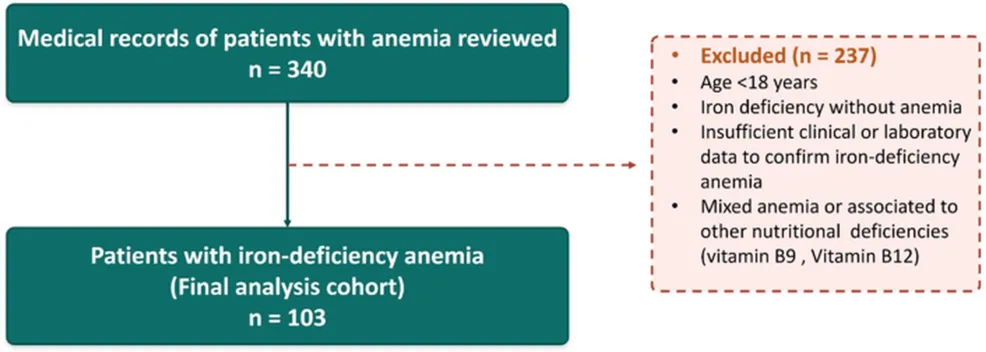
The research was structured as a retrospective, descriptive study involving adults aged 18 years and older who were diagnosed with IDA at the Department of Clinical Hematology and Cell Therapy. Out of 340 adults assessed for anemia, 103 individuals (30.3%) were confirmed to have IDA. The median age of these patients was 43 years, with women constituting a significant majority (75.7%). Fatigue emerged as the predominant symptom, reported by 70.9% of patients, alongside notable clinical signs such as mucocutaneous pallor found in 91.3% of cases. Laboratory results highlighted a concerning mean hemoglobin level of 6.76 g/dL, with severe anemia being prevalent among 74.8% of the patients.
Furthermore, the study identified underlying etiologies in 71.8% of cases, with blood loss being the most common cause, particularly from gynecological sources. Impaired iron absorption, often linked to _Helicobacter pylori_ infection, accounted for a substantial number of cases as well. These findings underscore the critical need for thorough etiological evaluations to enhance patient management strategies. The research not only sheds light on the demographic and clinical characteristics of IDA in this region but also emphasizes the necessity of targeted interventions and public health strategies to mitigate the impact of iron deficiency anemia.
As reported by cureus.com.