
The Shock of Migration: A Shared Human Response
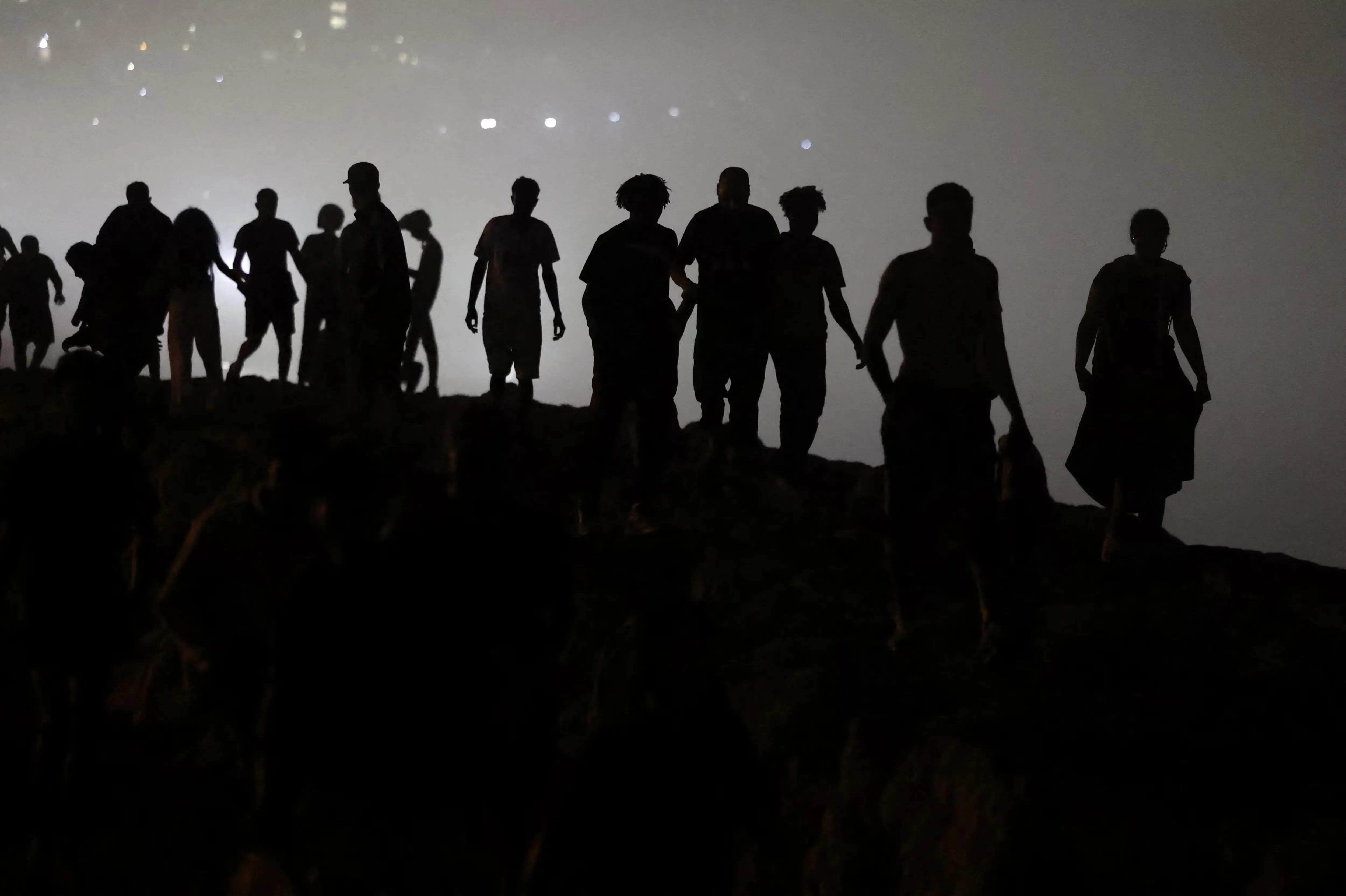
It is perfectly understandable that a significant portion of the Spanish public was deeply unsettled by the sudden and unprecedented influx of tens of thousands of irregular migrants into Ceuta. Had a similar phenomenon occurred in Morocco, the Moroccan populace would likely have reacted in much the same manner. When societies are confronted with events of such magnitude, it is human nature to initially respond with rejection, anger, indignation, or even revolt. In this context, the outrage and some comments laden with an atavistic reflex expressed in Spain following the Ceuta crisis are comprehensible and, to some extent, legitimate.
Debunking Myths: The Morocco-Span Relationship in Perspective
However, the underlying issue in Spain is of a different nature. Despite the efforts of government officials, including Prime Minister Pedro Sánchez, Interior Minister Fernando Grande-Marlaska, and Foreign Minister José Manuel Albares, to reassure the public by clarifying that there is no serious evidence to suggest that Morocco acted deliberately or in bad faith, nor that it sought to exploit the situation as a means of political leverage, a deluge of pseudo-analyses has flooded the media and social networks. These analyses assert, without any substantiation, that Morocco was directly responsible for the events in Ceuta.
For anyone genuinely seeking to grasp the stark contrast between Madrid's official gratitude towards Morocco and the anti-Moroccan diatribes that have permeated parts of the Spanish media, political, and intellectual landscapes, the fundamental question remains: why would Morocco engage in such self-destructive behavior? Understanding the Ceuta crisis necessitates examining who benefits from it. In this instance, it is clear that Morocco does not stand to gain anything.
There is no doubt that the events have severely damaged the Kingdom's international image. Therefore, any serious analyst wishing to comprehend the intricacies of this tragedy must question why Rabat would deliberately instigate a crisis that it knew would heavily tarnish its own international reputation. Unfortunately, it appears that many Spanish intellectuals, analysts, and commentators are unable to approach Morocco with the necessary detachment, calmness, and rigor that a serious analysis requires. They nearly always interpret facts through a lens of continuous suspicion, never granting the Kingdom the benefit of the doubt. They rarely take the time to ask: "What if Morocco did not act deliberately? What if we examined the facts from different angles to ascertain if the available evidence leads to an alternative explanation?"
Instead, from the very onset of the crisis, a torrent of accusations, insults, and unfounded intentions descended upon Morocco. In a biased narrative often tinged with a paternalistic and sometimes racialized view of Moroccans, the most spontaneous explanation was to denounce an alleged Moroccan blackmail. Despite the growing body of evidence suggesting the contrary, many preferred to assume that Rabat had intentionally opened the border to exert pressure on Madrid.
The attacks against Morocco and King Mohammed VI multiplied, while almost no one took the time to examine the facts, their context, and their logic. Had they done so, they would have arrived at the most fundamental of questions: what political, geopolitical, economic, or reputational advantage would Morocco derive from such an operation? The unequivocal answer is none. But this answer did not suit those who had already designated their culprit, and so they continued to accuse Morocco, transforming unfounded, hostile, and speculative allegations into supposed truths.
Amidst this avalanche of falsehoods, speculation, and prejudiced paternalism, one of the most extravagant theories gaining traction claimed that Morocco had deliberately coordinated its actions with Israel and the United States to pressure Spain or even punish it due to its stances on Palestine and Iran. This argument lacks any substance and does not withstand serious scrutiny.
Morocco is a sovereign state that designs, develops, and conducts its foreign policy solely based on its own national interests. It is hard to imagine that Rabat would knowingly jeopardize its strategic relationship with Spain or sacrifice significant economic, security, and diplomatic interests merely to serve the agenda of another state, be it Israel or any other country. This is simply not how the Moroccan state thinks, defines, or implements its foreign policy.
Today, the country with which Morocco maintains the most strategic relationship—one that it absolutely cannot afford to compromise—is Spain. Geography, economic interdependence, the intensity of trade exchanges, and the extraordinary density of human ties that bind the two countries, including the presence of over a million Moroccans living in Spain, render Spain an absolutely crucial partner for Morocco. Conversely, Morocco has become, over the years, an equally indispensable partner for Spain's stability, prosperity, and security. No other southern neighbor of the European Union today shares a comparable level of economic, security, migratory, and human interdependence with Madrid.
This reality profoundly undermines the simplistic and conspiratorial narratives that seek to suggest that Rabat would have intentionally provoked a crisis capable of jeopardizing a bilateral relationship on which it depends as much as Spain itself does. A cold reading of the facts shows that Morocco had infinitely more to lose than to gain from the events in Ceuta.
Currently, Moroccan-Spanish relations are enjoying the most favorable period they have experienced in over half a century. Since Morocco's independence, the two governments have never maintained such a high level of mutual understanding, trust, and respect. Similarly, the two countries have reached an unprecedented degree of economic integration and interdependence. The same goes for their cooperation in security and migration management, despite what some superficial commentators may say.
By recognizing the Moroccan autonomy plan as the only serious and realistic basis for resolving the Sahara dispute, the Spanish government has finally granted Morocco what it has sought since the 1960s. This development signifies that Spain is committed to no longer adopting or even rejecting any approach that could hinder Morocco's efforts to regain its sovereignty over the Sahara. Why would Morocco jeopardize all these diplomatic achievements for such a fleeting and trivial tactical advantage?
Anyone claiming that Morocco used the events in Ceuta as a trial balloon to organize a comparable march to the Green March to end Spanish presence in the enclave is merely indulging in unfounded speculation and propagating absurdities.
For Morocco, the Sahara has always taken precedence over Ceuta and Melilla. Morocco has absolutely no interest in reopening the question of Ceuta and Melilla, whether with the current Spanish government or the one resulting from the upcoming general elections. As I have explained in three of the four works I have dedicated to Moroccan-Spanish relations, since the early days of the Kingdom's independence, Rabat's top priority has always been the recovery of the Sahara. Evidence of this is found in a conversation with the then Spanish Minister of Information and Tourism, Manuel Fraga Iribarne, on July 9, 1963, where King Hassan II stated he was prepared to set aside Morocco's territorial claims on Ceuta and Melilla for three or four generations if Spain agreed to open negotiations regarding the future of the Sahara.
Three months earlier, during a meeting with Spain's ambassador to Morocco, Manuel Aznar, on April 22, 1963, the Moroccan sovereign went even further in his concessions to persuade Madrid to engage in negotiations for the return of the Sahara to Morocco. In exchange for the opening of direct negotiations on the outstanding territorial dispute, Hassan II proposed to Spain preferential participation in the exploitation of the Sahara's natural resources, the conclusion of a security pact concerning the Canary Islands, as well as the possibility of establishing a Spanish military base in the Sahara.
More importantly, Hassan II informed his counterpart that he was willing to relegate the issue of Ceuta and Melilla to a secondary position, provided that Spain understood and respected the fact that Morocco's top priority was the recovery of its sovereignty over the Sahara and Ifni. Another indication of King Hassan II's good faith, as well as the trust he placed in General Franco's willingness to respond positively to this gesture, was Morocco's decision, following their meeting at Madrid-Barajas airport on July 6, 1963, to refrain from raising the issue of Ceuta and Melilla before the Fourth Committee of the United Nations. This was during a time when colonial powers, including Spain, were required to submit a list of remaining non-self-governing territories to be decolonized.
For over a decade following that, Morocco largely refrained from raising this issue before the Fourth Committee. The only exception occurred on January 27, 1975, when Rabat referenced the file to pressure Spain and deter it from taking any measures that could undermine Morocco's efforts to regain its sovereignty over the Sahara.
Since then, the rare occasions on which Morocco has suggested it could leverage the question of Ceuta and Melilla as a means of pressure on Spain have coincided with Spanish decisions that Rabat viewed as openly hostile to the legitimacy of Morocco's claims over its Southern provinces. One such episode was the visit of Javier Rupérez to the Tindouf camps in October 1978. Rupérez, then responsible for foreign affairs for the Union of the Democratic Center (UCD), the party of Spanish Prime Minister Adolfo Suárez, made a visit that signaled a subsequent change in Spanish policy towards the Polisario Front. This shift materialized a year later when Adolfo Suárez met with the Polisario Front's Secretary-General, Mohamed Abdelaziz, on the sidelines of his official visit to Algeria.
In reaction to this visit, which Morocco considered clearly hostile and contrary to both the letter and spirit of the Tripartite Agreement of Madrid signed by Spain, Morocco, and Mauritania on November 14, 1975, the Moroccan Foreign Minister, Mohamed Boucetta, stated during an address at Georgetown University's Strategic Institute on October 9 that Morocco intended to recover Ceuta and Melilla. "Morocco's territorial integrity is not yet complete since the Kingdom has not yet regained the Moroccan cities of Ceuta and Melilla, nor several small islands off its Mediterranean coast." About a week later, Morocco's chief diplomat reiterated this position by declaring, "Ceuta and Melilla are Moroccan and will remain so, just as Gibraltar is Spanish."
Since then, with the exception of 1995 when Spain debated the autonomy statuses of the two enclaves, Morocco has largely relegated its claims on Ceuta and Melilla to the background. Not because Rabat has renounced them, but because it has consistently believed that preserving and strengthening its strategic partnership with Spain while prioritizing the Sahara issue serves its long-term national interests far better. In December 2008, Spanish Prime Minister José Luis Rodríguez Zapatero...
As reported by fr.le360.ma.