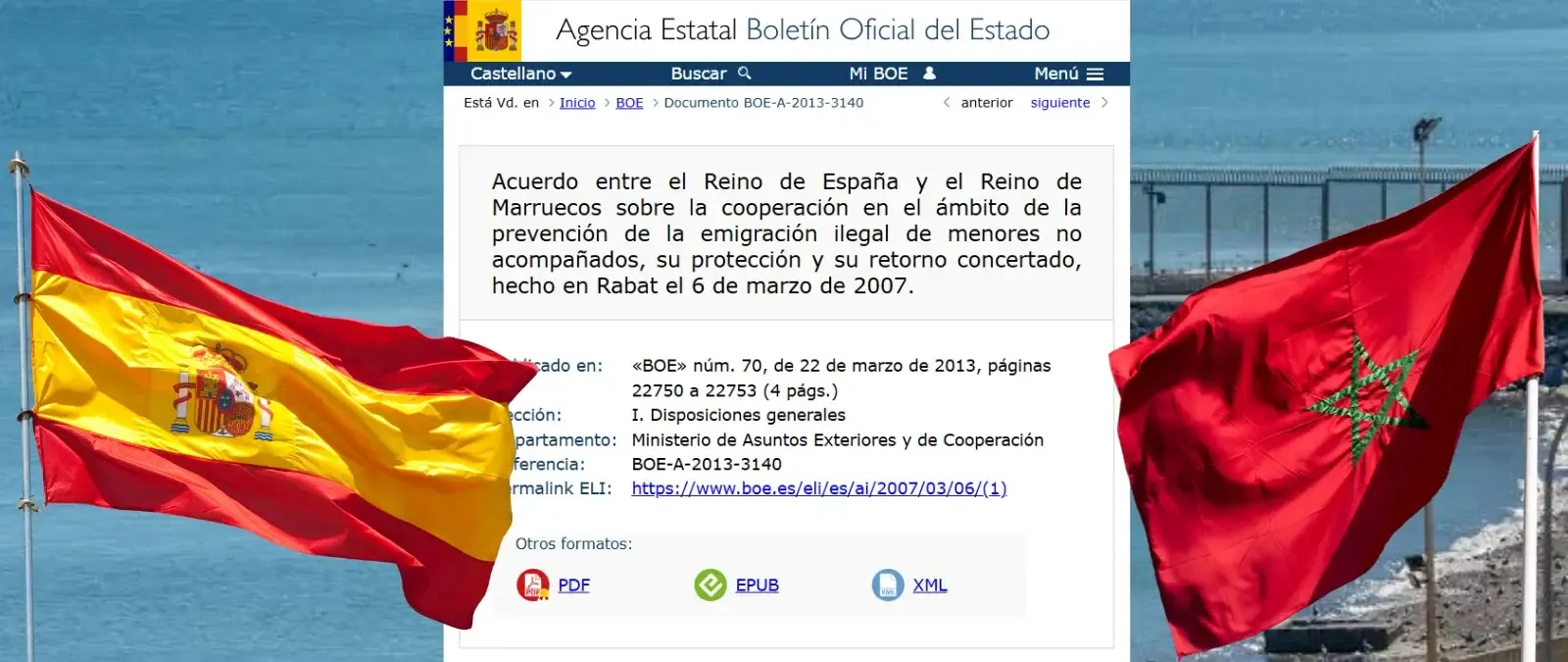

In late July 2026, Ceuta experienced a significant influx of migrants, including unaccompanied foreign minors, as reported by various sources. According to the agreement between Spain and Morocco concerning the prevention, protection, and organized return of Moroccan minors, which has been in effect since 2012, Spanish authorities are obligated to provide these minors with the same level of protection afforded to Spanish minors. This legal framework ensures that unaccompanied minors cannot be subject to immediate deportation or expulsion processes that are applicable to adults. Instead, each case must be carefully evaluated, and if the legal requirements for returning these minors are met, the process will proceed in consultation with the Moroccan government.
The Agreement on the Return of Unaccompanied Moroccan Minors
The agreement between Spain and Morocco does not solely focus on the return of Moroccan minors found irregularly in Spain. Its primary objective is to create a cooperative framework that addresses both the prevention of illegal migration of unaccompanied minors and the establishment of protective measures for those already in Spain. Under this agreement, Moroccan minors are entitled to the same rights as Spanish minors and cannot be subjected to border rejections or summary deportations, a protocol applicable to adults. Loueila Sid-Ahmed Ndiaye, a lawyer specializing in migration and human rights, emphasizes that this agreement encompasses provisions for the potential return of some minors to Morocco following an official request from Spanish authorities or recommendations from the public entity responsible for the minor's care, provided certain conditions are met.
Procedures for Identifying and Managing Unaccompanied Foreign Minors in Spain
When an unaccompanied foreign minor enters Spain, state security forces, the Public Prosecutor's Office, and child protection services must first identify the individual. If there are any doubts about the minor’s age, a determination process is initiated, with the Public Prosecutor's Office responsible for confirming the child's age as soon as possible. Once a minor's age is confirmed, they are placed under the care of the autonomous community where they are found and registered in the Unaccompanied Foreign Minors Registry.
The return process for unaccompanied foreign minors to their home countries is regulated by Article 35.5 of the Immigration Law. The administration must first request a report on the minor’s family circumstances from the respective country’s diplomatic representation. After this, the minor's opinion must be considered, and supporting reports from protection services and the Public Prosecutor's Office are required to facilitate the return, ensuring that no risk is posed to the child during the repatriation process. According to the latest data from the State Attorney General's Office, as of December 31, 2024, there were 16,041 minors registered in the Unaccompanied Foreign Minors Registry, with only eight successfully repatriated, indicating the complexities involved in the return process.
In extraordinary migration situations, such as those experienced in Ceuta, a “Solidarity Response Plan” may be activated to facilitate the relocation and transfer of minors between autonomous communities to ensure their comprehensive care. This plan is initiated when the child protection system exceeds its normal capacity significantly. In such instances, minors must be transferred to their designated autonomous communities within fifteen days of their registration in the Unaccompanied Foreign Minors Registry. As of 2025, the established capacity for hosting these minors was set at a ratio of 32.6 places per 100,000 inhabitants, with Andalusia receiving the highest allocation of 2,827 places.
As reported by maldita.es.