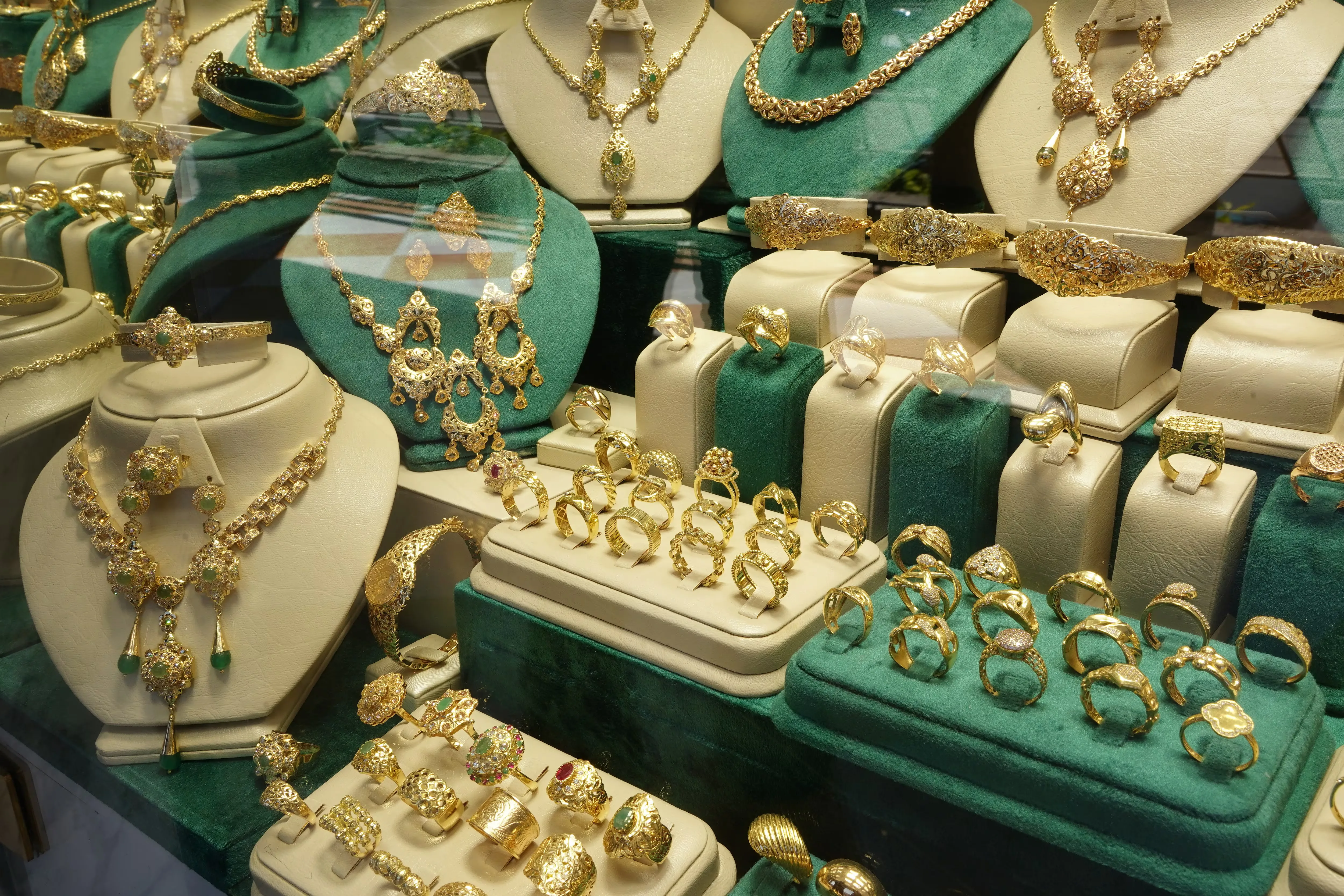

The Unique Dynamics of the Moroccan Gold Market
The Moroccan gold market exhibits a perplexing behavior that does not align with international trends, particularly when global prices decline. Despite fluctuations in the global marketplace, Moroccan consumers frequently observe a stagnation in retail prices. A visit to the jewelry stores in cities like Casablanca or Rabat reveals significant price discrepancies for similar pieces, with international price reductions seldom reflected in local pricing. As of April 7, 2026, the price of gold internationally stands at around $4,672 per ounce, a notable decrease from the record high of $5,200 achieved earlier this year. This decline has led to a price of approximately 1,527 dirhams per gram for 24-karat gold in Morocco. However, even with this substantial drop of over $500 globally, consumers in Morocco see little to no adjustment in local prices.
To better understand this phenomenon, jewelry professionals explain that the local market operates at a different pace, often slower than that of international exchanges. For instance, Hassan, a jeweler in Rabat, notes that while international prices have dipped, they remain somewhat elevated in Morocco, with 18-karat gold priced between 1,090 and 1,100 dirhams per gram and 24-karat gold reaching up to 1,250 dirhams. This persistent discrepancy indicates that the year 2026 is shaping up to be a period of stagnation for the sector, as consumer behavior shifts dramatically. Many customers, wary of prices that refuse to decline, are opting to sell their existing jewelry for cash rather than invest in new purchases.
The Complexities of Gold Supply and Pricing
The Moroccan gold market's instability can also be attributed to the intricate relationship between currency fluctuations and global crises, which contribute to a volatile gold pricing environment. As the dollar strengthens, gold prices tend to fall, a trend currently observed due to geopolitical factors. However, this creates an unpredictable pricing landscape for consumers, as the cost of jewelry is never fixed, complicating the purchasing process.
Driss El Hazzaz, president of the Moroccan Federation of Jewelers, sheds light on another critical issue—the informal supply chain. Although Morocco is home to gold and silver mines and ranks as the world's leading silver exporter, the majority of the production is exported for refining abroad, leaving local markets without direct access to raw materials. Consequently, jewelers often rely on recycling old jewelry, which can only meet 10 to 15% of market demand, thereby inflating costs before artisans even begin their work. Furthermore, stringent import regulations imposed by the Office des Changes limit payments to around $18,000, a trivial amount compared to international market prices, forcing jewelers to resort to the informal market or smuggling to source gold.
This reliance on smuggling, often referred to as the 'land route,' leads to immediate cost increases that jewelers must pass on to consumers. El Hazzaz explains that smugglers purchase gold and sell it locally, compelling jewelers to maintain a profit margin of 90 to 150 dirhams per gram from the outset. This increased entry cost contributes to the persistent high prices seen in Moroccan workshops, even when global gold values decline.
When questioned about the stark price differences between neighboring jewelry stores for seemingly identical products, El Hazzaz points to the fundamental distinctions between merchants and artisan jewelers, as well as the technical nature of the work involved. Merchants typically purchase finished stock and are reluctant to lower prices in response to global gold price drops, as they aim to protect their margins based on previous high purchase costs. Additionally, the cost of labor plays a significant role in pricing, with variations depending on whether the work is machine-produced or handcrafted. The time invested in creating unique pieces can drastically inflate costs due to the meticulous nature of artisanal craftsmanship.
Moreover, the jewelry sector suffers from a lack of legal frameworks that hinder its growth. El Hazzaz recalls a strategic study conducted over two years, which included discussions with the government aimed at establishing regulations for taxation, customs, and supply chains. Unfortunately, despite public investment, no agreements were finalized, leaving the market in a state of instability that negatively impacts both artisans and consumers' purchasing power.
In the absence of an official pricing structure mandated by the state, each establishment must navigate the delicate balance between commercial freedom and adherence to quality standards. To sustainably improve the market, El Hazzaz proposes the establishment of a 'national gold counter' that would facilitate bulk purchases of gold from international markets for legal redistribution to artisans, thereby eliminating costly intermediaries and individual importation risks. This initiative could align Moroccan prices with global realities, ensuring fair and transparent pricing for all consumers in the Kingdom.
Despite these challenges, experts emphasize that gold remains a vital financial safeguard for Moroccan families, maintaining intrinsic value that protects savings over the long term. Unlike currency, which may devalue, gold is a finite resource that cannot be artificially manufactured, underscoring its essential role in the economic landscape. As reported by fr.le360.ma.