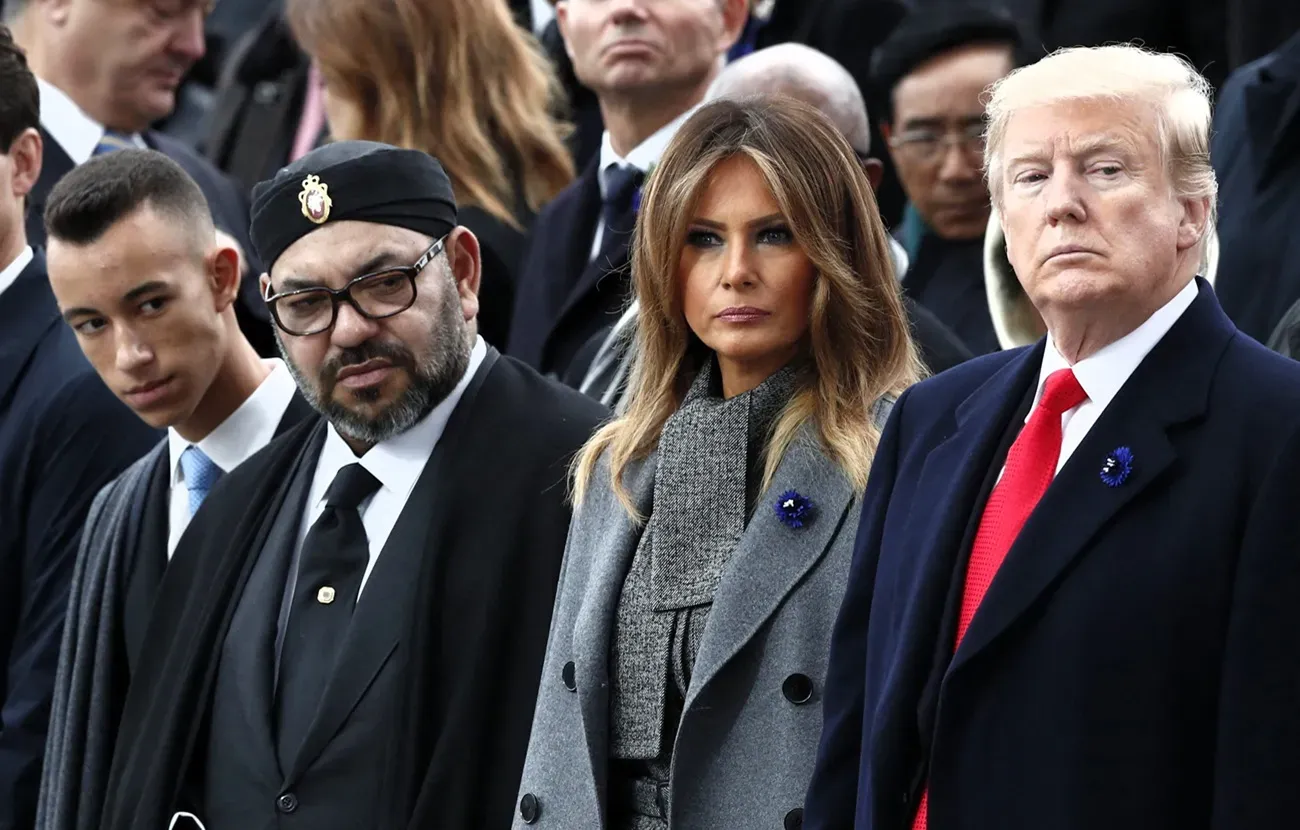

The Strategic Alliance Between the United States and Morocco
In recent years, the United States has significantly bolstered its support for Morocco, driven by a complex web of geopolitical interests in the Sahel region. This alliance is primarily aimed at curbing the influence of Russia and China while ensuring that Western powers maintain access to critical trade routes and mineral resources across Africa. A notable reaffirmation of this partnership occurred when Washington publicly backed Morocco's stance before the United Nations regarding Western Sahara, particularly following aggressive actions by the Polisario Front against the city of Smara. The strategic relationship was further solidified post-2020, following the Abraham Accords, which established Morocco as a key ally of both the United States and Israel in North Africa. Concurrently, rising tensions between Spain and Israel, coupled with the Trump Administration's policies, have positioned Morocco as the predominant military and logistical partner for the U.S. in the western Mediterranean.
The historical roots of the U.S.-Morocco alliance date back to the 18th century, specifically the Treaty of Peace and Friendship signed in 1786. Throughout the decolonization era and the Cold War, Morocco aligned itself with the Western bloc, a move that is now seen as pivotal in Washington's efforts to safeguard its interests in the region. Presently, the U.S. views Morocco as an essential partner in combating the growing presence of Russian influence in Algeria and addressing the escalating instability in the Sahel, which has been exacerbated by recent military coups in Mali, Niger, and Burkina Faso. The withdrawal of Western troops from these countries has further complicated the security landscape, prompting the U.S. to rely on Morocco as its primary regional ally to maintain stability and influence.
Recent Developments and Future Prospects
A landmark moment in U.S.-Morocco relations occurred in 2020 when former President Donald Trump recognized Moroccan sovereignty over Western Sahara in exchange for Morocco's normalization of relations with Israel under the Abraham Accords. This political maneuver has since catalyzed a surge in political, military, and economic cooperation between Washington and Rabat. For instance, in February 2026, a Memorandum of Understanding was signed for the exploration of critical minerals in Western Sahara, aligning with the U.S. strategy to reduce dependency on China. Additionally, American companies, including Ortus Power Resources and Harmattan Energy, are investing in green energy projects in the region, further intertwining U.S. interests with Moroccan development.
Moreover, in April 2026, both countries signed the 2026-2036 Defense Cooperation Roadmap, aimed at reinforcing their strategic alliance. Shortly thereafter, the U.S. once again supported Morocco's position by condemning the Polisario Front's attacks at the UN and calling for an end to the longstanding conflict. Morocco's accession to NASA's Artemis Accords has also underscored its role as a strategic partner in technological and space endeavors. Militarily, Morocco has emerged as a principal U.S. partner in Africa, hosting the African Lion exercises, the largest military drills conducted annually by U.S. Africa Command (AFRICOM), and integrating advanced NATO technologies for intelligence sharing.
This growing partnership has significant political ramifications for Spain, especially amid heightened tensions with the Trump Administration. Some Republican factions have even questioned Spain's sovereignty over Ceuta and Melilla, reflecting Morocco's increasing importance in U.S. strategic priorities. The deterioration of security in the Sahel plays a crucial role in this dynamic, as the withdrawal of Western forces has allowed Russia to expand its influence through groups like the Africa Corps, while jihadist factions gain territorial control.
Furthermore, Morocco's Atlantic Initiative launched in 2023 aims to connect landlocked Sahel countries like Mali and Niger to the Atlantic through new trade routes and infrastructure, with the future port of Dakhla positioned to become a major logistical hub. The initiative is supported by substantial investments in renewable energy and green hydrogen projects, which have attracted international investors due to Morocco's strategic location and energy potential. This shift in perspective transforms the Western Sahara conflict from a mere political issue to one intertwined with international economic and energy interests.
The normalization of relations between Morocco and Israel has further enhanced Rabat's strategic significance for Washington, creating a robust alliance that connects the Middle East with North Africa. Since the Abraham Accords, military and technological cooperation has intensified, particularly in defense systems and drone technology, culminating in the establishment of a formal Military Action Plan in January 2026. Despite widespread protests in Morocco against this alliance, the monarchy has managed to navigate the political costs by framing its partnership with Israel and the U.S. as essential to its position on Western Sahara.
These developments come at a time of strained relations between Spain and the United States, as Madrid grapples with differing views on defense spending within NATO and military operations in Iran. The deterioration of Spain's relationship with Israel has also impacted U.S. perceptions, particularly following Spain's recognition of the Palestinian state in 2024 and its subsequent arms embargoes against Israel.
Geopolitically, Morocco and Spain's shared strategic position at the Strait of Gibraltar underscores the significance of their relationship, especially for European energy supply lines. As tensions rise between Madrid and Washington, Morocco is positioning itself as a more reliable ally, modernizing its military and seeking to become the primary U.S. partner in the western Mediterranean, potentially at Spain's expense.
This analysis underscores the vital importance of understanding international relations in an ever-evolving global landscape, helping individuals form informed opinions amidst a sea of information.
As reported by elordenmundial.com.