
Mastering Character Introductions Through Cinematic Techniques
When it comes to introducing iconic film characters, few examples are as exemplary as Rick Blaine from the classic film Casablanca. This cinematic masterpiece not only captivates audiences with its intricate storytelling but also serves as a masterclass in character introduction. The way Rick is introduced sets the tone for his character and establishes a sense of intrigue and anticipation long before he makes his entrance. This technique is essential for filmmakers aiming to create memorable protagonists that resonate with viewers.
From the moment we step into Rick’s Café Américain, the atmosphere is charged with whispers and rumors about Rick Blaine, skillfully crafted by director Michael Curtiz. The audience learns about Rick through the perspectives of others, hearing snippets of dialogue that hint at his personality: "He won't drink with guests" and "He never accepts checks." These lines not only build an aura of mystery around Rick but also prepare the audience for the eventual reveal of his character. By the time Rick finally appears on screen, viewers are primed with expectations and curiosity, eagerly awaiting the moment when the legend becomes flesh.
Visual Storytelling: The Reveal of Rick Blaine
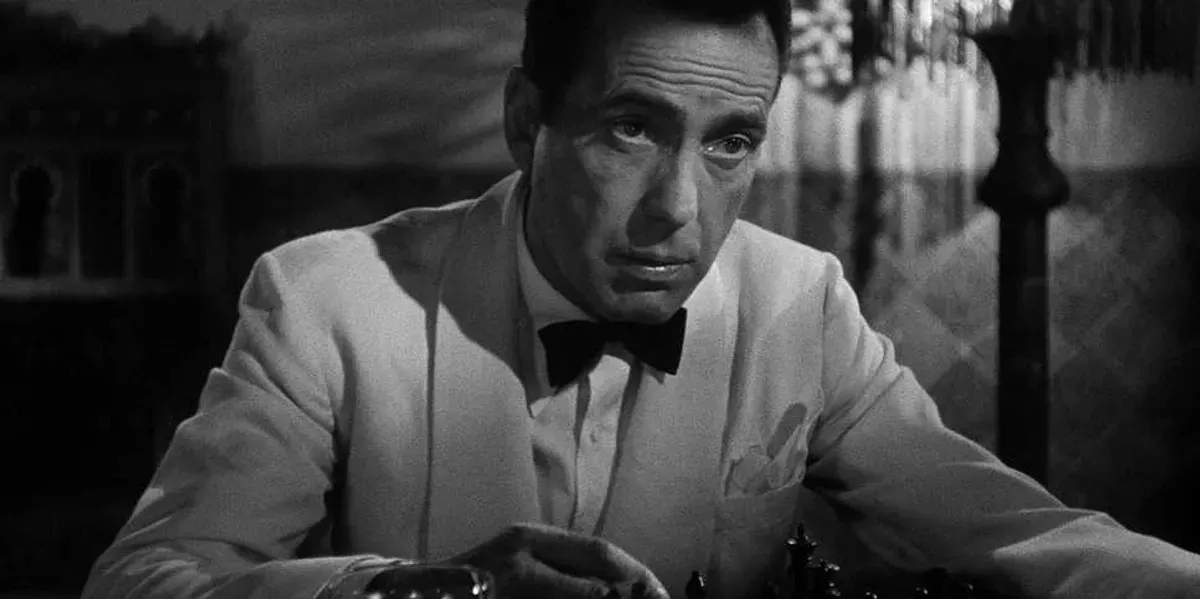
The brilliance of Casablanca lies in its ability to convey character traits without relying heavily on dialogue. As Rick is introduced, we first see his hand signing a check, immediately establishing his authority and control within the café's ecosystem. This subtle detail signals his power and influence, even before we see his face. The next visual cue is equally telling: Rick is shown alone, engaged in a game of chess against himself. This scene paints a vivid picture of his character, revealing three critical traits: he is a strategist, he exists in solitude, and he holds dominion over both sides of the chessboard in his life.
Rick's character is further solidified when he encounters a high-rolling customer attempting to enter his private gambling room. With a calm demeanor, Rick rips up the customer's check, asserting his dominance without the need for raised voices or aggressive gestures. This moment is crucial as it succinctly encapsulates Rick's core philosophy, as articulated later in the film: "I stick my neck out for nobody." This line not only serves as his character's thesis statement but also foreshadows the transformative journey he will undergo throughout the film.
In conclusion, the introduction of Rick Blaine in Casablanca is a textbook example of effective character development through visual storytelling. For aspiring filmmakers and screenwriters, the lesson is clear: consider how you can portray your characters without the crutch of dialogue. How can you visually represent their essence? By studying and applying these techniques, you can craft character introductions that are not only engaging but also deeply resonant with audiences. Even in the realm of filmmaking, it’s true what they say: you’ll always have Paris.
As reported by nofilmschool.com.