
Understanding the Migrant Surge in Ceuta
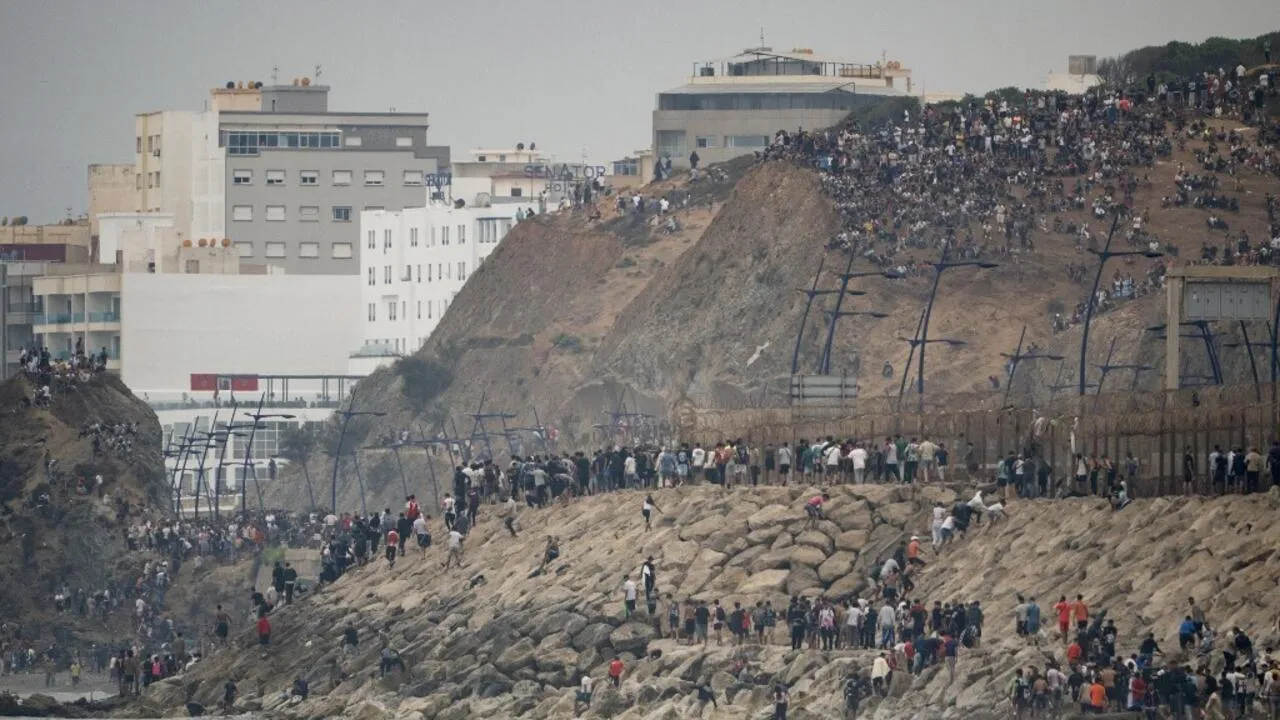
The recent migrant crisis has reached unprecedented levels, with approximately 60,000 migrants reportedly crossing the border between Morocco and Ceuta, the Spanish enclave on the African continent. This influx represents a staggering 70% of the local population, as noted by Ceuta's local government president, Juan Vivas. As of July 31, the Spanish government confirmed that over 37,500 migrants had already returned to Morocco. Spanish Prime Minister Pedro Sánchez visited the area, condemning the situation as an 'attack' and a 'violation of Spain's territorial integrity.' The European Union, led by Italy, is demanding Spain's exclusion from the Schengen Area in response to this crisis. To gain further insight, we spoke with Marie-Laure Basilien-Gainche, a public law professor at Jean Moulin University in Lyon and a senior member of the Institute of France and the Convergences Migrations Institute.
Reactions from Moroccan Authorities and Diplomatic Dynamics
Initially, Moroccan authorities appeared reticent and cautious, showing neither support nor opposition to the surge of migrants heading towards the Spanish border. However, they have since expressed a willingness to collaborate with Spanish police authorities to control the flow of migrants crossing from Morocco to Ceuta. This shift raises questions about the rationale behind the Moroccan government's initial silence and subsequent change in strategy. It is likely a decision rooted in the monarchy and the governing council, reflecting the complex diplomatic relations between Morocco and Spain. The recent coordination efforts between the two nations have reportedly led to the return of 25,000 migrants to Morocco, indicating some effectiveness in their collaboration.
The return of thousands of primarily Moroccan nationals who crossed into Spain by sea is unsurprising given the circumstances. This aligns with long-standing Spanish policies regarding border control, particularly with regard to land borders, and the legislative framework that has allowed for such operations. The partnership with Moroccan authorities has facilitated a swift return of migrants to their home country.
Historically, Morocco has leveraged migratory pressure to influence Spain on various issues, as seen in 2021. The current situation might reflect similar dynamics, particularly against the backdrop of Spain's evolving relationship with the Polisario Front and its rapprochement with Algeria concerning Western Sahara. However, these remain speculative interpretations of the Moroccan government's stance.
The responses from European Union countries, especially from right-wing and far-right leaders, have been noteworthy. Giorgia Meloni, aiming to position herself as a leader of European right-wing politics, has called for Spain's suspension from the Schengen Area, using the migrant crisis as a platform to advocate for the most restrictive migration and asylum policies possible. Yet, it is essential to note that under Schengen regulations, there is no mechanism for suspending a member state, and any such proposals might be more symbolic than practical.
The reactions from various European nations suggest a fear of potential repercussions stemming from the migrant situation. However, it is crucial to contextualize these concerns; the recent surge involved only a few tens of thousands of people, most of whom are still on African soil and are being repatriated to Morocco, which should not significantly impact countries like Italy or Finland. It raises questions about the motivations behind the heightened emotional responses from European leaders, which seem to perpetuate unfounded narratives about demographic changes and the so-called 'great replacement' theory.
As reported by rfi.fr.