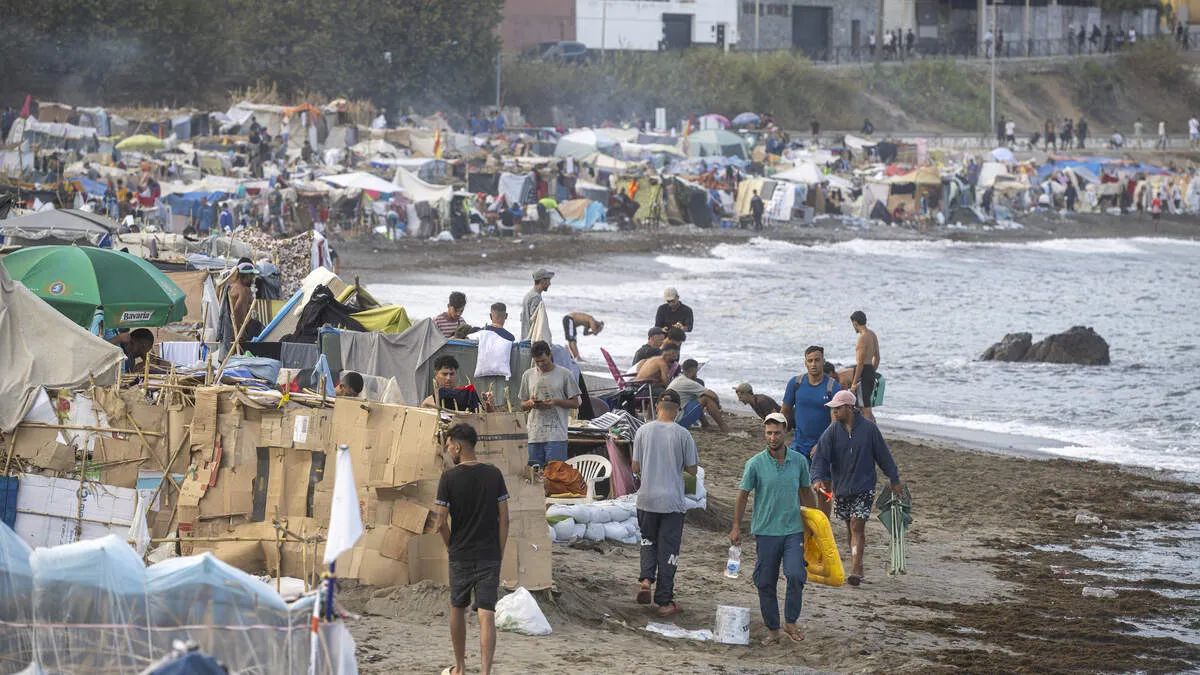

Understanding the Migratory Surge in Ceuta
The recent unlawful entry of over 50,000 migrants into Ceuta via the Tarajal breakwater has triggered an unprecedented migration crisis, given the sheer scale of the incident. As the autonomous city strives to restore normalcy, the event has spiraled into a political crisis centered around border security and has sparked a diplomatic conflict with other European Union nations concerning Spain's immigration policies. This has led to ongoing discussions aimed at uncovering the causes and responsibilities related to the situation on both sides of the border.
Political Implications and the Role of Morocco
Jorge Dezcallar, a seasoned diplomat and former Spanish ambassador to Morocco, has extensive experience in international relations and geopolitical conflicts. His tenure in Rabat (1997-2001) positions him as a credible voice on Spain-Morocco relations. In a recent interview, Dezcallar articulated his views on the crisis at the Ceuta border, emphasizing that it transcends a mere migratory issue; it is a matter that directly challenges Spain's sovereignty and territorial integrity. He pointed out that the sudden influx of 60,000 individuals is not spontaneous but rather the result of various converging factors, including misinformation circulating on social media and a Supreme Court ruling. However, he underscored the complicity, or at the very least the negligence, of Moroccan authorities as a crucial element in the unfolding of this crisis, a position supported by visual evidence. Furthermore, Dezcallar criticized the Spanish government's response, asserting that had it been adequate, the massive entry of migrants could have been prevented. He noted that the perceived weakness of the current Spanish administration, in the face of political instability and corruption allegations, may have emboldened Morocco to test Spain's resolve. He also addressed the demographic aspects of the crisis, highlighting that most of the individuals crossing the breakwater were young men aged between 18 and 30, driven by high unemployment rates and a lack of prospects in Morocco. The disparity between the economies of Morocco and Spain further fuels the allure of migration. Lastly, Dezcallar expressed concerns regarding Spain's diplomatic relations with its European partners, indicating that the current government's approach to immigration has already sparked irritation among European allies, threatening to escalate into broader diplomatic issues. He concluded by stressing the need for a robust response to ensure the security of Ceuta and Melilla and prevent future occurrences of such crises.
As reported by 20minutos.es.