
Mass Protests Erupt in Response to Migrant Crisis
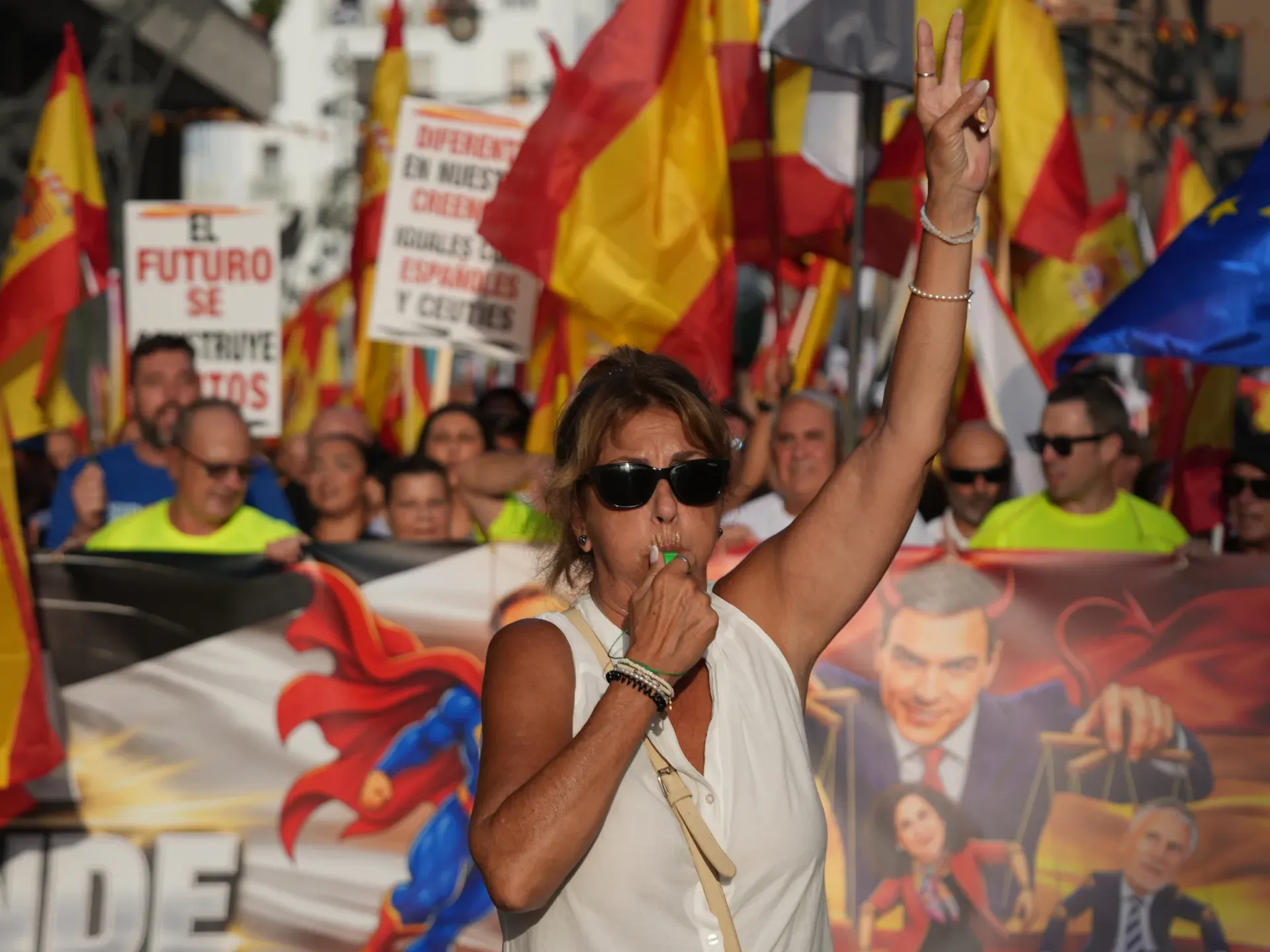
In recent days, Spain has witnessed significant unrest as thousands of demonstrators took to the streets to voice their concerns over the ongoing migrant crisis in Ceuta, a small Spanish enclave located on the northern coast of Africa. On Wednesday, approximately 50,000 people gathered in the capital, Madrid, while in Ceuta, local residents showed their solidarity by draping Spanish and local flags over their shoulders, creating a striking visual of national pride amidst the turmoil. The protests coincided with Ceuta Day, a regional holiday commemorating the Portuguese takeover of the city in the 15th century, and were fueled by the memory of a recent surge in migrants and asylum seekers that overwhelmed local resources.
On July 30 and 31, over 70,000 migrants made the perilous journey from Morocco to Ceuta, resulting in a tragic loss of at least 80 lives during this chaotic crossing. Although many of these individuals have returned to their home countries, estimates indicate that around 5,000 remain in Ceuta, including approximately 1,200 minors. Among them is Otman Ianaya, a 40-year-old father who swam to the enclave with his wife and two young daughters in search of a better future. "There is no work in Morocco," he explained to the news agency AFP. "I want to build a future in my life." Unfortunately, the conditions many migrants now face are dire, with some resorting to sleeping on the beaches of Ceuta as they await assistance.
Social Strain and Political Tensions Escalate
The influx of migrants has put immense pressure on local services, prompting the Spanish government to expand emergency housing and increase funding for social services. However, critics argue that these measures fall woefully short of addressing the urgent needs of the population. The mounting strain has led to isolated incidents of violence, including confrontations with police, attacks on military patrols, and reports of sexual assaults, highlighting the volatile situation on the ground. Residents in Ceuta, frustrated by the overwhelming number of newcomers, have clashed with law enforcement and have even burned belongings of migrants in protest against what they perceive as an invasion of their territory. Protesters like Gema Guillen have expressed their grievances, stating, "The situation has been chaotic; you can’t even go out onto the street."
The political ramifications of this crisis have become increasingly pronounced, illustrating deep divisions within Spain's government. Ceuta’s regional leader, Juan Jesus Vivas, a member of the conservative Popular Party, has described the migrant influx as a threat to Spain's territorial integrity. In contrast, Spain’s territorial policy minister, Angel Victor Torres, has accused right-wing factions of using the situation to undermine the current administration rather than seeking constructive solutions. Prime Minister Pedro Sanchez has attributed the recent surge in migrants to a misinterpretation of a court ruling and the spread of online misinformation that has encouraged crossings. He has also suggested that negative media portrayals of the crisis have been amplified by foreign influences, particularly from Russia and Israel, although he did not provide specific evidence to support these claims.
In light of the ongoing crisis, the Spanish government has committed to providing 309 million euros (approximately $357 million) in aid to assist Ceuta. While some migrants are actively seeking economic opportunities, others are fleeing persecution in their home countries and seeking asylum. Halima Ahmed, a representative from the NGO Luna Blanca, emphasized the need for compassion in this tumultuous time, stating, "They are people in a vulnerable situation; we need to have a little bit of empathy." She acknowledged the frustrations felt by both migrants and residents, noting, "People are tired, people are fed up… but that does not justify any type of violence."
As reported by aljazeera.com.