
Archaeological Breakthrough in Khemisset Province
In a remarkable archaeological discovery, researchers have unveiled what is being hailed as the oldest known large-scale defensive system in North Africa, located outside the Nile Valley. This ancient structure was found at the Oued Beht archaeological site in the Khemisset Province of Morocco, offering groundbreaking insights into the region's prehistoric past. The newly discovered system consists of a substantial ditch accompanied by an earth embankment, with dates ranging from the beginning to the middle of the second millennium BCE, approximately 3,500 to 4,000 years ago.
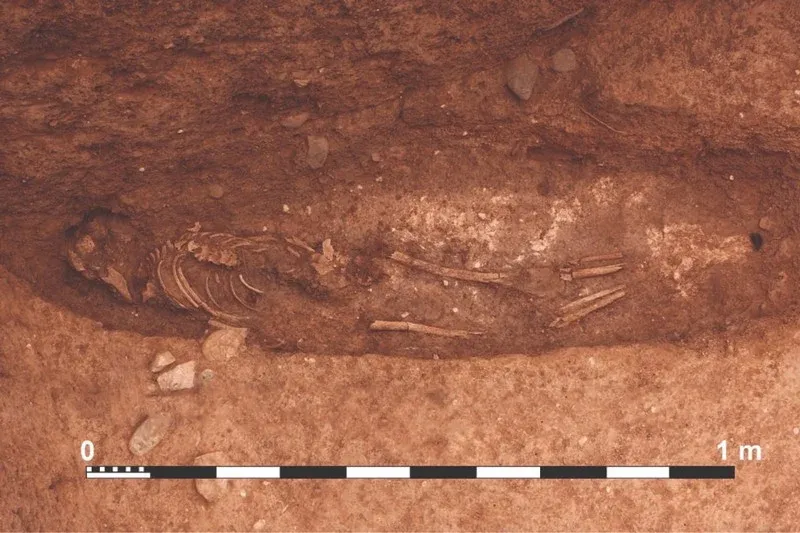
This significant finding emerged during the third field season of the Oued Beht Archaeological Project (OBAP), shedding light on a previously undocumented phase of Bronze Age activity at the site. Historically, previous research had largely concentrated on the Final Neolithic occupation, but recent archaeological efforts conducted in 2022 unveiled evidence of a large and complex settlement that thrived from the mid-to-late fourth millennium to the early third millennium BCE. This illustrates that the area remained occupied and transformed over centuries, indicating a rich tapestry of human activity.
Insights into Bronze Age Community Organization
The new research has been pivotal in establishing the chronology of the Oued Beht site, supported by seventeen radiocarbon dates that confirm activity during the second millennium BCE, including the construction of the newly discovered defensive system. Notably, the ditch and embankment were strategically positioned along the southern part of the settlement, utilizing the natural contours of the ridge, reflecting advanced planning and organized collective labor by the communities of that time.
The scale of these earthworks offers compelling archaeological evidence of how early societies in northwestern Morocco not only organized their settlements but also actively modified their surrounding landscapes during the Bronze Age. Furthermore, this site has undergone various transformations, evident from the substantial stone wall that was erected over the older defensive structures during the medieval period. This continuity of use highlights the sustained human activity at Oued Beht across roughly five millennia, spanning from Neolithic farming communities through Bronze Age occupation, and into the medieval era.
The research was conducted through a collaborative effort between Morocco’s National Institute of Archaeological and Heritage Sciences (INSAP), the National Research Council of Italy (CNR), ISMEO, and the University of Cambridge. Notable Moroccan archaeologist Youssef Bokbot serves as one of the co-directors of this project, alongside Giulio Lucarini and Cyprian Broodbank. The findings have been published in the academic journal _Libyan Studies_ by the British Institute for Libyan and Northern African Studies, with the study being made available online on September 7. It comprehensively examines archaeological evidence from excavations and surveys that took place in 2023, covering the site’s diverse phases, including Neolithic, Bronze Age, and medieval periods.
This extraordinary discovery not only enriches the archaeological narrative of Oued Beht but also paves the way for future excavations that are anticipated to yield further insights into the communities that once inhabited and shaped this significant site in Morocco's prehistoric landscape.
As reported by moroccoworldnews.com.