
Understanding the Threat to Iran's Mount Fars Nuclear Site
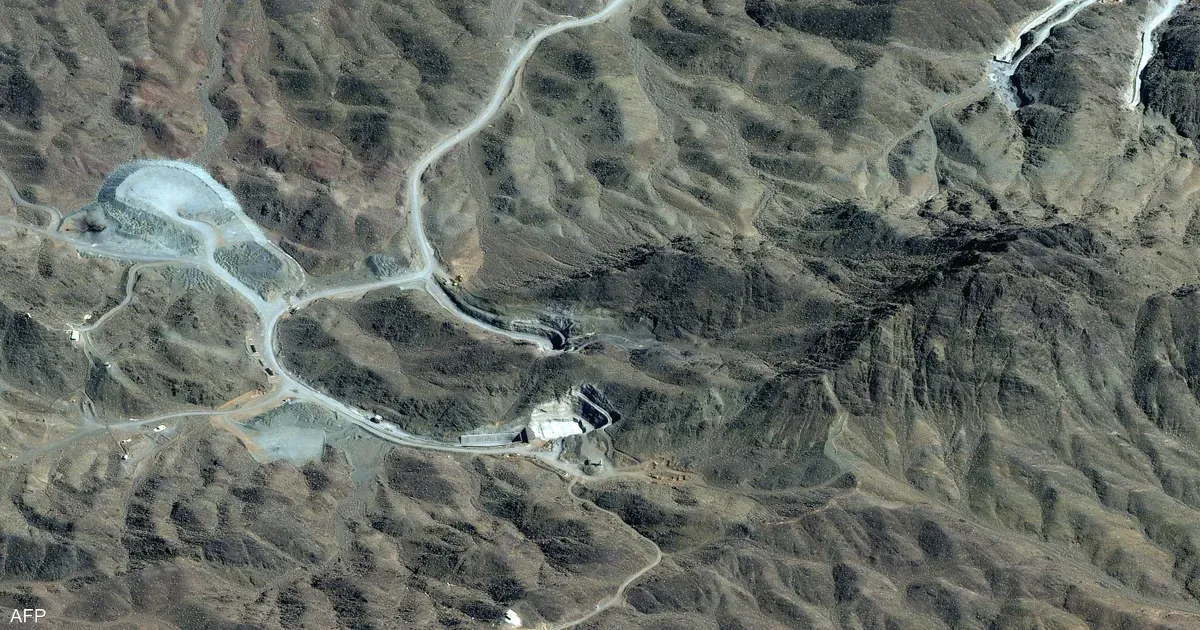
The former U.S. President Donald Trump recently issued a stark warning regarding a facility associated with Iran's nuclear program, known as "Mount Fars." This fortified site, buried deep underground, is situated approximately 220 kilometers south of Tehran and just two kilometers from the key Natanz nuclear complex. In an interview on July 13, Trump declared, "We will destroy Mount Fars. Tell the Iranians to prepare themselves." This statement underscores the ongoing tensions between the U.S. and Iran, particularly regarding nuclear capabilities.
The Strategic Importance of Mount Fars
Mount Fars has been a focal point in the geopolitical landscape, especially considering its proximity to Iran's Natanz facility, which houses two uranium enrichment plants—one above ground and another underground. The Natanz site has previously faced airstrikes during conflicts involving the United States and Israel, notably on February 28 and during a 12-day conflict the previous year. However, according to the Institute for Science and International Security, a U.S.-based research center focused on nuclear non-proliferation, the Mount Fars facility remains under construction and has not been targeted in these military engagements.
The peak of Mount Fars rises about 1600 meters above sea level, and while the above-ground enrichment plant at Natanz was destroyed, the underground facility likely sustained severe damage. The history of this site is intertwined with Iran's contentious nuclear ambitions, which have long strained relationships with Western powers, despite Iran's insistence that it does not seek to develop atomic weapons.
Construction at Mount Fars commenced in 2020, following what Iranian authorities described as a sabotage incident at Natanz that caused significant damage, potentially hindering the development of advanced centrifuges for uranium enrichment. In September of the same year, Ali Akbar Salehi, the then-head of the Iranian Atomic Energy Organization, announced that Iran was building a more modern and expansive facility within the mountain to manufacture advanced centrifuges.
According to Rafael Grossi, Director General of the International Atomic Energy Agency (IAEA), Iran had previously expressed intentions to carry out nuclear activities at Mount Fars, marking it as a strategic move to place sensitive facilities underground as part of their systematic approach to enhance security.
Analysis of satellite images by the Institute indicates that Mount Fars features two entrances leading to a facility estimated to extend at least 100 meters underground. Security measures around the site include an extensive security perimeter and substantial reinforcements at tunnel entrances. Portions of the eastern tunnel entrances have been partially filled in since the conflicts to obstruct ground vehicle access, although they have not been entirely sealed.
As for the operational status of Mount Fars, Trump noted in his remarks that U.S. surveillance has detected no significant activity, suggesting that Iran is struggling with its nuclear posture. The report from the Institute suggests that while construction continues, the facility has yet to begin operations, leaving uncertainty about when it might become functional based solely on satellite imagery.
There remains ambiguity around Iran's plans for the site, especially in light of the destruction of its centrifuge program, which has limited its ability to produce the necessary components for a large-scale assembly facility. However, if Iran begins to rebuild its capacity to manufacture centrifuges, it might consider establishing a smaller assembly plant at Mount Fars, potentially facilitating a nuclear weapons program.
Experts argue that the deep underground complex would be challenging to target with the most potent bunker-buster bombs in the U.S. arsenal, suggesting that the site is better suited for ground attack or sabotage operations. Nevertheless, there could be vulnerabilities that airborne strikes could exploit, as the facility's depth presents unique challenges for direct military engagement.
As reported by skynewsarabia.com.