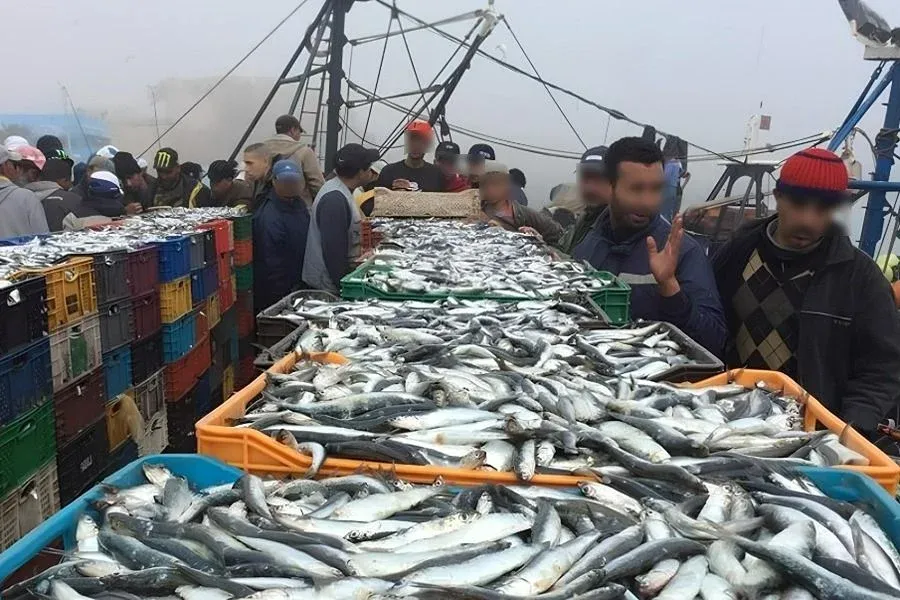

Potential Pilchard Herpesvirus Threat in Moroccan Waters
Currently, there have been no confirmed cases of Pilchard herpesvirus (PHV) in Morocco, and no evidence suggests that this pathogen is circulating within its waters. However, alarming sardine die-offs reported along the coast of South Africa since early August have reignited scientific interest in the virus, as highlighted by Le Matin. On August 14, South African officials confirmed the presence of genetic material from PHV in sardines that were sampled; notably, all 15 specimens analyzed tested positive, with particularly high viral loads detected in ten sardines directly linked to these mortality events. Furthermore, the genetic sequence analyzed exhibited a remarkable 99.7 percent similarity to a viral gene previously identified in Australia.
In light of these developments, Hassan Saadouni, a prominent economic operator and president of the CGEM Marrakech-Safi Coastal and Blue Economy Commission, has emphasized the necessity of maintaining vigilance, without succumbing to alarmist sentiments. He underscored the critical role sardines play as an economic, social, and strategic resource, supporting a comprehensive network that includes coastal fishing, canneries, employment opportunities, transportation, exports, and domestic supply, especially in the Safi region. Saadouni advocates for enhanced scientific monitoring, increased laboratory capabilities, improved collaboration among researchers, governmental bodies, and industry stakeholders, as well as prompt reporting in instances of unusual mortality rates.
Learning from Australia's Experience with PHV
The urgency of these concerns is informed by past experiences in Australia, particularly during the significant PHV outbreaks of 1995 and 1998-1999. Researcher Brian Jones, who investigated these outbreaks, recounted to Le Matin that the virus is remarkably contagious, with infected sardines that exhibit no symptoms capable of mingling with other schools and spreading the virus before the mortality rates become apparent. The outbreak in 1995 extended over 5,000 kilometers of the Australian coastline, reaching as far as New Zealand. The subsequent outbreak between 1998 and 1999 was even more devastating, resulting in the loss of approximately 60 percent of sardine biomass in both southern and western Australian waters. This catastrophic event compelled the closure of two out of three sardine fisheries in Western Australia for an entire season, with financial losses exceeding 12 million Australian dollars in the first outbreak and 15 million in the second.
Rosemary Dorrington, a microbiology professor at Rhodes University who participated in the South African examinations, confirmed that her team detected elevated levels of PHV in all dead fish analyzed. She noted that the symptoms and transmission speed exhibited were consistent with those observed during the initial Australian outbreak. However, Dorrington remains cautious about the precise transmission mechanisms, as the virus was also found at varying levels in a limited sample of live fish. She has recommended that Morocco implement routine PCR-based monitoring for sardine catches, extending an offer to share her laboratory's methodologies with Moroccan colleagues. Additionally, she advised that fresh or frozen sardines imported from South Africa should be treated as potentially infectious until the outbreak is conclusively resolved.
Morocco is not starting from scratch regarding fisheries monitoring; the National Institute of Fisheries Research is actively tracking small pelagic stocks through scientific surveys. Moreover, fish product imports are subject to health certifications overseen by ONSSA. However, there is currently no public information indicating that routine, PHV-specific screening is applied to Moroccan sardines, a gap that both Dorrington's recommendations and Saadouni's call for vigilance highlight as crucial to address before any local outbreak becomes apparent.
As reported by northafricapost.com.