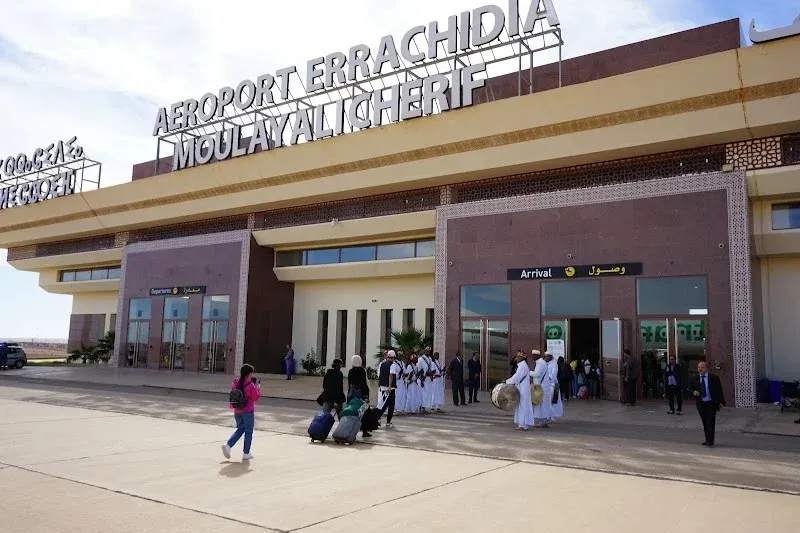

Tourism and community stakeholders in the Errachidia region have raised an "urgent call" for the establishment of two new flight routes connecting the area to Casablanca and Rabat airports, ideally through a low-cost airline. They advocate for a comfortable weekly flight frequency that caters to the needs of residents, professionals, and visitors. These stakeholders believe that enhancing connectivity is crucial for alleviating the region's isolation, boosting its economic and tourism appeal, and achieving greater spatial equity and territorial fairness.
Local dynamics have emphasized that the experience of the flight connecting Marrakech and Errachidia, which offers fares starting from approximately 160 dirhams per trip, has demonstrated the potential of low-cost domestic flights to create easier and broader mobility between the region and other parts of the country. Furthermore, it contributes to promoting internal tourism and facilitates the movement of citizens and professionals. Therefore, they argue that this model should be expanded to include direct connections to the administrative and economic capitals.
Strengthening the Region
Othman Al-Shawash, a tourism operator in the Drâa-Tafilalet region, stated that "Errachidia city needs enhanced air connectivity to eliminate its territorial marginalization, as air transport has become a critical entry point for achieving tourism and economic development." In an interview with Hespress, Al-Shawash elaborated that establishing low-cost connections to Casablanca and Rabat, similar to the Marrakech route, is essential given the high costs and limited weekly scheduling of current flights from these airports. He suggested that programming three weekly flights from the economic hub of the kingdom and another three from the administrative capital could play a significant role in improving travel conditions.
He further noted that the provision of regular flights at reasonable prices remains a genuine necessity, emphasizing that the development of air routes would have a direct impact on the tourism sector. Many tourists arriving in Morocco via Casablanca airport are forced to continue their journey using tourist transport or trains towards Marrakech before flying to the nearest airport to the Merzouga desert. This current travel pathway increases costs and extends travel times.
Al-Shawash insisted that establishing two internal flight routes from Rabat and Casablanca to Errachidia, featuring competitive pricing, could significantly alter the accessibility equation of the region, making it more competitive for both local and international tourists. He emphasized that enhancing regional openness to Drâa-Tafilalet should be seen as an investment in promoting the destination and the local economy, as ease of access is a decisive factor for tourists when choosing their destinations.
Breaking Isolation
Community and tourism actor Moujan Hamou Ait Al-Qaïd supported the growing regional and local discussions about the need to facilitate access to the Drâa-Tafilalet region and strengthen its connections with other parts of the country. In a statement to Hespress, Ait Al-Qaïd argued that the issue has evolved beyond mere transportation demands and has become a significant developmental and territorial matter, given the direct implications that improving air services could have on the economy, tourism, investment, and the living conditions of residents.
He highlighted that enhancing air routes between Rabat and Casablanca with low-cost options to Errachidia could provide a significant boost to domestic tourism by facilitating access for Moroccans from various cities to the region's attractions. The Drâa-Tafilalet region offers a rich variety of tourism options, including oases, palaces, kasbahs, and opportunities for mountain, desert, and cultural tourism.
Ait Al-Qaïd pointed out that high travel costs, long distances, and complicated routes remain barriers to the region's full benefit from the dynamics of national tourism. He called for integrating air transport into a clear policy aimed at encouraging Moroccans to explore their country’s inland destinations. He stressed that strengthening transport at affordable prices is part of a comprehensive approach to ensuring spatial justice and equity for the Errachidia region.
In conclusion, Ait Al-Qaïd noted that the Drâa-Tafilalet region, due to its geographical distance and location, requires practical measures that align with its unique characteristics. Investing in domestic air travel and transportation represents an investment in the people and the local areas' ability to generate wealth. Improving air connectivity could pave the way for a new dynamic benefiting local professionals by encouraging travel agencies, tour organizers, and investors to develop targeted tourism programs for the region.
Moreover, he indicated that facilitating access to Errachidia and various regions would extend tourists' stays and widen the circle of beneficiaries from tourism activities, positively impacting local hotels, guesthouses, restaurants, transport services, guides, artisans, and cooperatives. This, in turn, would enhance the economic and social impact of tourism at the local level, as the Merzouga desert holds significant potential, making it one of Morocco's top tourist destinations thanks to its people.
As reported by hespress.com.