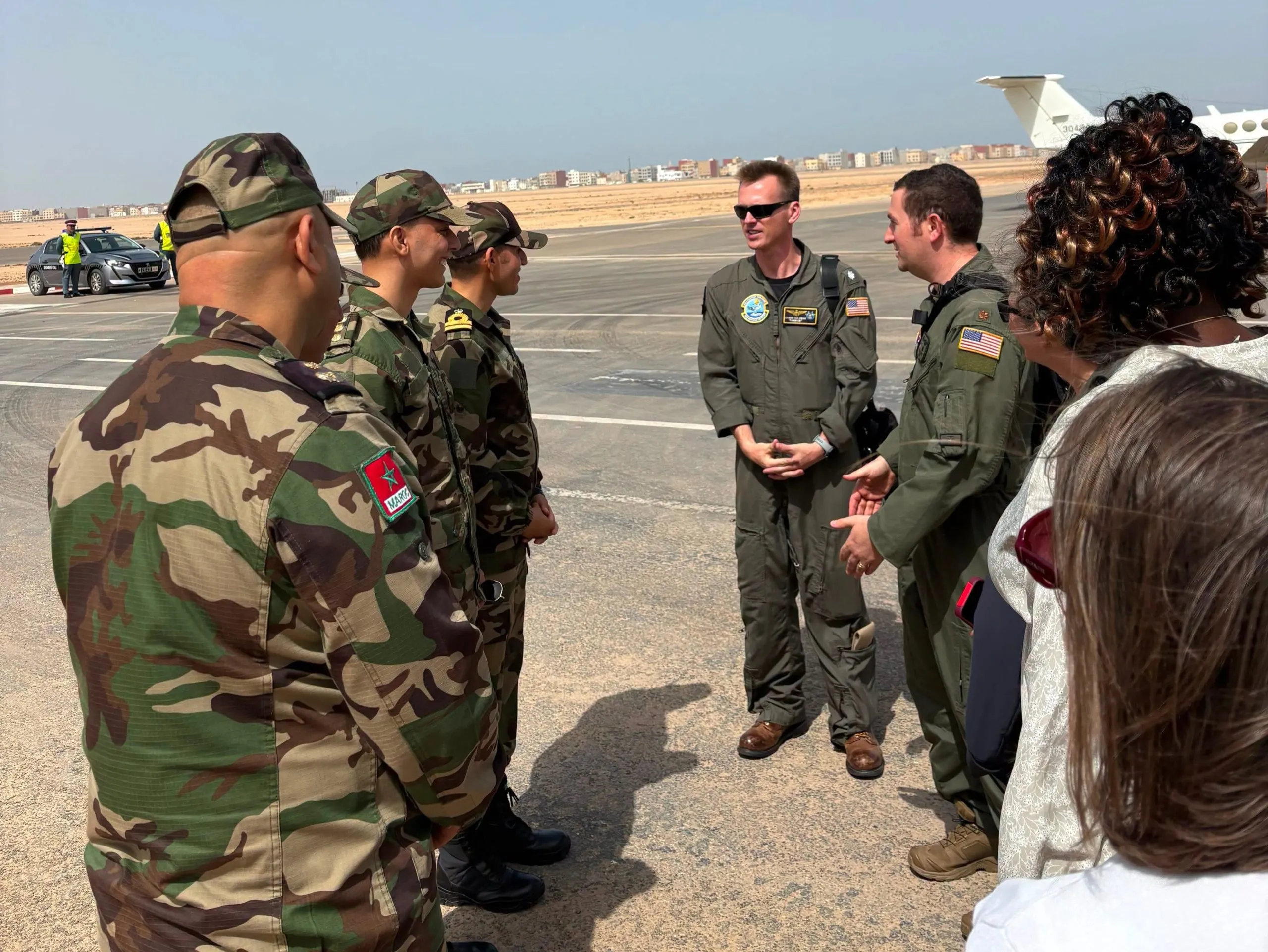

In a significant move to enhance bilateral relations, a high-level delegation of senior US military officials from the US Embassy in Rabat recently visited the Atlantic Port in Dakhla. This visit, announced on the embassy's social media channels, highlights the growing engagement between the United States and Morocco in various sectors, particularly focusing on maritime infrastructure, regional connectivity, economic development, and shared security priorities. The embassy emphasized the strategic importance of the port, viewing this visit as an invaluable opportunity to exchange insights with Moroccan officials regarding the future of the maritime sector.
This visit follows a previous trip by a US Mission delegation to El Guerguerat in June, marking the first official visit to this critical border crossing between Morocco and Mauritania. During that engagement, the delegation collaborated with Moroccan counterparts to discuss vital issues such as border security cooperation, counter-narcotics initiatives, anti-trafficking efforts, and interagency coordination within the Sahara region. Collectively, these two visits signify a stronger, more tangible US presence in Morocco’s southern provinces.
Under the administration of Donald Trump, US engagement in the area has evolved from mere diplomatic recognition to concrete actions, particularly since the US recognized Moroccan sovereignty over the Sahara in December 2020. This shift towards economic collaboration was further exemplified in late July when the US Trade and Development Agency (USTDA) signed an agreement with the Moroccan-based joint venture, ORNX. This agreement is aimed at funding a pre-front-end engineering and design study (Pre-FEED) for a large-scale ammonia plant in Laayoune, leveraging US technology with a grant valued at MAD 57 million (approximately $5.7 million).
The consortium selected by ORNX, led by Kellogg Brown & Root (KBR), includes notable US companies such as GE Vernova, Electric Hydrogen, and Terabase. Once operational, this ambitious ammonia plant is projected to produce up to 560,000 tons of ammonia annually, utilizing around 900 MW of electrolyzer capacity, thereby integrating power generation, hydrogen production, and ammonia synthesis into a single operational framework.
Both the ammonia project and the recent embassy visits underline the ongoing infrastructure development in Dakhla. The Atlantic Port is currently 65% complete, with construction expected to conclude by the end of 2028 and operations slated to commence in 2029. This port is designed to serve more than just as a shipping terminal; it is envisioned as the maritime gateway for the Sahel region and a logistics hub that will link Morocco to West Africa. This initiative aligns with the national port strategy, the developmental model for the southern provinces, and the royal initiative aimed at providing Sahel states access to the Atlantic Ocean.
The port's comprehensive plan includes a heavy-load quay and deepening the commercial basin from 16 to 18 meters, alongside two terminals dedicated to green ammonia with a combined annual capacity of 6 million tons. Additionally, an adjacent industrial zone is being developed for green hydrogen, renewable energy, and low-carbon industries, positioning Dakhla as a complementary hub to Tanger Med and Nador West Med.
As reported by moroccoworldnews.com.