
Rising Incidents of Violence in Educational Institutions
In Morocco, incidents of violence against teachers and educational staff have surged just a month into the new academic year, raising alarm and concern among educational circles. The frequency with which these attacks occur suggests a troubling trend that has intensified over recent years. Educational experts attribute these assaults to a combination of deep-rooted social, educational, and psychological factors. They point out the fragility of family education, the absence of psychological support within training centers, and a growing sense of exclusion and marginalization among certain youth groups. Additionally, the lack of a comprehensive national strategy to combat violence in educational institutions exacerbates the severity of the situation.
Recent Incidents Highlighting the Crisis
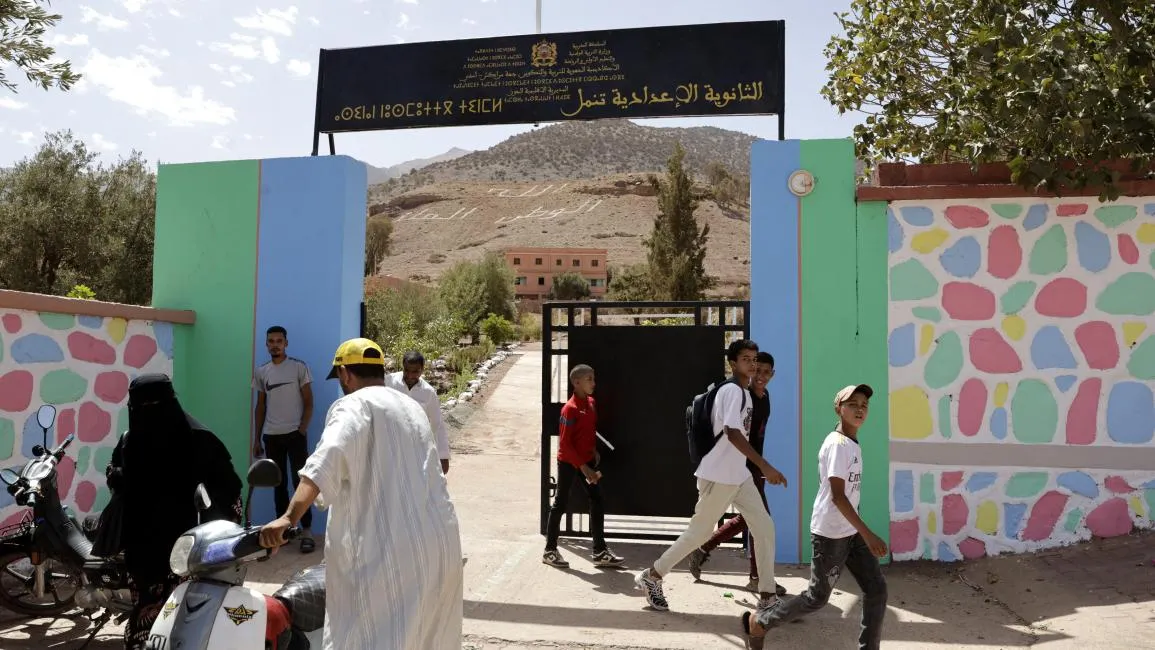
On October 2nd, a student at Al-Zarqatouni Secondary School in the Azzilal region physically attacked a teacher during class. The situation escalated after class when the student, aided by several peers, ambushed the teacher upon his exit from the school, subjecting him to further physical violence. The following day, the principal of Kiser Secondary School in the Settat region experienced both physical and verbal assault from a 15-year-old student while performing his educational duties, leading to the principal's hospitalization.
Witnesses reported that the student was in an abnormal state and had entered the school premises outside of regular school hours. When the principal requested that he leave and adhere to the school's internal regulations, a heated argument ensued that culminated in the assault. The student was later apprehended and placed under police supervision, where he was questioned regarding his intrusion into the school and the attack on the principal.
These incidents have sparked condemnation and outrage from educational and union activists, who warn that such uneducational behaviors are undermining what little respect remains for public education in the country. Educational unions link these attacks to various factors, including social vulnerability, family disintegration, poverty, unemployment, the influence of street culture, and social media, alongside what they perceive as repeated failures in educational reforms, incitement against teachers, and a devaluation of their roles.
A report titled “Violence in the School Environment,” prepared by the Higher Council for Education, Training, and Scientific Research in collaboration with UNICEF, states that violence against teachers represents one of the most alarming types of school violence. It undermines the relationship between students and teachers, affects the conditions of educational work both inside and outside the classroom, and erodes the authority of educational staff, thereby demotivating their efforts. The report highlights that verbal abuse, including insults and threats, is the most common form of violence, while physical assaults are the most serious, placing teachers in a precarious position as their role inherently involves maintaining control over themselves and their classrooms.
The Higher Council for Education, Training, and Scientific Research notes that some findings indicate a growing tension in the relationship between students and their teachers, particularly evident at the secondary education level, where 23% of students perceive these relationships to be poor.
In this context, Hicham El-Houari, president of the Moroccan Forum for the Right to Education, asserts that addressing violence in all its forms necessitates a balanced rights-based approach that rejects any harm to the safety of educational staff while simultaneously protecting the rights of students. This can be achieved by enhancing school mediation practices, developing psychological and social support mechanisms, and fostering a culture of dialogue within the school environment to ensure the dignity of educators and uphold children's right to learn in a healthy setting.
El-Houari also emphasizes that solely relying on security and punitive measures may yield short-term effectiveness but fails to eradicate the root causes of the problem. Violent behavior is often a reaction rather than a conscious and natural action, which can extend beyond teachers to others in the community, including healthcare and security personnel.
He insists that the Ministry of National Education must reevaluate its pedagogical approaches, moving beyond a focus on rote learning of letters and numbers, to integrate sociological and psychological methodologies that analyze the phenomenon and identify its causes. This must occur within the framework of public policies that require the involvement of other relevant governmental sectors. Additionally, he stresses the need to focus research and exploration towards the digital space, which has direct access to our children's minds without scrutiny of its impacts and content, while not overlooking other social and economic factors.
As reported by ar.shafaqna.com.