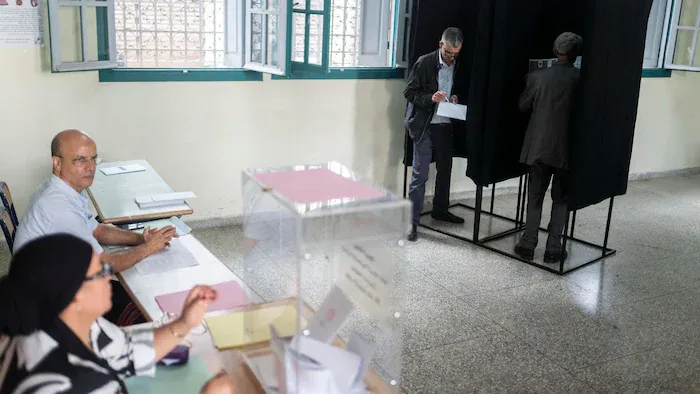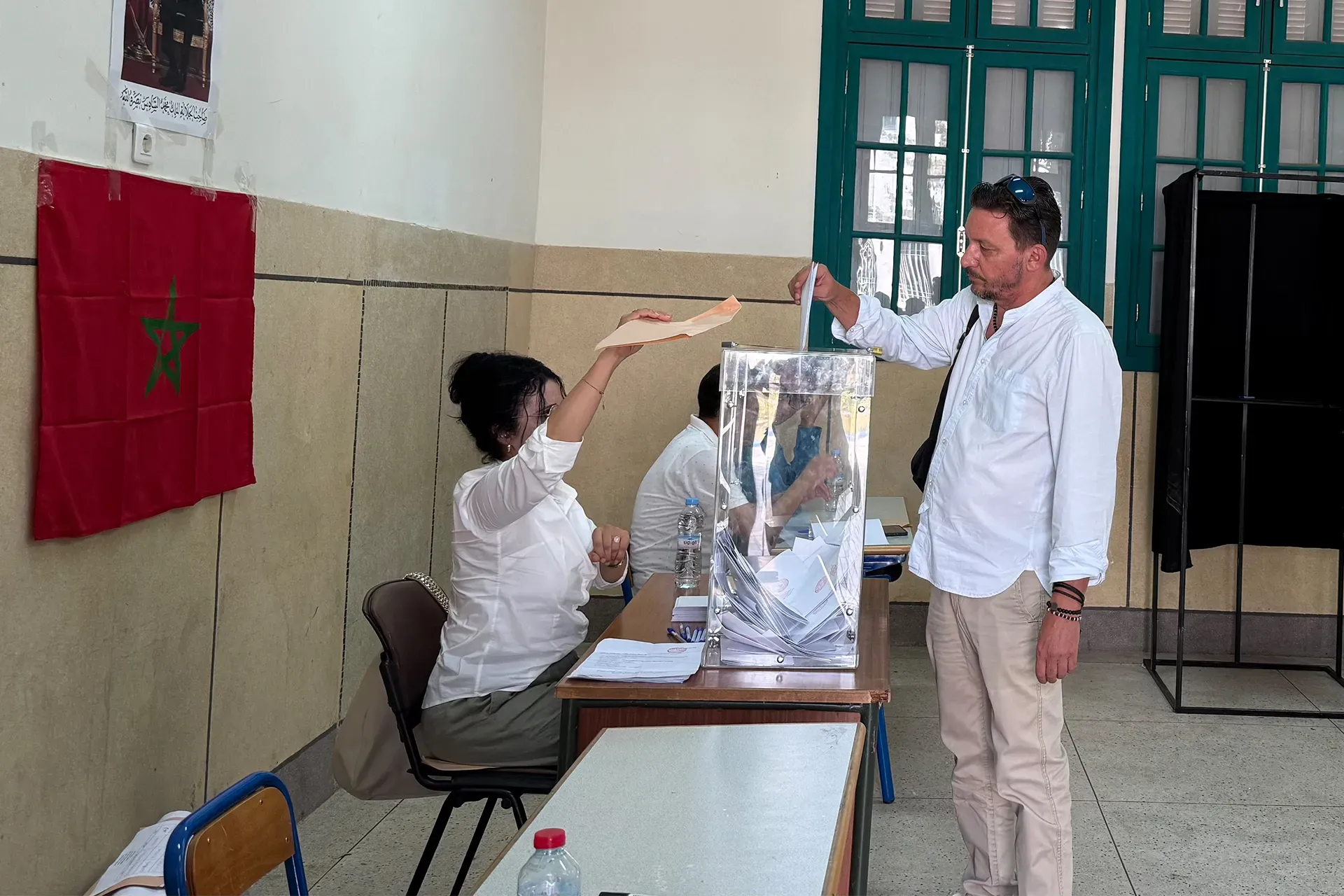

Rabat/Marrakech: At the Hassan II High School in the Hassan neighborhood of Rabat, voters of various ages began arriving early in the morning to cast their ballots. Al Jazeera witnessed the voting atmosphere from morning through midday across several cities, including Rabat, Skhirat, Temara, Marrakech, and the outskirts of Ourika.
The turnout in Rabat was moderate, particularly among the elderly and women, while Marrakech experienced a calm day with a smooth flow of the voting process at polling stations. The Ministry of Interior reported that voter participation reached 21% by 3 PM (GMT), with observers anticipating a rise in turnout after working hours when employees and laborers finish their jobs.
The Moroccan government urged public administrations and institutions to facilitate employees' right to vote and called on private sector leaders to allow their workers to exercise this right. Polling stations opened at 8 AM and will remain accessible until 7 PM, welcoming approximately 15.8 million voters, 46% of whom are women.
This election marks the twelfth of its kind since Morocco's independence, with 27 parties participating (including two that formed an alliance for this election) and two lists of independent candidates. A total of 7,288 candidates are vying for 395 seats in the House of Representatives, distributed across 1,850 lists.

Quiet and Orderly Voting Process
In the heart of Marrakech, the voting day started quietly. Polling stations were nearly empty in the early hours, with voters arriving gradually without forming queues or congestions. At the entrances, young volunteers welcomed attendees, checking their national IDs and directing them to their respective polling booths while noting their numbers on small papers they carried inside.

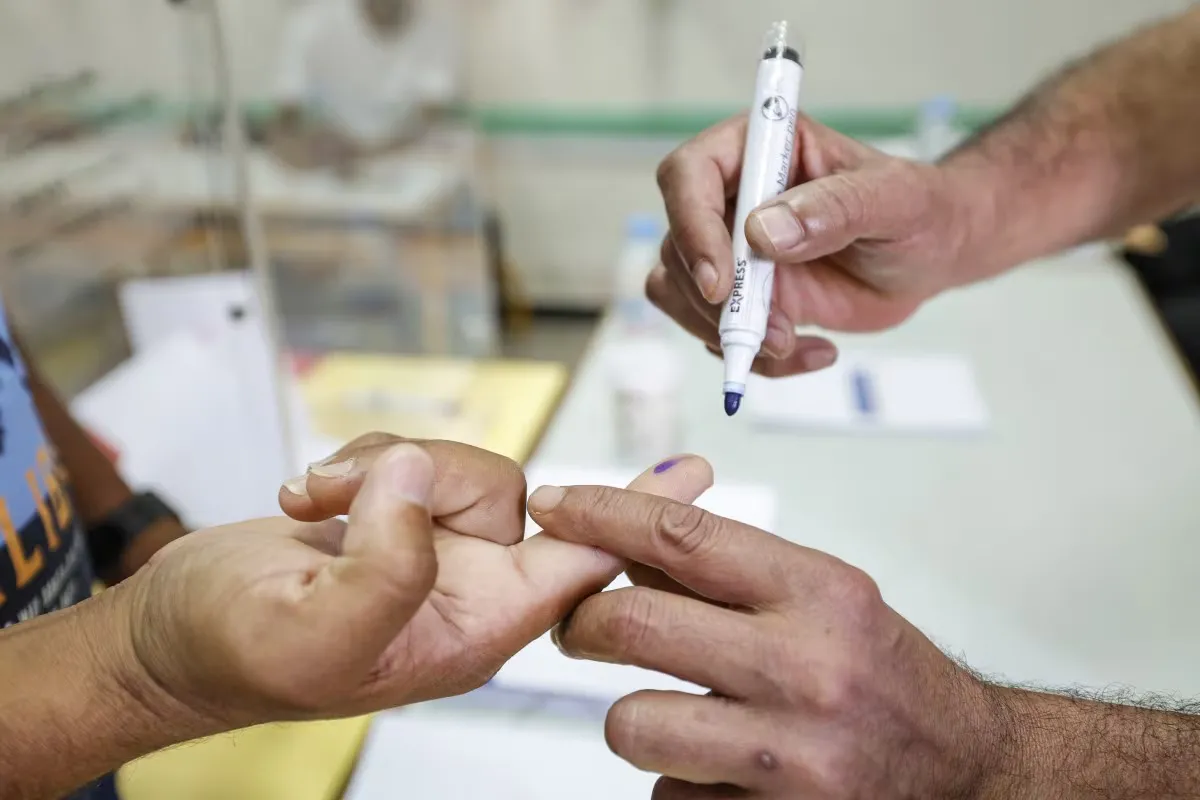
Inside the polling stations, the process was clear and efficient: national ID verification followed by inking the voter's finger after they cast their vote. One polling station official remarked, "Everything is going smoothly," while security personnel monitored the flow of people entering and exiting, assisting in maintaining order.
Outside the polling centers, the elections had a noticeable presence in the city's streets. Buses and private transport displayed banners urging citizens to participate, while cafes and shops continued business as usual. Omar, a young man working at a cafe, was busy during the afternoon and had not yet voted, but he indicated he would head to the polling station before it closed at 7 PM.
In one polling station, the number of party representatives did not exceed three individuals from the 18 competing lists. During the observation, no observers were encountered in any of the polling stations inspected, indicating limited party presence, while the voting process continued in a calm atmosphere.

From Marrakech to Ourika, the scene remained quiet in the early hours. One citizen entered a polling station, finding himself as the only voter, cast his ballot, and then proceeded to another polling station where he awaited his work as a party representative.
Voter schedules also reflected work commitments. One individual made a point to arrive early to vote before starting work, while another delayed their participation due to professional obligations. One expressed, "I came to vote before going to work," while another planned to return to the polling station before it closed. Thus, the voting process seemed to distribute itself throughout the day according to voters' circumstances.

High Hopes for Change
After exiting the polling station at Hassan II High School, Khalid Nasiri shared with Al Jazeera his hopefulness about the party he voted for, expressing confidence that it would honor the trust placed in it and advocate for citizens' rights amidst rising costs of living, diminished purchasing power, and unemployment.
This is not Khalid's first voting experience; he has participated in several previous legislative elections. However, he notes a sense of relief in witnessing new and youthful faces entering the election scene, dispelling the despair he felt in recent years.

Twenty-two-year-old Marwa Karim is voting for the first time. She expressed to Al Jazeera a profound sense of responsibility while at the polling station, feeling that her vote represents her choice and hopes for future change. She is among the 632,000 young people aged 18 to 24 registered to vote.
Having recently obtained a master’s degree in electrical engineering, Marwa chose to vote for a candidate whose ideas and programs resonate with her aspirations, particularly regarding youth, unemployment, and education. She hopes that the promises made will come to fruition post-election, stating, "I hope my expectations are met, and I see tangible changes and results in the next five years."

Not far from the polling station at Hassan II High School, the civil society network for election monitoring set up an operations room in a hotel in Rabat for the legislative elections. Dozens of young volunteers sat in front of computer screens, receiving data from observers stationed at various polling stations and fielding calls to resolve urgent technical issues.
According to the head of the network, Youssef Laaraj, this operations room maintains communication throughout the day with observers, whether they are stationed at polling locations in villages and cities or on the move to gather their notes. He added that this process allows the network to extract the key data and results that will be announced the day after the election.
Laaraj explained that over 1,400 accredited observers, along with additional monitors distributed across polling stations and outside, would track the opening of polling stations, the voting process, and the counting of votes and announcement of results.
The civil society network comprises approximately 80 associations and civil networks covering various areas, including economic and social rights, youth, women, and disability. The special committee for accrediting electoral observers recognized 26 NGOs and national institutions, along with 30 international bodies, mobilizing a total of 306 observers. The committee confirmed that delegations representing 20 NGOs, international and regional organizations, and national networks focused on democracy and human rights, as well as 10 accredited diplomatic missions in Morocco, would participate in observing the legislative elections.
As reported by aljazeera.net.