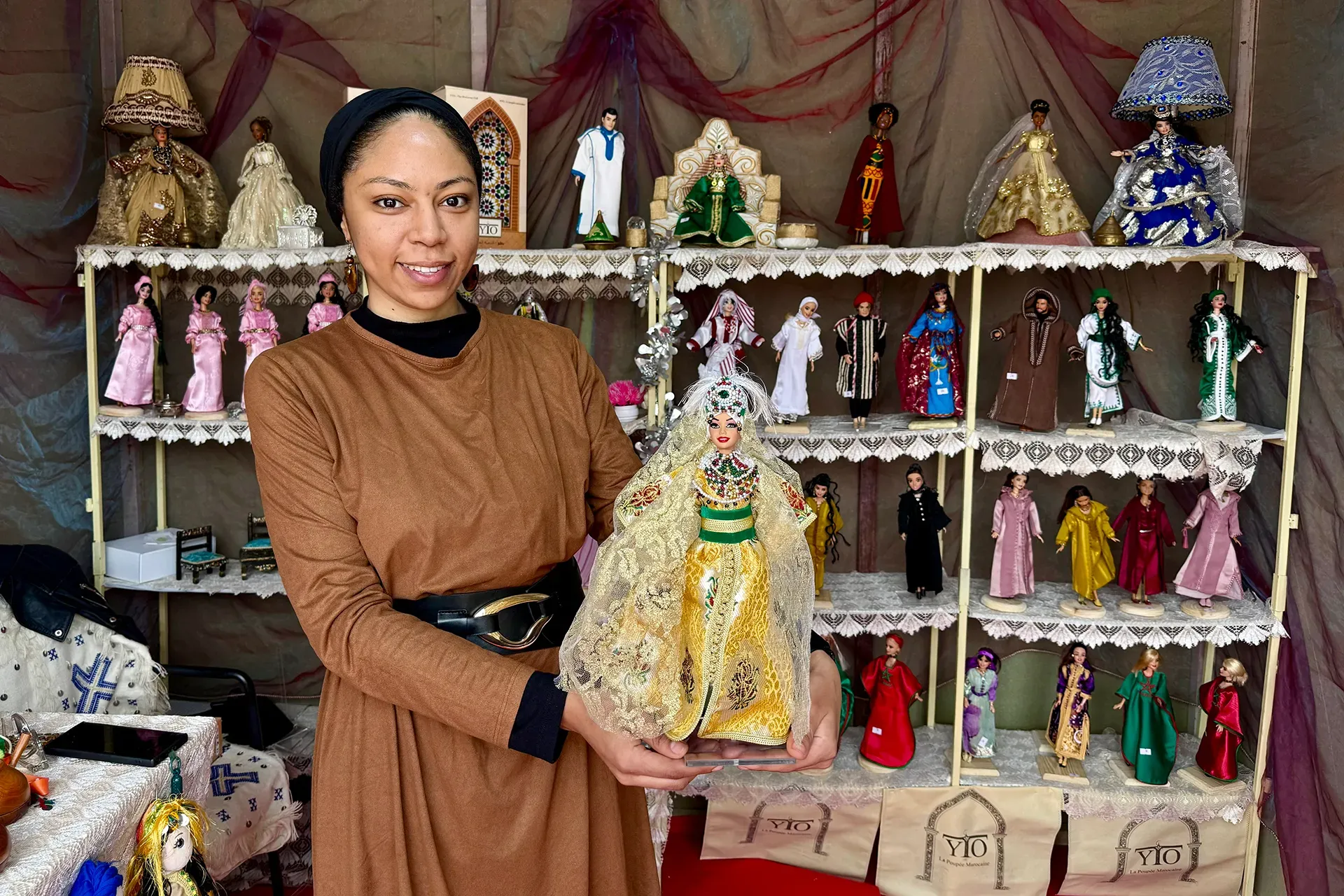
Inside a cardboard box adorned with a design inspired by Morocco's traditional antique doors, emerges a doll unlike any other found in toy stores, named "Yato," a name rooted in the Amazigh heritage that was on the brink of being forgotten. As soon as a child opens this box, they are transported through a wide door into a realm of childhood imagination, intertwining the joy of play with a profound sense of belonging to their identity and the culture of their country.
Reviving Identity through Craft
Designer Duaa Benhamou embarked on the journey of creating the "Yato" doll as part of an initiative that blends artisanal creativity with the preservation of cultural memory and recycling. Duaa's aim extends beyond merely providing an entertaining product for children; she seeks to enable them to discover Morocco through dolls that sport traditional clothing, jewelry, and shoes reflecting the cultural diversity of the country's regions. This project serves as a unique educational tool, allowing children to engage with their rich heritage through play.
Duaa's project was not born out of mere chance; rather, it is a culmination of her childhood spent among scraps of fabric in her mother's sewing and embroidery cooperative in Khemisset, east of the capital Rabat. Remembering those days, Duaa reflects, "I used to make dolls from reeds and design outfits from leftover fabrics to play with my friends." This passion accompanied her throughout her university studies in Rabat, where she studied economics at Mohammed V University. After honing her sewing skills under her mother’s guidance, she began designing miniature traditional outfits for dolls, selling them at her mother’s cooperative booth during handicraft exhibitions, which subsequently helped fund her education and personal expenses.
After graduating as a specialized technician in business organization, Duaa worked in several companies for eight years, distancing herself from the world of sewing and fashion. However, the COVID-19 pandemic and the ensuing lockdown provided her with a chance to revive her old passion. During the forced isolation, she decided to delve deeper into the diversity of traditional men's and women's clothing, transforming every second-hand doll into a "cultural ambassador." Duaa dedicated herself to researching references and books to uncover the secrets of traditional attire, discovering the allure of the "Tetouan shawl," the elegance of the "Fassi caftan," the rich history of the "Saharan melhfa," and the uniqueness of the "Amazigh takchita." She was captivated by the wealth of Moroccan traditional clothing, which varies according to the kingdom's diverse landscapes, with each region leaving its unique mark on its traditional attire.
From Hobby to Professional Venture
In her first exhibition after the pandemic, Duaa showcased around 75 dolls, all of which were sold. The encouragement and enthusiastic words from customers, urging her to continue her work, propelled her into the world of professionalism, leading her to establish her own project. She turned to the National Initiative for Human Development, a governmental program designed to support project holders, to acquire work equipment. Additionally, she secured a loan from the "Forsa" program, which assists young entrepreneurs with ideas and projects. This support enabled her to rent and equip a workshop, facilitating the transition of her project from a hobby to a professional endeavor.
What sets Duaa's project apart is its foundation in the concept of recycling. Each doll results from a process of reviving old and used items, collected from second-hand markets, cleaned, repaired, and adorned with Moroccan touches like henna and tattoos. Hair is sourced from hair salons to mimic the nature of Moroccan hair, while clothing is crafted from fabric remnants and golden thread leftovers. Jewelry is reimagined from broken pieces into chains, earrings, and rings that embellish the dolls. Duaa proudly states, "This product results from a complete recycling process; we don't just make toys, we create pieces of identity with sustainable touches."
By 2025, Duaa achieved first place in the "Lalla Meryem Prize for Innovation and Excellence," which supports women entrepreneurs with innovative projects. She views these accomplishments as validation that the "Yato" project deserves to continue and thrive. Furthermore, she aspires to extend the reach of her dolls into schools, conducting workshops to educate children about the diversity of traditional clothing in their country. Duaa laments that many children in some schools possess only superficial knowledge about traditional attire, unaware of the richness surrounding concepts like "Randa" and "Sefifa" as well as the various types of garments, belts, and shoes.
For Duaa, the "Yato" doll is not merely a toy but a carrier of culture, ideas, traditions, and memory, serving as an ambassador within every home that brings the new generation closer to their roots and teaches them to take pride in their identity. Today, she works with hope and determination to realize her ultimate dream: producing a doll that truly embodies Moroccan features that resemble her and the girls of her country. To this end, she plans to visit China this year to explore the details necessary for executing this goal.
As reported by aljazeera.net.