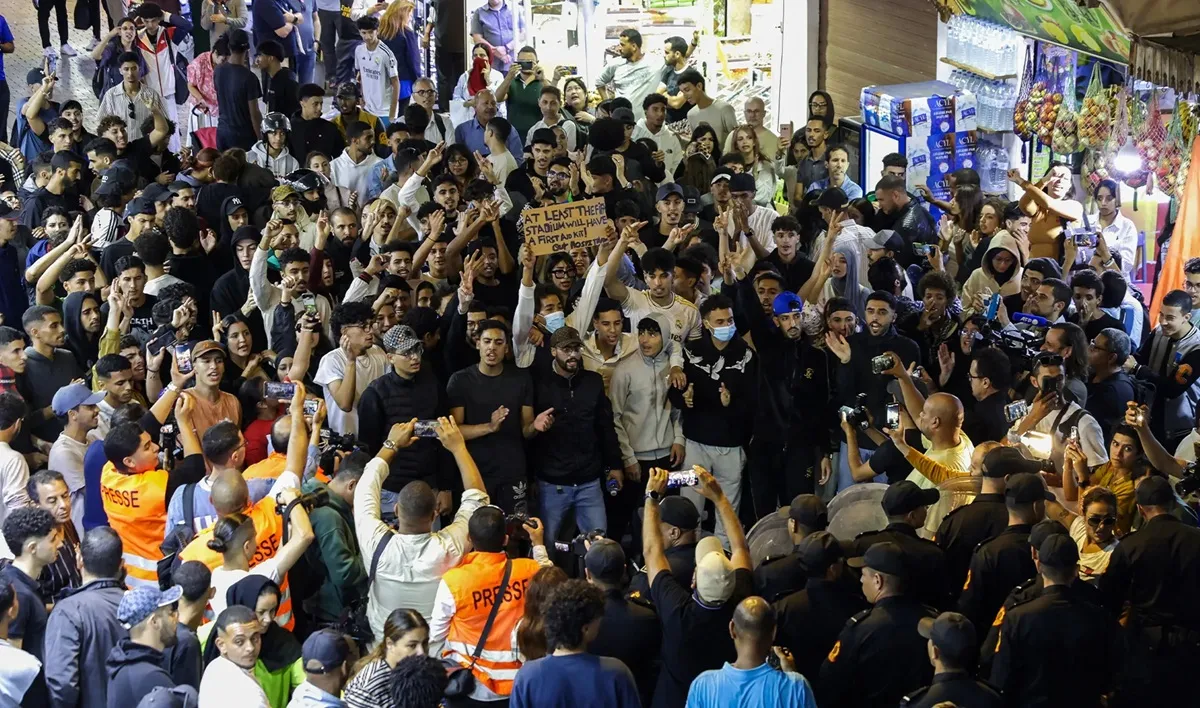

As Morocco approaches its legislative elections scheduled for September 23, a younger generation that took to the streets a year ago now finds itself grappling with a more pressing question than merely selecting a party or candidate: can their vote genuinely bring about change? Following a year of protests by the "Generation Z 212," which emerged as one of the most significant waves of youth discontent in Morocco, political participation among this demographic appears to be more pronounced. However, trust in political parties and institutions remains fragile. While some young individuals encourage each other to vote, others fear that the elections may simply reproduce the same political landscape that ignited their protests.
The protests of 2025 were fueled by widespread frustration with health care, education, and public services, eventually expanding to encompass government spending priorities, social justice, and corruption. These demonstrations highlighted the ability of this new generation to organize itself through digital platforms such as Discord, distancing themselves from traditional party frameworks.
Can My Vote Make a Difference?
According to Jihan, a political coordinator at a Moroccan youth center, the current elections feel different in part because a larger number of young people are beginning to discuss the importance of participation and voting. However, this newfound interest does not equate to a restoration of trust. Jihan notes that discussions among youth continue to revolve around a fundamental question: "Can my vote make a difference?" She describes this sentiment as a "cautious optimism," reflecting some young people's readiness to give the political process another chance, albeit with a palpable fear of disappointment.
This generation's stance can be summarized as follows: they are willing to extend their trust again, but will it be squandered once more?
Protests Altering Youth's Relationship with Politics
A year ago, the scene was markedly different. The "Generation Z 212" mobilized online before transitioning their protests to the streets, advocating for improvements in health care and education, as well as a more dignified lifestyle. The spark of anger ignited after protests concerning conditions at a public hospital in Agadir, expanding demands to include government spending and state priorities, with particular criticism directed at expenditures associated with Morocco hosting major sporting events.
According to Reuters, protests erupted across various Moroccan cities and were organized through platforms like TikTok, Instagram, and Discord, before facing significant police interventions and widespread arrests.
However, some participants in the movement do not perceive the elections as a natural continuation of their protests. Hassan, a journalist and activist who took part in the "Generation Z 212" protests and the Discord network, argues that a segment of youth has lost faith in political parties and the state to represent their aspirations. He believes that the recent wave of mass migration towards Ceuta symbolizes a broader discontent among Moroccans and is not merely a phenomenon linked to protesting youth. He asserts that the message conveyed by these individuals is clear: they no longer wish to be part of a system they feel does not address their needs.
These comments come at a time when the issue of migrant flows towards Ceuta remains contentious between Morocco and Spain, with Spanish authorities launching an investigation into the circumstances surrounding the mass arrivals, while Rabat has denied any involvement in facilitating them.
Youth skepticism extends beyond government performance; it also encompasses the nature of political competition itself. The National Rally of Independents, which leads the current government, holds a prominent position in the political landscape, while the Authenticity and Modernity Party is one of its main competitors. However, tensions between parties and mutual accusations regarding political recruitment and unfair competition do little to reassure young voters.
The debate intensified following the recent joining of Fouzi Lekjaa, President of the Royal Moroccan Football Federation and Minister of Budget, to the Authenticity and Modernity Party shortly before the elections. Lekjaa's move has led to speculation regarding his potential for a larger political role in the upcoming phase, with some analysts even suggesting the formation of a government linked to Morocco's preparations for hosting the 2030 World Cup.
Hassan describes this maneuver as a strong political card from within what he terms the "deep state apparatus," asserting that the Morocco 2030 institution, overseeing preparations for both the World Cup and the Africa Cup of Nations, could become a highly influential player in the future. This analysis remains speculative and does not imply that the formation of a government or the appointment of a new Prime Minister has been definitively resolved.
The government has attempted to address some of the youth's demands through an initiative aimed at encouraging their participation in political life by providing financial support for electoral campaigns and covering a significant portion of their costs. However, this initiative faces criticism due to its participation conditions.
According to the original stipulations, candidates under 35 must gather at least 200 notarized signatures from voters, with certain requirements for women’s signatures and geographical distribution. Additionally, young candidates do not receive public funding prior to the elections; instead, access to such funding is contingent upon achieving a specified percentage of votes.
Critics argue that these conditions undermine the initiative’s stated goal, particularly given the weak presence of youth within political parties and institutions. Jihan emphasizes that the success of any reform should not be measured merely by the existence of an initiative bearing the name of youth, but rather by its ability to genuinely provide them with opportunities to influence policy-making and political program development.
The Moroccan voter also faces a highly intricate party landscape, with dozens of parties, lists, and programs. Mohammed, a member of the youth branch of a socialist party in the Beni Mellal-Khenifra region, observes that most parties have attempted to incorporate "Generation Z" demands into their electoral rhetoric. However, a gap persists between slogans and actual policies.
He perceives that some leftist parties, particularly the Progress and Socialism Party and the Unified Socialist Party, have been closer to adopting the youth movement's demands during and after the protests. Conversely, Jihan argues that the Independence Party has demonstrated a greater understanding of several demands raised by young people in some of its positions. However, she cautions against reducing an entire generation to a single party, as "Generation Z" is not a homogeneous political bloc and does not hold a unified stance on all issues.
One of the most significant problems with the elections, according to the youth interviewed by "Asharq Al-Awsat," is the gap between the language of parties and the way the new generation consumes information. While parties rely on traditional political and institutional language, many young people obtain their information from social media platforms, where messages are shorter, more direct, and interactive.
Jihan believes that parties still struggle to explain their political identity, programs, and positions on fundamental issues in a manner that resonates with the youth, enabling them to comprehend and compare these aspects. Mohammed observes that the current electoral campaigns are dominated by general rhetoric and slogans, lacking clear mechanisms for engaging youth in political discourse.
The paradox lies in the fact that protests have not vanished from the political consciousness of the youth, even after they have left the streets. Some view the elections as an opportunity to test the potential for change from within institutions, while others believe that past experiences have demonstrated the limited ability of parties to respond to their demands. Thus, young people find themselves facing two contradictory choices: participating in a political process they do not fully trust or withdrawing and allowing traditional parties to shape the future.
Perhaps this is why the real question in Morocco is not solely about who will win the elections on September 23, but whether a generation that took to the streets demanding health, education, and dignity will decide this time to use the ballot box instead of the streets. If a significant portion of this generation chooses to vote, the elections could become a true test of the political institutions' ability to regain trust. Conversely, if apathy and disengagement prevail, the message may be more straightforward: the protests may have ended in the streets, but they certainly have not concluded in the minds of the youth.
As reported by watanserb.com.