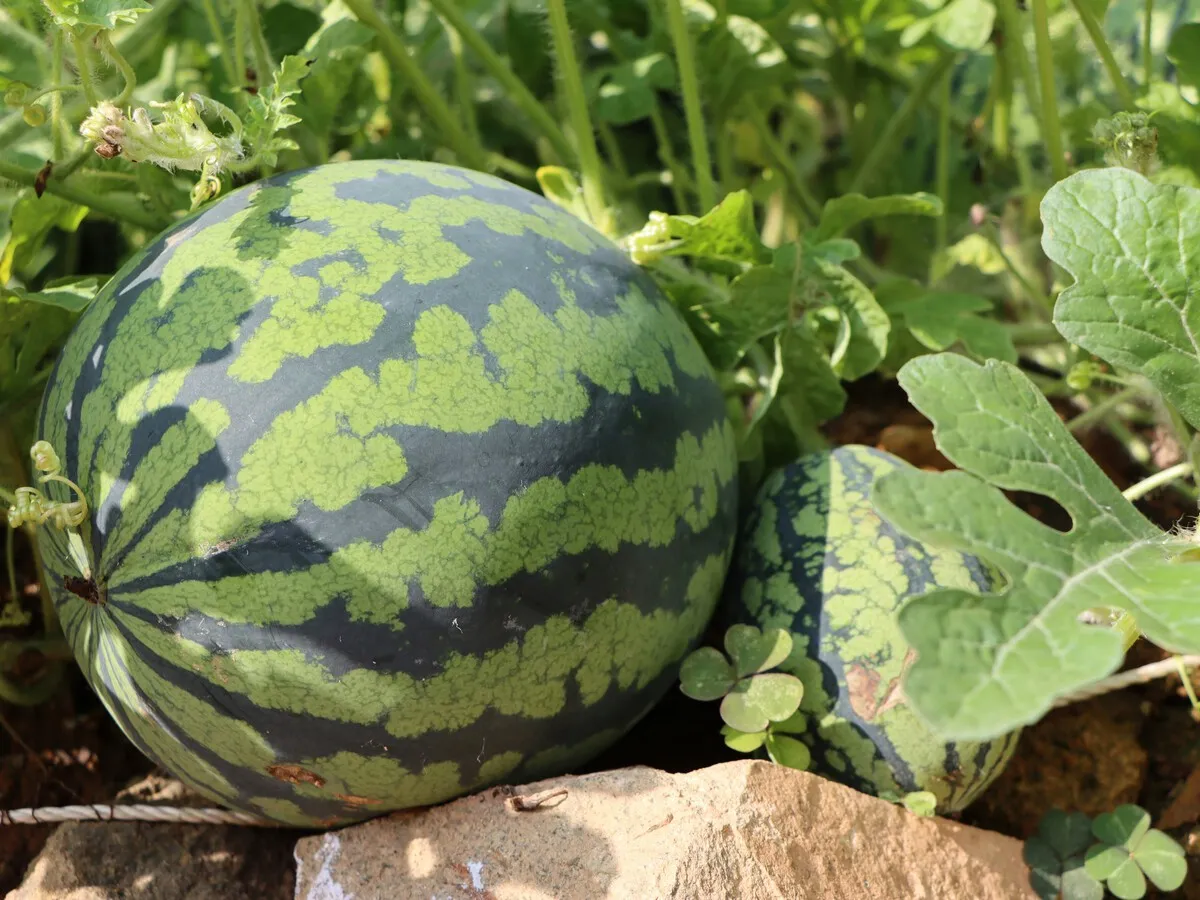

Andrés Góngora, the General Secretary of COAG, recently voiced a significant concern regarding the Spanish agricultural sector, particularly focusing on the increasing pressure from Moroccan watermelon imports. He stated, "It's a different species, larger and with more seeds. Despite this, imports have saturated the Spanish market, pushing prices down." This alarming situation has reignited discussions about the equality of importation regulations, often referred to as 'mirror clauses,' which aim to establish a level playing field for local producers.
Góngora's warning about market saturation was not an isolated sentiment. Adoración Blanque, the president of Asaja Almería, elaborated on this issue during a conversation with ABC, indicating that Moroccan produce is flooding Spanish sales channels at prices that fall below the local production costs. She characterized the current scenario as "unsustainable," stressing that the imbalance created by cheaper imports is detrimental to local farmers. Blanque pointed out, "The product enters at a price lower than what we have, leading to market flooding, which results in plummeting prices." Such a situation not only affects the income of farmers but also leads to fruit being left unharvested, as the returns do not justify the costs of collection and transport.
According to Blanque, Spanish farmers uphold stringent quality standards and comply with local legislation across farms, storage facilities, and supermarkets. However, she lamented that it makes little sense for locally produced fruit to be held to different standards than imports. Without consistent criteria, local farmers struggle to remain competitive. The data supports their concerns, indicating that Spanish watermelon growers are increasingly competing against producers from other regions worldwide.
The most recent bulletin from the Ministry of Agriculture, dated August 20, provides insights into this growing trend. Although 57.7% of watermelon imports into the EU come from intra-community movements between EU member states, the share of fruit imported from Africa, America, and Turkey is on the rise, with Morocco standing out as a dominant supplier. In the first half of the year, the EU imported 351,672 tons of watermelons from non-EU countries, a slight decrease from 2022 and 2023, yet a 6.8% increase compared to the same period in 2025.
Diving deeper into the statistics reveals that over 40% of all non-EU watermelon imports originated from Morocco, which exported 148,950 tons to the EU in just six months. This figure is noteworthy not only for its volume but also for the sustained growth it represents, reflecting a 14% increase compared to 2025 and a 9.3% rise over the past five years. However, this remains significantly lower than the figures recorded at the onset of the pandemic.
Morocco is not the only player in the watermelon export market. The Ministry of Agriculture's records indicate that the EU also imports substantial quantities from other countries, including Brazil, Senegal, Mauritania, Costa Rica, and Turkey. Notably, Brazil has ramped up its exports to the EU by 110% compared to the five-year average, while Turkey experienced a 38% increase in trade during the first half of the year.
The critical issue lies not merely in the volume of watermelon entering the EU or Spain from Africa or America, but rather in how this influx affects the pricing of locally cultivated fruit. The latest agricultural report reveals concerning trends for Spanish farmers: during the week of August 17 to 23, the price for watermelons at the farm gate was €24.1 per 100 kg, which is 16.4% lower than the five-year average. For melons (specifically the piel de sapo variety), the price was €22.58, reflecting a staggering 39.4% decrease.
Farmers are particularly apprehensive about the pressure that foreign fruit exerts on the domestic market, its effects on pricing, and the overlap in harvest seasons. Góngora pointed out that when Senegal is in peak season, Spanish produce begins to enter the market, leading to cheaper foreign products flooding in. Furthermore, he highlighted concerns over labeling issues that make it challenging to distinguish between locally grown produce and that arriving from Senegal.
As reported by xataka.com.