News
•
October 27, 2026
•
4 min read
Azerbaijan's Commitment to AI Development and Global Collaboration with Morocco
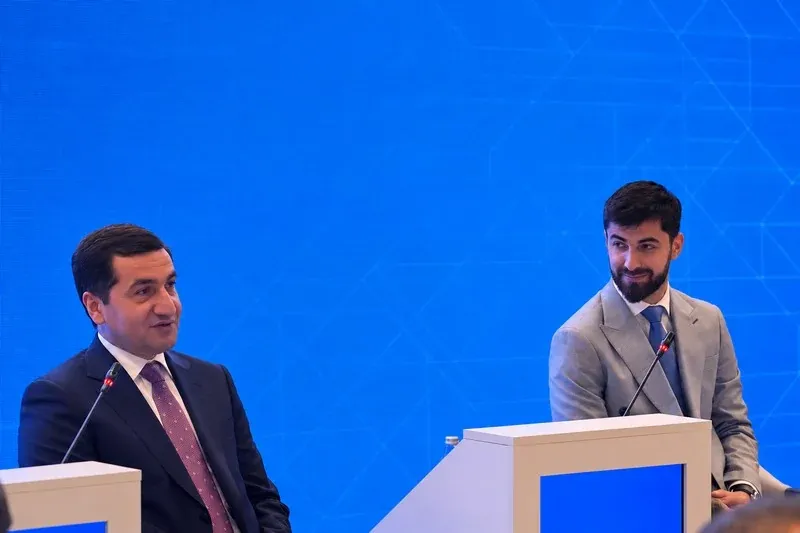
In a significant statement made during a press interaction in Baku, Azerbaijan, Hikmet Farhadov Hajiyev, the Assistant to the President of Azerbaijan, highlighted the rapid advancements in artificial intelligence (AI) technologies and social media platforms, which present increasingly complex challenges regarding responsibility and accountability. He noted that the growing difficulty in distinguishing between truth and deception arises from the intertwining of these technologies and their extensive reach. Hajiyev further elaborated on Azerbaijan's proactive stance towards AI, revealing that the country is currently working on establishing a national infrastructure in this domain. This initiative is complemented by collaborations with various countries and international partners, including Morocco, which shares numerous partnerships with the Eurasian nation.
During the exchange with the Moroccan news platform Hespress, Hajiyev was queried about the solutions that Azerbaijan proposes to the world in the realm of advanced technologies amid ongoing challenges and national movements, particularly after Morocco's recent establishment of a dedicated ministry for AI. He responded by asserting that Azerbaijan actively engages with both international and national discussions based on its capabilities, thereby contributing to this global discourse surrounding AI. The high-ranking official, who spoke with Hespress on the sidelines of the seventh Global Cultural Dialogue Forum set to commence with an opening by President Ilham Aliyev, emphasized Azerbaijan's favorable geographical and geopolitical positioning, along with its strategic advantage of abundant electrical resources, which are conducive to the development of AI technologies.
Hajiyev also addressed the issue of misinformation, asserting that it is not a new phenomenon tied to modern technologies; rather, it has historically been utilized within certain strategies. However, he highlighted a critical distinction today: the scope of misinformation has expanded, targeting entire societies and transcending national borders. He elaborated that deliberate misinformation and fake news have become integral components of broader hybrid strategies aimed at nations and communities. The advent of AI, social media, and deepfake technologies has facilitated the proliferation of this phenomenon, enhancing its capacity to influence diverse societal perceptions and shape outcomes.
In this context, Hajiyev noted that current developments might necessitate a reevaluation of some fundamental principles enshrined in the United Nations Charter, in addition to the established rules and principles of international law. He pointed out that the hybrid threats as they exist today were not foreseen when these regulations were initially formulated. Citing the principle of non-intervention in the internal affairs of states, he explained that the focus during the formulation of this principle was predominantly on physical interventions in the domestic affairs of various national entities. Today, however, it is essential to reconsider the basis of this principle and its practical application in light of ongoing transformations in the geopolitical landscape.
Hajiyev added that interference in the internal matters of countries can occur through multiple non-military means, utilizing a wide array of tools and methods. He emphasized that this dimension warrants further study and attention, particularly as hybrid threats continue to rise. He also pointed out that advancements in AI and deepfake technologies have become increasingly sophisticated and complex, posing significant challenges to nations. In this regard, he underscored the importance of not limiting the phenomenon of misinformation solely to social media platforms, clarifying that the occasional distinction made between these platforms and traditional media should not obscure the reality that deliberate misinformation can also spread through professional media outlets.
Moreover, he affirmed that this issue is not confined to social media, nor is irresponsible behavior limited to a specific category of actors. He indicated that these developments are part of a broader concept of hybrid warfare, which may extend beyond the military realm into large-scale campaigns targeting nations and communities, potentially undermining regional peace and stability. Discussing the connection between these challenges and the themes of peace and culture, Hajiyev cautioned that the region is witnessing attempts to undermine the peace agenda and disrupt its progress. He warned that such trends could contribute to consolidating negative perceptions regarding the peace process and rallying opposition to it.
As reported by hespress.com.
 News