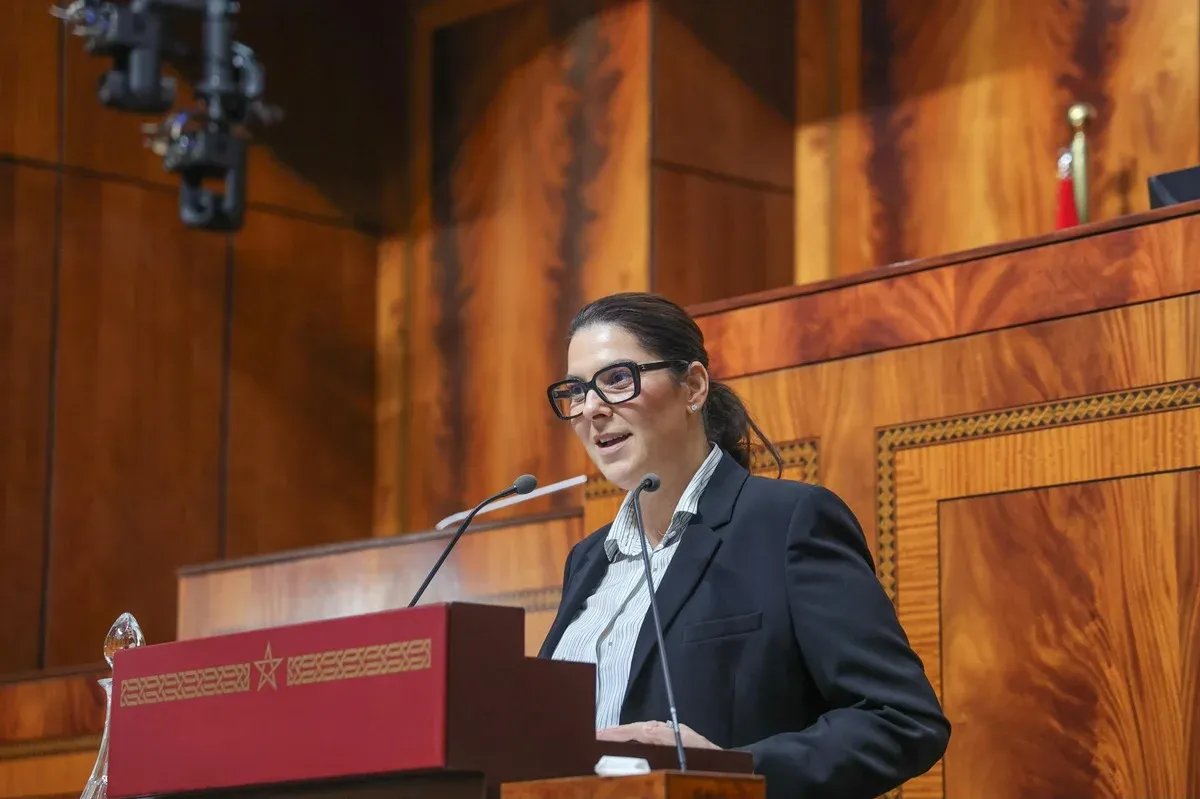
In a significant address to both the House of Representatives and the House of Councillors, the Chief of Government, Fatima-Zahra Mansouri, outlined the major directions of the governmental program set to be implemented from 2026 to 2031, in accordance with Article 88 of the Constitution. This ambitious program is anchored on seven complementary priorities aimed at enhancing Morocco's governance and social fabric. These priorities include strengthening the rule of law, combating corruption and vested interests, promoting integrity in public life, preserving national identity and social cohesion, ensuring dignified living conditions and asserting the social state, integrating youth, ensuring strategic sovereignty and international influence, as well as building a robust economy to support this national ambition.
Focusing on territorial governance and advanced regionalization, the government aims for significant progress in regional management by advancing the implementation of the organic law on regions. This involves redefining regional competencies based on efficiency, modernizing project implementation mechanisms, enhancing regional financial resources and autonomy, with a planned annual financial transfer of 12 billion dirhams starting in 2027.
To promote public integrity, Fatima-Zahra Mansouri emphasized the necessity of completing the national integrity framework via Article 36 of the Constitution, criminalizing illicit enrichment and conflicts of interest. This initiative will include mandatory strengthening of asset declaration and criminalization of disclosures for private purposes. A structural reform will be launched to regulate markets, combat monopolies, and reassess public procurement processes in collaboration with the Competition Council. Public procurement will become a lever for production, mandating that contractors allocate 30% of the value of contracts to Moroccan small and medium-sized enterprises (SMEs).
In response to the rising cost of living and to solidify the social state, a strategy has been formulated to bring food prices down to reasonable levels. This strategy incorporates plans for the supply of strategic products, reforming the distribution channels for meat and fish, and establishing direct connections between producers and consumers through the creation of regional companies and shared marketing platforms.
The social program also sets forth an automatic allocation covering up to 100 dirhams of the monthly electricity bill for eligible households, without requiring any administrative procedures. Additionally, it anticipates a gradual reform of income tax aimed at increasing salaries and encouraging formal employment. The government is committed to accelerating universal health coverage and doubling direct social assistance from 500 to 1,000 dirhams by the end of its term, while also expanding access to unemployment benefits.
Regarding retirement reforms, a comprehensive structural reform is on the table, discussed within the framework of social dialogue, aimed at ensuring financial viability and extending protection to those without pensions. This includes a progressive increase of the minimum pension to 3,000 dirhams across all schemes and ensuring that widows receive the full pension of their deceased spouses, while safeguarding the rights of orphans and beneficiaries.
In terms of education and training, the focus is on a profound transformation to go beyond the mere generalization of access, preparing competent and innovative generations. The plan aims for 80% of students to master fundamental learnings by 2031 through the expansion of 'pioneering schools', a binding national framework, and enhanced educational support. Aiming to reduce school dropout rates to zero by 2030 is also a key objective.
On the housing and land use front, the plan includes the creation of a national rental housing offer, a shift towards suitable habitats, reduction of housing costs, improvement of neighborhood quality, and reduction of territorial disparities. The elimination of inadequate housing is a priority, with a special program for rural housing targeting 100,000 housing units during the term, supported by direct aid of 40,000 dirhams for eligible households and free technical support. A new law on rural development will simplify construction procedures and regularize buildings that comply with safety standards.
Fatima-Zahra Mansouri concluded her speech by addressing the pressing issue of the 2.9 million youth who are neither employed nor in training, with youth unemployment exceeding 29%. Starting in 2027, a national social empowerment program will train 100,000 youth annually and provide an initial work experience to another 100,000. Training capacities are expected to reach between 150,000 and 200,000 beneficiaries per year, while also supporting 60,000 businesses to facilitate their access to financing and markets. Additionally, a professional mobility pass will be introduced to assist workers living far from their homes through affordable rental housing.
As reported by yabiladi.com.