In a compelling address at the Florida International University (FIU), Morocco's ambassador to the United States, Youssef Amrani, articulated a vision that extends beyond Morocco’s geographical identity as a bridge between continents. The Ambassador emphasized that Morocco aspires to be an active participant in global solutions, seizing opportunities and fully engaging in the significant transformations currently shaping our world. This discourse was part of a conference held at the prestigious Steven J. Green School of International & Public Affairs, where Dr. Shlomi Dinar, the Dean, facilitated the discussion, highlighting Morocco's strategic direction, its role on the international stage, and the future prospects of Moroccan-American partnerships.
A Morocco Committed to Identity and Future Growth
During the session, Ambassador Amrani was queried about what distinguishes Morocco amidst a rapidly changing global landscape. He pointed out that the Kingdom has successfully leveraged its unique position between Africa, Europe, the Arab World, and the Atlantic as a significant asset for dialogue, openness, and cooperation. Under the enlightened leadership of His Majesty King Mohammed VI, Morocco has undergone profound economic transformations, marked by the development of modern infrastructures and substantial investments in key sectors such as industry, energy, and education. This event also coincided with the inaugural edition of the "Morocco Days in Miami," which took place from October 22 to 24, organized by the Consulate General of the Kingdom of Morocco in Miami.
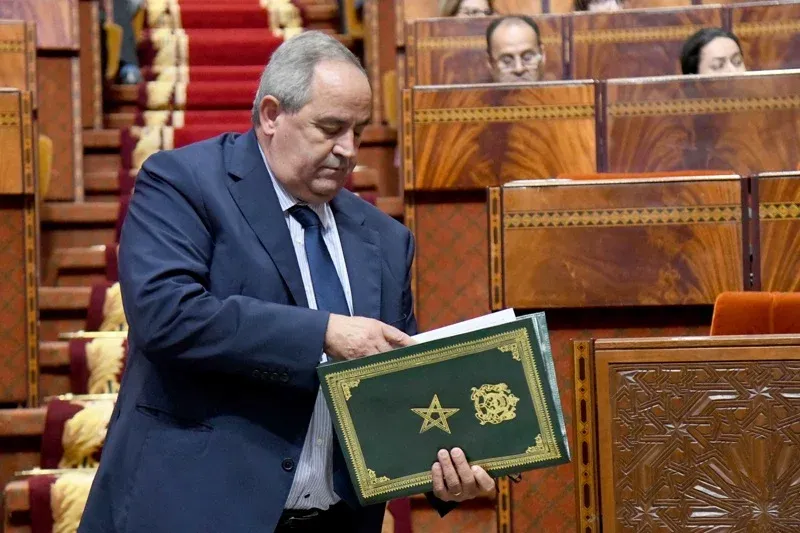
Ambassador Amrani expressed that Morocco does not have to choose between tradition and modernity; rather, it blends both seamlessly. He emphasized that the commitment to national identity is a formidable strength in preparing for the future. Additionally, he highlighted the increasing role of women in this evolution. Their growing presence in universities, businesses, research, and public institutions reflects significant societal changes within Morocco. He noted that the representation of women in Parliament has surged from just two in 1993 to 107 today, an indicator of substantial progress and a confirmation that female participation is vital for the country’s development. The ambassador underscored that one cannot comprehend modern Morocco without recognizing the influential role women play, citing the historic appointment of Fatima Ezzahra El Mansouri as a pivotal moment in Morocco’s institutional evolution.
A Global Economic Platform
Ambassador Amrani further elaborated on Morocco's clear economic ambition: to establish the Kingdom as a robust platform for production, investment, and value creation, capable of connecting markets and participating in major international production chains. In a world where businesses seek reliable partners, efficient infrastructures, and secure supply chains, Morocco possesses significant advantages that open new avenues for collaboration with the United States. The goal now is to move beyond mere trade exchanges towards developing joint projects in production, innovation, and access to new markets. He reminded the audience that Morocco is the only African nation to have signed a free trade agreement with Washington, an important milestone in fostering bilateral economic relations.
Addressing global challenges, Ambassador Amrani reiterated the principles guiding Moroccan diplomacy: clarity in positions, commitment to agreements, and the establishment of sustainable partnerships. He emphasized that, in the face of crises and geopolitical tensions, Morocco firmly believes that stability cannot endure without economic development, regional cooperation, and prospects for its populations. This philosophy is particularly evident in Morocco's engagement in Africa and the Royal Initiative aimed at facilitating Sahel countries’ access to the Atlantic Ocean, transforming geographic isolation into economic opportunity by enhancing interconnectivity and providing these nations with new access to international markets.
In his reflections, the ambassador noted that Miami serves as a crucial bridge between Morocco and the United States, with both nations sharing a common ambition to transform their strong political and strategic relations into a powerful engine for shared economic prosperity. He highlighted the potential role of South Florida in fostering closer ties, as Miami acts as a gateway to Latin America and the Caribbean, while Morocco offers privileged connections to Africa, Europe, and the Atlantic space. This complementary relationship presents concrete opportunities for economic cooperation, underscored by the direct flight connection between Casablanca and Miami, as well as the planned 2025 twinning between Miami-Dade and Casablanca-Settat, which could catalyze new ventures in trade, logistics, tourism, innovation, and economic exchanges.
In response to student inquiries about the future of diplomacy, Ambassador Amrani remarked that diplomacy has evolved beyond mere government-to-government relations; it is now built within businesses, universities, research labs, and sectors that shape the global economy. He emphasized the important role universities play in bridging Morocco and the United States, advocating for the development of academic exchanges and joint research initiatives, particularly in water management, energy, climate resilience, and women's entrepreneurship. He concluded with a profound reflection, stating that while governments may forge agreements, it is the women and men we educate today who will amplify their impact tomorrow. Nearly 250 years after recognizing American independence, Morocco seeks to continue and deepen this privileged relationship, with a clear ambition to transform a remarkable historical legacy into new opportunities for cooperation, growth, and progress for both peoples.
As reported by lematin.ma.