The Provisional Partnership Agreement Between the EU and Morocco
The **Partnership Agreement between the European Union (EU) and Morocco** has been in provisional effect since October 2025, following a modification introduced by the Commission to comply with the ruling of the European Court of Justice on October 4, 2024. This ruling deemed the inclusion of Western Sahara's crops in the trade preferences granted to Morocco illegal, leading the EU to navigate a complex legal framework in order to maintain the agreement that has been advantageous to the Moroccan Kingdom since its occupation began in 1975.
This legal maneuvering is based on a supposed implicit consent from the Sahrawi people for the exploitation of their land. It is important to note that the **European Justice** recognizes the current inhabitants of Western Sahara as the 'people of Western Sahara', rather than the individuals who have been displaced for over 50 years, many of whom—approximately 170,000—now reside in refugee camps in Tindouf, Algeria.
The nuance surrounding implicit consent is crucial, as the EU Council interprets this consent to be valid as long as the agreement "does not impose any obligation on that people and that they receive a specific, tangible, substantial, and verifiable benefit from the exploitation of the natural resources of the territory, proportional to the degree of such exploitation." Furthermore, documents accessed by El Debate clarify that the expiration of the EU-Morocco agreement, which has been applied provisionally for over a year, would negatively impact the Sahrawis. The preferential access granted for fruits, vegetables, fish, and seafood to the Sahara is vital for sustaining the local economy, which is the basis for granting this "implicit consent."
Challenges in Ratifying the EU-Morocco Agreement
The strategy employed by the EU Council has been instrumental in preserving the validity of this partnership, which is essential for the institution led by Antonio Costa. This maneuver was executed to bypass the **democratic oversight of the European Parliament**. Although the legislation mandates ratification by the Eurochamber, the provisional application—which is not definitive until accepted by Parliament—can remain in this state "for as long as the Council deems fit."
According to sources from the Directorate-General for Agriculture and Rural Development (DG Agri) and the Directorate-General for Trade and Economic Security of the European Commission (DG Trade), the modification implemented in the renewal of the EU-Morocco agreement can remain unratified for an indefinite period. The agreement is currently in force, and **there is no limit to ratification**, which could persist for years. This confirmation from DG Agri and DG Trade aligns with an initial inquiry in the European Parliament, where it was indicated that "in the legislative texts, there is no mention that the **provisional application** has a limit." However, to verify that the EU can maintain the provisional application of the agreement with Morocco indefinitely without parliamentary approval, a consultation with the Commission, which holds the competence for EU trade policy, was advised.
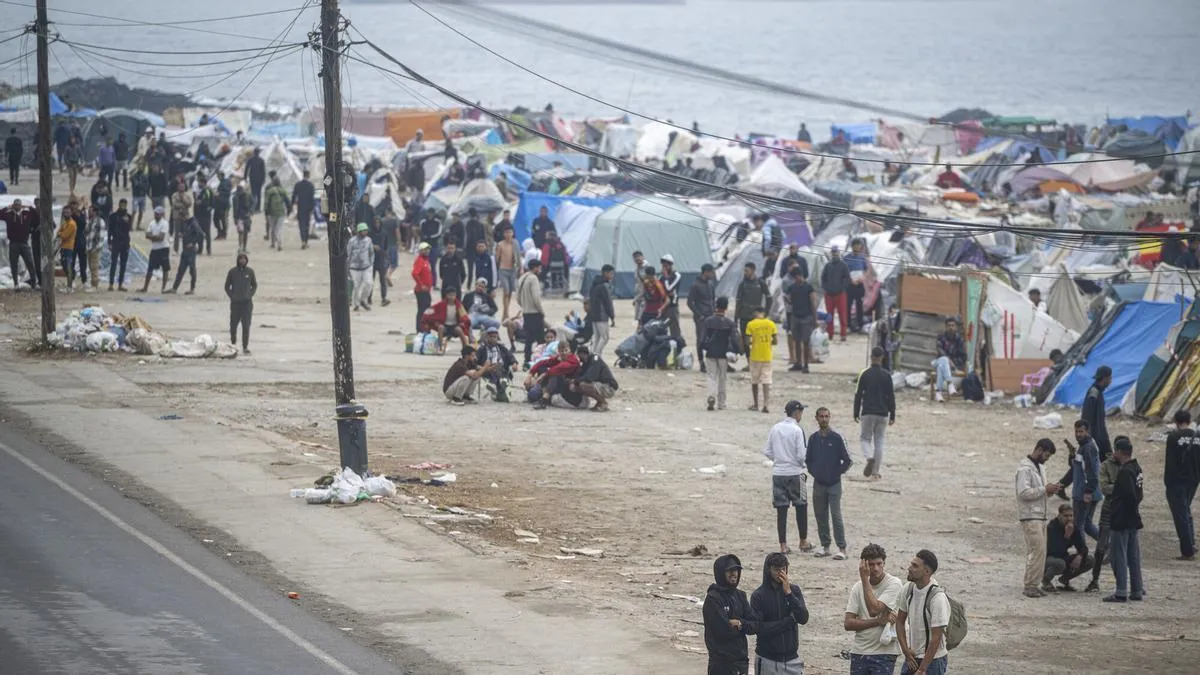
The ratification of the **EU-Morocco agreement** remains uncertain due to the Council's distrust in securing support from the Members of the European Parliament (MEPs). As reported by El Debate in June 2026, the Eurochamber is skeptical about the legality of the arguments employed by the European Commission to include Western Sahara’s crops in the trade preferences, thereby diminishing the Council's interest in expediting the process. Recent consequences stemming from the invasion of Ceuta further complicate matters, potentially jeopardizing Morocco's interests and leading to a suspension of the partnership.
In **Brussels**, it is emphasized that the events in the autonomous city—classified as an aggression against the European border—will have implications across the parliamentary spectrum, indicating that ratification may be closely contested, although the Council has the power to prolong the process as it sees fit.
A parallel vote held in Strasbourg on November 26, 2025, aimed to prevent European regulations from allowing the erasure of the Sahrawi origin in the labeling of agricultural products within the Morocco agreement. The motion by the Popular Party received support from Vox and backing from the Socialist Party (PSOE), although over 60 MEPs from the European People's Party (EPP) and 50 from Patriots of various nations, predominantly from Germany and France, facilitated this maneuver. Should there be any shift in the voting stance as has been warned, there would be room for a **suspension** of the agreement.
As reported by eldebate.com.