The Complex Landscape of Israel-Iran Relations Explored
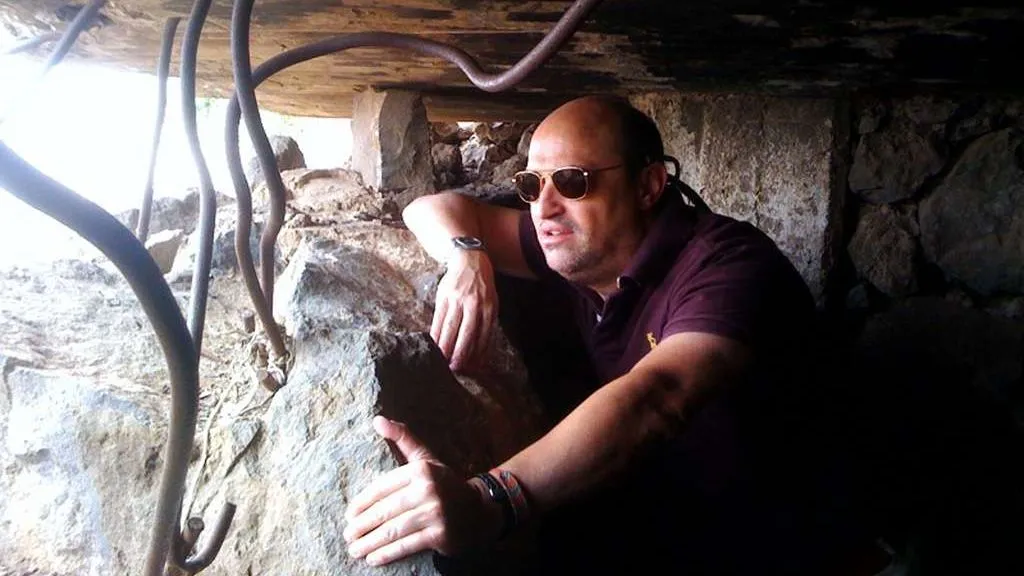
Few journalists possess as profound an understanding of the clandestine conflict between Israel and Iran as Eric Frattini, a seasoned correspondent with extensive experience in the Middle East. Frattini, who has reported from the tumultuous regions of Beirut and Jerusalem, has established himself as a war reporter and an expert in intelligence and terrorism. His latest work, titled The Sacred War of Mossad, delves into the espionage, cyber warfare, and diplomacy employed by Israeli intelligence to dismantle the 'heads of the hydra' of the Iranian military nuclear program.
Nuclear Ambitions and Political Dynamics in Iran
Frattini posits that the nuclear program in Iran is intrinsically linked to the very leadership of the Islamic Republic. Since the revolution of 1979, Iran's new leadership under Ruhollah Khomeini defined its security perspective through its rivalry with Washington, conflict with Israel, and a pervasive sense of external threats. Tehran recognized that mastering nuclear technology was synonymous with national sovereignty and resilience against external pressures. This notion was particularly emphasized during Hashemi Rafsanjani's presidency from 1989 to 1997, a period marked by attempts to negotiate amidst severe sanctions affecting the Iranian populace. As Iran transitioned to a reformist leadership with Mohammad Khatami, the regime came to view the sanctions as more detrimental than the threats posed by potential attacks from Israel or the United States.
However, internal economic strife and rising protests ushered in the hardline presidency of Mahmoud Ahmadinejad, who significantly accelerated the nuclear program. His successor, Hassan Rouhani, recognized the severe economic repercussions of continued sanctions and was instrumental in the 2015 Joint Comprehensive Plan of Action (JCPOA). Yet, the ultimate decision-making authority remained with the Supreme Leader, Ali Khamenei, who set forth the overarching military and political directives.
In the eyes of Israel, any military action against Iran's nuclear program is perceived as a direct strike against the regime's leadership, with Khamenei himself establishing critical guidelines for Iran's nuclear ambitions. Various Iranian power structures, particularly the hawkish elements within the Islamic Revolutionary Guard Corps (IRGC), also play a crucial role in decision-making, further complicating the geopolitical landscape.
Frattini's exploration reveals an intriguing paradox: prior to the Islamic revolution, Israel actively supported Iran's nuclear ambitions. Technological advancements in Iran's nuclear program can be traced back to U.S. initiatives under President Dwight Eisenhower in 1957, highlighting an era of close collaboration between the two nations. The Mossad, Israel's national intelligence agency, even trained the notorious Savak, the Shah's secret police, illustrating the once-strong ties between Israel and Iran.
Despite the complex interplay of cooperation and conflict, the current dynamics showcase that Iran has found ways to continue developing its military nuclear project, even in the face of international agreements like the JCPOA. Frattini argues that key figures in the U.S. intelligence community were aware of Iran's ongoing nuclear developments, while Israel's Mossad has undertaken significant operations to delay the program, including targeted assassinations of key scientists.
As the situation evolves, the relationship between the Mossad and Spanish intelligence remains historically close, facilitating cooperation on various security matters. However, tensions and complexities arise as political discourse in Spain occasionally shifts towards anti-Israel sentiments, complicating diplomatic relations. Meanwhile, Morocco has been strengthening its military ties with Israel, negotiating the acquisition of advanced military technology, thus positioning itself strategically in the regional power dynamics.
As reported by elespanol.com.