Understanding the Implications of Morocco's Recent Legislative Elections
The recent legislative elections in Morocco, held on September 23, 2026, have highlighted the pressing need for a reassessment of the timing of such crucial democratic events. The suggestion is to move the elections from the political season to a period that could coincide with the end of spring or the beginning of summer. This change would help to alleviate the overlap that currently exists between the urgency of forming a new government and the necessary discussions surrounding the upcoming budget for the following year.
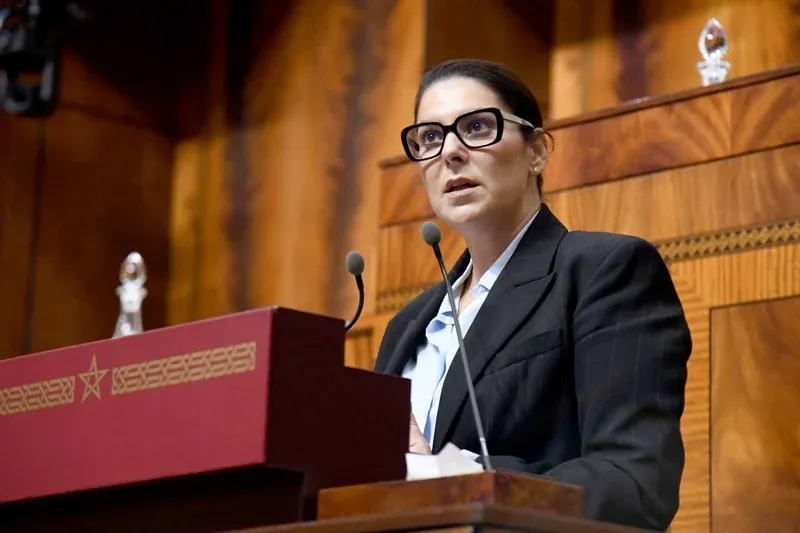
In her address to the parliament, Prime Minister Fatima Zahra Mansouri committed herself to ensuring that her government’s accountability would be measured by tangible results reflected in the daily lives of citizens. She outlined seven key priorities for her administration, including the rule of law, the fight against corruption, social spending, youth integration, strategic sovereignty, and building an economy capable of meeting social aspirations. This ambitious agenda is crucial for a government that emerged from elections characterized by a shift in power dynamics, albeit within an established bloc of allied parties.
However, it is essential to recognize that merely articulating these management choices in speeches does not automatically translate them into public policy. The real test of these commitments will be evident through measurable outcomes in terms of fiscal allocations, resource management, tax policies, and spending priorities. It is well understood that the preparation of the national budget begins months in advance, involving a series of framework memoranda, programming, and negotiations between various sectors and the Ministry of Finance. Consequently, the 2027 budget is inherently a product of processes initiated under the previous government, prior to the elections of September 23 and before the final composition of Mansouri's cabinet was known.
The Challenge of Aligning Ambitious Promises with Fiscal Reality
This reality is not inherently problematic, as the state must continue operating regardless of electoral outcomes, and administrative continuity necessitates ongoing budget preparations. However, the political implications become pronounced when a new government presents itself as a vehicle for new choices, yet finds that its primary tool for implementing these choices was already in existence before its formation.
With a new majority emerging from the elections and a newly crafted governmental program, Prime Minister Mansouri has expressed that the next five years are an opportunity to rectify imbalances and concentrate state resources on areas that directly impact citizens such as employment, education, healthcare, and living conditions. Therefore, it is imperative that any significant shifts be evident in the first budget to bear her government’s signature. Failing to achieve this would suggest that while political change has occurred, the underlying financial structure remains unchanged.
When the government discusses purchasing power, for instance, it is crucial to identify how this is reflected in taxation, subsidies, and income. Similarly, when employment is addressed, attention must be paid to the resources allocated, investments made, and measures implemented to create actual job opportunities. Furthermore, if combating corruption and conflicts of interest are stated priorities, this must be reflected in procurement regulations, tax collection, oversight, and governance practices. Finally, when improvements to public education and healthcare are promised, it is essential to evaluate whether the human resources, investments, and budget allocations in these sectors align with the stated ambitions.
The core issue in Morocco is not a lack of governmental programs; previous administrations have also presented coherent plans on paper, addressing employment, education, healthcare, investment, social justice, and reducing inequality. The differentiating factor between governments lies not in the number of new initiatives but rather in the extent to which they can transform rhetoric into actionable financial laws and decisions that carry political and financial implications.
Prime Minister Mansouri's situation is further complicated as she does not commence her term with a budget that she prepared. Instead, she must navigate a budget that was chiefly developed prior to her administration’s assumption of power. Additionally, she is tasked with convincing the Moroccan public that her government represents a departure from previous policies merely characterized by changing ministerial names and coalition dynamics. The Prime Minister herself has mentioned the need to shift from mere investment size to its effectiveness, from a multitude of programs to their integration and impact, implicitly critiquing the prior phase where the state invested heavily, yet the results did not significantly touch the daily lives of its citizens.
Interestingly, the government has emphasized the importance of effectively managing political and legislative time. However, it seems that the first element that has eluded them is time itself. Following delays in its formation, the new government found itself pressed to assume its responsibilities quickly, convene the council of ministers, present its program, approve the finance law, and seek parliamentary confidence within a compressed timeframe.
As of Thursday, October 22, 2026, the House of Representatives will discuss the government program and vote on it according to Article 88 of the constitution, which governs the parliamentary installation of the government. Naturally, the discussions will focus on the promises made, their feasibility, and any omissions or inclusions in the program. However, the most constructive debate, in my view, would be for the deputies to juxtapose the government program with the finance law and pose a straightforward question: Where do your lofty promises manifest in the numbers, allocations, and accounts?
If a clear alignment exists between the promises and the budget, we would witness a government that has managed to imprint its initial mark on public policy despite the time constraints. Conversely, if the budget appears to follow the same trajectory it would have under the previous administration, regardless of the elections and government change, we would find ourselves facing a new program, a new government, and a new majority, yet an old fiscal year.
In politics, it is insufficient for merely the individuals in power to change for us to claim that circumstances have transformed. The reality of change is reflected in state expenditure, tax contributors, the magnitude of those taxes, beneficiaries of subsidies, and the priorities of spending. Thus, I do not believe there are many who are eagerly anticipating whether the House of Representatives will grant its confidence to Mansouri’s government. This was effectively decided when the majority coalition was formed, when the King appointed the government after confirming its majority status, and when the coalition successfully presented its candidate for the presidency of the House of Representatives. The real question facing us today is whether the government will structure the 2027 budget to support its agenda, or will it be forced to conform its program to a budget that was prepared and ready by Nadia Fettah Alawi.
As reported by thevoice.ma.