
Military Interventions and Security Oversights: A Historical Perspective
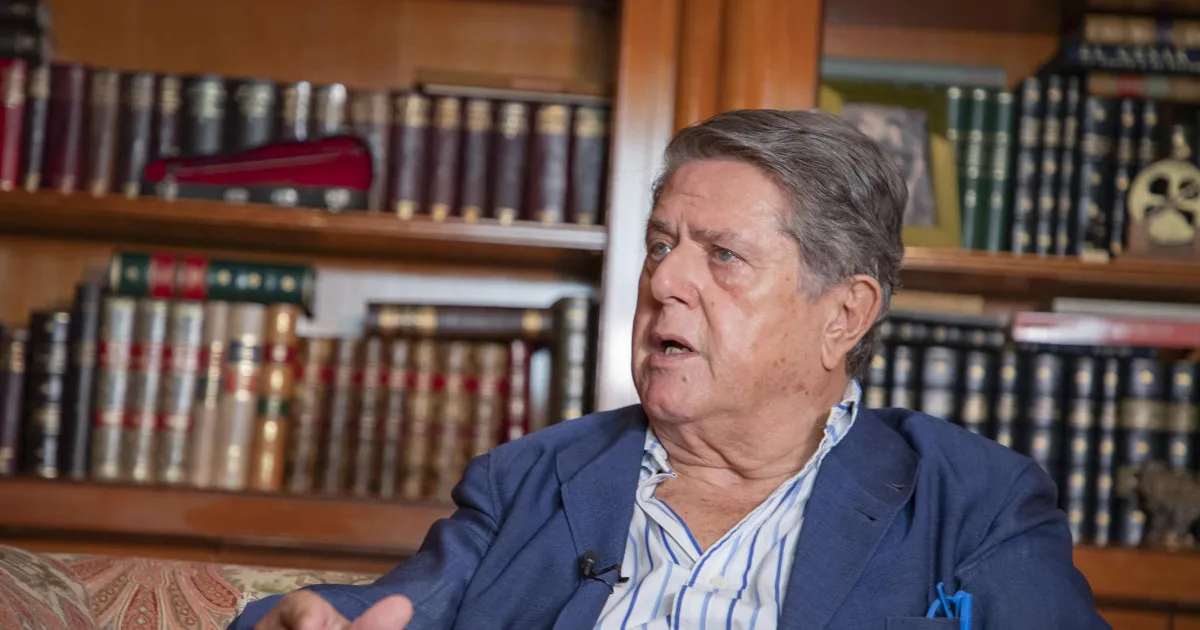
In July 2002, under challenging circumstances marked by strong winds and the early dawn, the Special Operations Command initiated a military intervention on Perejil Island, located just eight kilometers off the coast of Ceuta. This action was prompted by the landing of Moroccan military personnel who proceeded to raise two Moroccan flags on the island. Federico Trillo-Figueroa, who served as the Minister of Defense during José María Aznar's government, orchestrated Operation Romero Sierra aimed at reclaiming the islet. Fast forward 24 years, Trillo-Figueroa reflects for El Debate on the recent invasion faced by Ceuta and the lesser-affected Melilla, attributing significant culpability to Moroccan planning and complicity.
When posed with a hypothetical question regarding how he would have managed the situation had he been the Minister of Defense during the recent influx of 70,000 individuals into Ceuta, Trillo-Figueroa expressed his belief that intelligence services, including the National Intelligence Center (CNI) and military intelligence, should have provided prior warnings about such mass mobilizations. He noted that the populations neighboring Ceuta do not reach those figures even when accounting for their entire demographics. Once the invasion commenced, he argued that immediate and decisive action should have been taken, including the declaration of a state of emergency to manage the situation effectively and expel infiltrators. He criticized the government for failing in both preventive measures and execution, raising concerns about a lack of accountability and analysis of the incident.
Government Accountability and International Relations
Trillo-Figueroa pointed out that the CNI had issued several alerts to the Ministry of the Interior regarding the risks of a mass entry across the Ceuta border. He expressed disbelief at the government's claims of having no prior knowledge about the impending influx, stating that such a substantial movement of people could not go unnoticed by a well-prepared intelligence service. He accused the government of deception, arguing that the failure to hold Morocco accountable for its role in the crisis reflects a broader issue of governmental negligence.
The minister's criticisms extended to the Spanish government's stance on Morocco, particularly Prime Minister Sánchez's characterization of Morocco as a reliable ally while simultaneously acknowledging the invasion. He emphasized the need for the citizens of Ceuta to demand accountability from the state for the inadequate functioning of security and border services. The perceived contradiction in Sánchez's statements was highlighted, especially when he condemned the violation of Spain's territorial integrity while attributing some responsibility to a Supreme Court ruling.
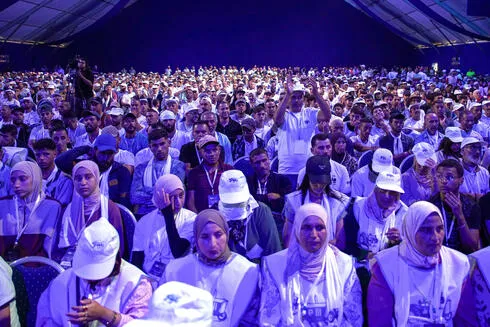
Trillo-Figueroa articulated that the recent events should be viewed as a well-organized military or paramilitary operation, rather than a spontaneous migration crisis. He noted the historical context of previous Moroccan strategies that involved leveraging migratory pressures to challenge Spain, drawing parallels to the Marcha Verde. The recent influx, according to him, is indicative of Morocco testing Spain's resolve and could be a prelude to future negotiations regarding the status of Ceuta and Melilla.
He concluded with a stark warning about the implications of Spain's shifting policies towards the Sahara and the broader geopolitical landscape. Trillo-Figueroa believes that the current government's approach might lead to dire consequences for Spain's territorial integrity and security, with the potential for increased tensions and threats to arise as a result of perceived weaknesses in Spain's international standing.
As reported by eldebate.com.