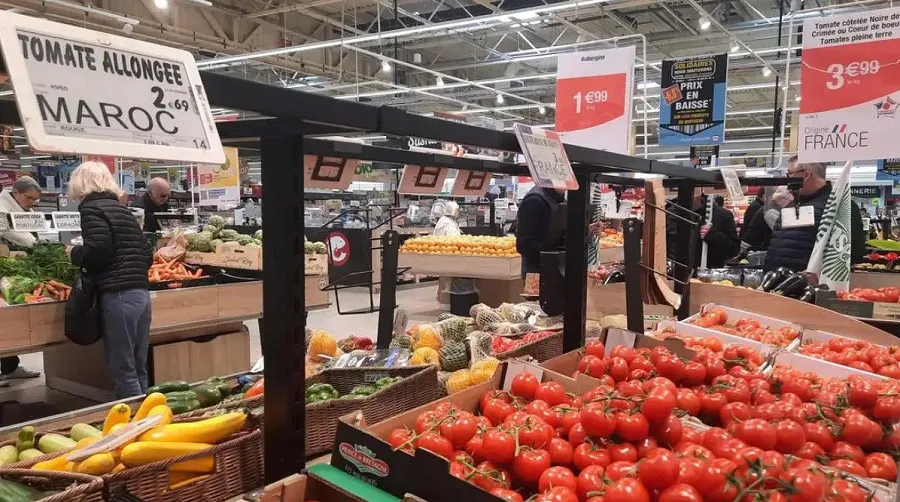

Growing Movement Against Moroccan Products in France
In recent developments, Moroccan agricultural products have emerged as a focal point of protest against the Moroccan regime, particularly in France. Social media campaigns and activist circles are increasingly advocating for a boycott of Moroccan fruits and vegetables. This movement is primarily a response to Morocco's normalization of relations with Israel, its extensive security cooperation with Tel Aviv, and its announced participation in an international force that is perceived to support the Israeli occupation of Gaza. The boycott proponents assert that the political choices made by the Moroccan government cannot be separated from the products it exports. Following the normalization agreement between Morocco and Israel in 2020, the two nations have strengthened their ties, especially in military and security sectors, positioning Morocco as one of Israel's most compliant allies in the Arab world.
The outrage surrounding this issue intensified with Morocco's recent commitment to send troops, including military and police personnel, to support the international force for Gaza, an action critics argue cannot be framed as merely humanitarian given the context of ongoing cooperation with Israel. The backlash is not limited to the situation in Gaza. For years, Moroccan agricultural products have faced scrutiny and rejection in various international markets. A study examining Moroccan fruit and vegetable exports from 2010 to 2022 records a staggering 349 rejections, with pesticide residue violations being a significant concern. In 2025, the European health alert system flagged Moroccan products for containing substances that did not meet European safety standards.
The Political Implications of Consumer Choices
This situation raises a critical question regarding European consumers: why should they overlook the practices of a regime whose diplomatic and security decisions they oppose? The boycott addresses this inquiry by transforming consumer purchasing decisions into political statements. It targets one of Morocco's most strategic sectors—its export agriculture—which has been declining in competitiveness compared to higher-quality Algerian products in recent years. In this context, tomatoes and citrus fruits are no longer mere commodities; they have become symbols of dissent directed at the Moroccan monarchy's policies, which include rejecting normalization with Israel, opposing military cooperation, and refusing to financially support a foreign policy that collaborates with what many see as genocidal actions in Gaza.
As reported by algeriepatriotique.com.