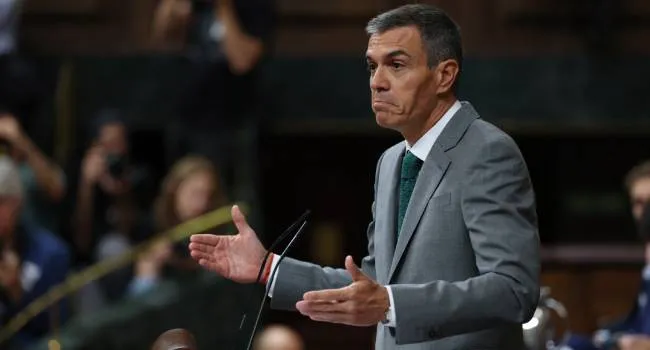


On September 3, 2026, Spanish Prime Minister Pedro Sanchez addressed the congress of deputies regarding the government's response to the recent influx of migrants into Ceuta, a North African enclave controlled by Spain. During his address, Sanchez emphasized the absence of definitive evidence implicating Morocco in the orchestrated surge of migrants that occurred in late July, a situation that has raised significant concerns and criticisms both domestically and internationally.
Highlighting a police report that pointed out several shortcomings in the Moroccan security response, Sanchez rejected claims that Morocco had planned the migrant rush, which saw over 70,000 individuals crossing into Ceuta within just two days. Tragically, this unprecedented event resulted in numerous fatalities, primarily due to drowning as migrants attempted to navigate dangerous waters. While the leftist government has made efforts to maintain a diplomatic relationship with Morocco, historically fraught with tension over territorial claims, Sanchez's remarks marked a rare instance of public criticism directed at Rabat.
In a bold move that could further strain relations, Sanchez disclosed that the Spanish government has invited King Felipe VI to visit Ceuta and Melilla, another Spanish territory in North Africa. This suggestion comes amid rising tension following comments made by Moroccan officials, which Sanchez deemed “unacceptable.” Notably, Justice Minister Abdellatif Ouahbi's remarks in August suggested Morocco's historical and geographical claims over the enclaves, asserting that a “final solution” was necessary for the territories to rejoin Morocco.
Despite the government's insistence that no solid proof exists regarding Morocco's involvement, the political climate in Spain remains charged. Many locals in Ceuta continue to feel abandoned as thousands of migrants still roam the streets, exacerbating tensions within the community. In recent days, widespread protests have erupted across Spain, with opposition parties criticizing Sanchez's approach to the crisis and questioning his handling of relations with Morocco.
As the situation evolves, analysts speculate that Morocco may have utilized the migrant influx as a means of political leverage against Spain, particularly following Sanchez's diplomatic overtures to Algeria, Morocco's historical rival, earlier in the summer. The backdrop of the Western Sahara dispute adds another layer of complexity to an already delicate diplomatic relationship, especially after Spain's controversial shift in stance toward Morocco's autonomy proposal for the region.
In closing his remarks, Sanchez reiterated Spain's commitment to Ceuta and Melilla, declaring that they would remain part of Spain “until the end of time.” He emphasized the need for increased support for Ceuta during these challenging times, making a strong case for the royal visit as a gesture of solidarity and reassurance.
As reported by channelstv.com.