
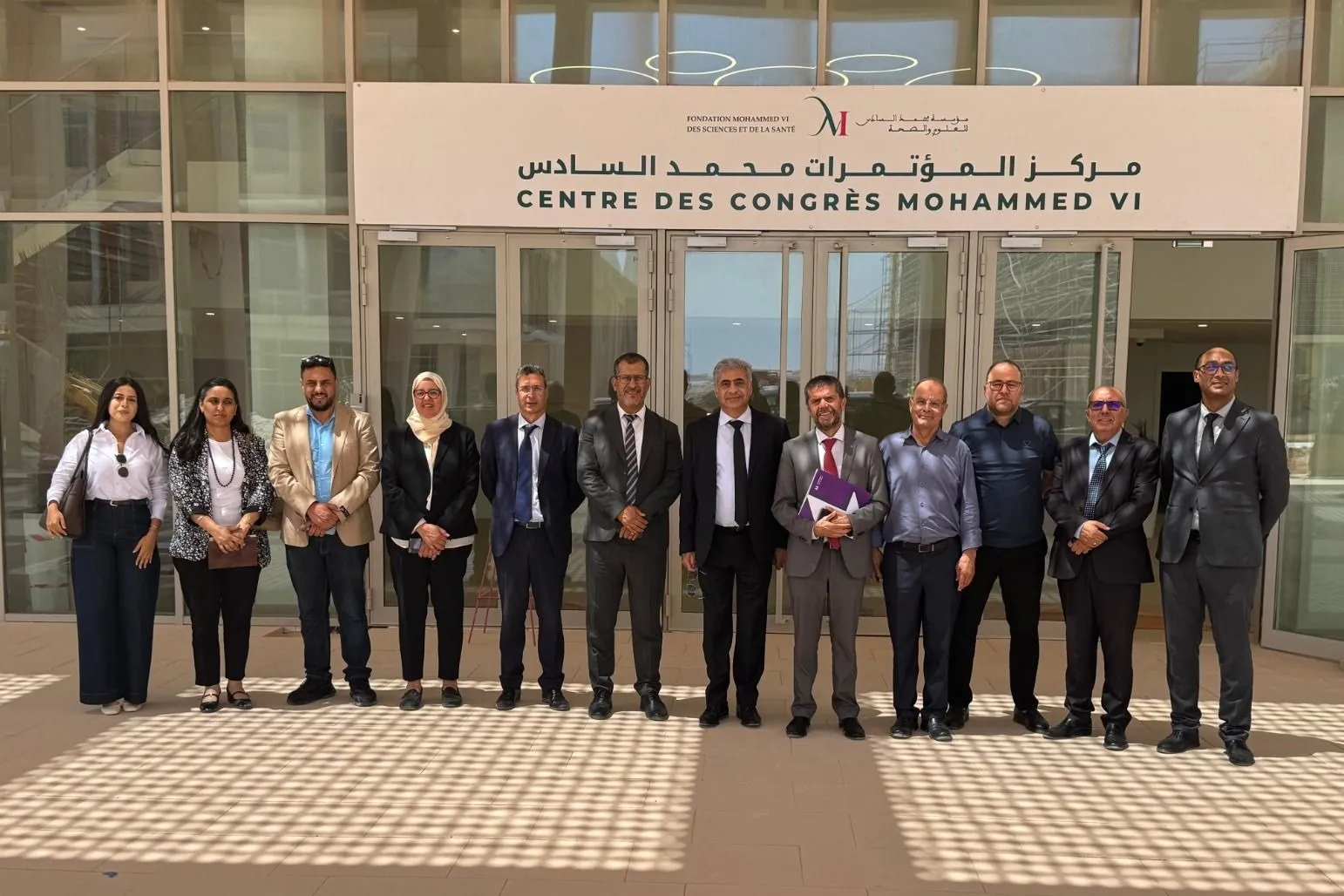

A delegation from the Canary Islands, led by Francisco García, the rector of the University of La Laguna, is currently engaged in an institutional visit to Dakhla and Laâyoune, Morocco. This visit, which is part of the initiatives of the Public Universities Association of the Canary Islands (UPCAN), aims to foster stronger relationships with academic authorities and explore avenues for cooperation in education, research, and innovation. The agenda, running until July 8, focuses on understanding the higher education landscape of both regions and identifying collaborative opportunities.
On July 6, the delegation concentrated its efforts in the Dakhla-Oued Eddahab region, where they held institutional meetings with the regional wali and the president of the Regional Council. These discussions were followed by visits to several educational institutions, including the École Supérieure de Technologie de Dakhla, the École Nationale des Technologies Avancées de Dakhla, and the Mohammed VI University of Sciences and Health campus in Dakhla. During these engagements, García emphasized the importance of establishing a "broad, intense, and stable" university cooperation based on reciprocity and a shared vision for the future, highlighting the geographical proximity of the Canary Islands to Dakhla and Laâyoune, which is merely 600 kilometers and 300 kilometers away, respectively.
García asserted that the locations of the Canary Islands, Dakhla, and Laâyoune should not be viewed as peripheral but rather as strategic, serving as vital connections between Europe, Africa, and America. From this vantage point, universities can play a significant role as agents of cooperation and development within the Atlantic region. Furthermore, the discussions addressed common challenges faced by these territories, such as water scarcity, desertification, climate change, marine resource protection, and youth employment. Emphasizing the youth and talent as key assets, García underscored the universities' capabilities to create educational, scientific, and professional opportunities tied to the development of their respective regions.
The visit has effectively pinpointed potential areas for collaboration in sectors of mutual interest, including the blue economy, food transformation, applied digital technologies, enterprise management, entrepreneurship, advanced engineering, renewable energies, green hydrogen, logistics, public health, telemedicine, and innovation linked to Atlantic territories. A significant aspect of García’s address was the necessity to establish robust networks of collaboration among universities, aiming to share experiences, optimize resources, and amplify the impact of academic and research activities. "Knowledge has become the most valuable strategic asset for the economic, social, and cultural development of communities," he stated.
The idea of the Atlantic as a connecting space was also a focal point in the discussions. The rector recalled the historical ties between the Canary Islands and the Atlantic coast of Africa, suggesting that this neighboring relationship could serve as a catalyst for academic integration and shared future development. He urged, "Let us transform the channel separating the Canary Islands from Dakhla and Laâyoune into a meeting space rather than a distance." Today, July 7, the institutional agenda continues in Laâyoune, with meetings scheduled with the wali of the Laâyoune-Sakia El Hamra region and the president of its Regional Council, alongside visits to the École Supérieure de Technologie de Laâyoune and the Faculté de Médecine et de Pharmacie de Laâyoune. Tomorrow, July 8, the delegation is set to visit the Laâyoune campus of Mohammed VI Polytechnic University, as well as various cultural and institutional sites in the city and industrial zone of Marsa.
The planned itinerary over these three days includes meetings with regional authorities, working sessions at university centers, and visits to spaces related to the academic, productive, and cultural development of Dakhla and Laâyoune. The interactions held during this visit are expected to pave the way for concrete academic and scientific collaborations in areas of mutual interest for the public universities of the Canary Islands and Moroccan institutions.
As reported by ull.es.
