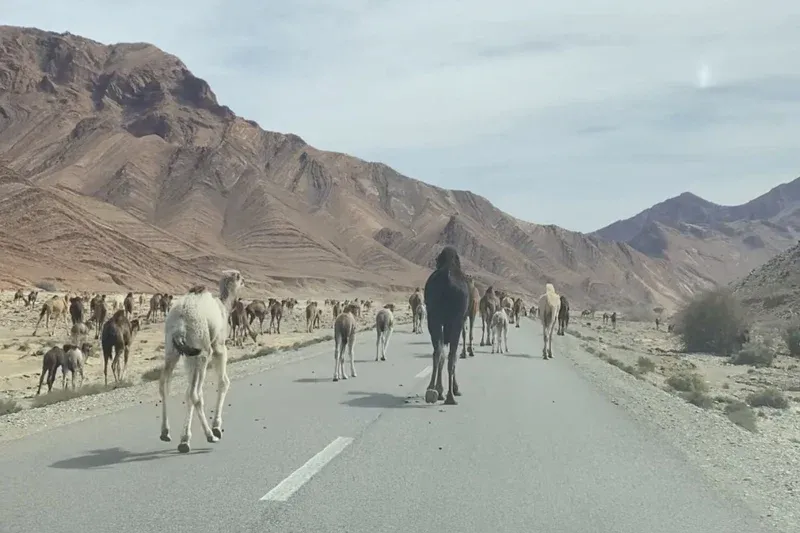

Understanding the Facts of Camel Importation from Mauritania
Recent reports have circulated regarding a supposed monopoly on camel import licenses from Mauritania to Morocco, suggesting that a limited number of individuals control this trade. However, according to a reliable source cited by Hespress, these claims do not accurately reflect the current situation. The source clarified that camel imports from Mauritania have been effectively halted since 1994. Consequently, there are no open import licenses being distributed among operators, which can subsequently be monopolized by specific parties.
The source elaborated that the entry of camels from Mauritania into Moroccan territory has been prohibited for decades, a situation governed by regulatory, health, and security measures related to livestock movement across borders. It emphasized that the notion of an ongoing monopoly on licenses needs to be critically examined, as the core issue lies in the fact that imports through this route have been suspended for years.
These assertions align with the regulatory framework established by Morocco in 1994, which imposes quantitative restrictions on various imports. This framework has undergone several modifications and amendments over time. The source indicated that authorities are stringent in addressing any attempts to smuggle camels across the southern borders, given the region's sensitivity and the associated risks of smuggling and livestock movement. Enhanced field measures are in place to monitor borders and limit the entry of unauthorized camels.
Furthermore, the source pointed out that drawing a direct correlation between rising prices and the alleged monopoly on import licenses requires careful reconsideration. It urged stakeholders to distinguish between the long-standing suspension of imports from Mauritania and other market influences, such as the declining livestock population, increased costs of breeding and feed, prolonged periods of drought, as well as fluctuations in supply and demand.
Notably, prices for camels in the southern regions of Morocco have reached unprecedented levels, with the cost of a camel exceeding 20,000 dirhams, and female camels priced around 34,000 dirhams. Some camels have been reported to sell for between 55,000 and 65,000 dirhams, while camel meat prices have surpassed 150 dirhams per kilogram in certain butcher shops in Laayoune.
As reported by hespress.com.