Insights from the National Immigration and Border Center Report
The report issued by the National Immigration and Border Center (CENIF) has brought to light significant findings regarding the involvement of Moroccan gendarmes in the surge of migrants arriving in Ceuta. Although the report outlines a concerning level of permissiveness among Moroccan security forces, it does not unequivocally attribute the responsibility for the influx directly to Morocco. Spanning across 55 pages, which include two annexes enriched with maps, photographs, interviews with migrants, and data sourced from social media, the report concludes that the events were not merely incidental; rather, they were indicative of prior planning, though the authorship of this plan remains unspecified.
Throughout the critical days of July 30 and 31, the report details that the Moroccan police response to the mass mobilization and entry of migrants into Ceuta was characterized by a troubling degree of permissiveness. There was a conspicuous absence of serious attempts to reduce or disperse the crowds at the border perimeter on the first day of these events. It further notes that the geographical concentration of public security forces due to the Throne Day celebrations on July 30 should have facilitated a more robust control on July 31. Instead, a notably slow reaction was observed, which was inadequate for the situation at hand.
Evidence of Organized Facilitation
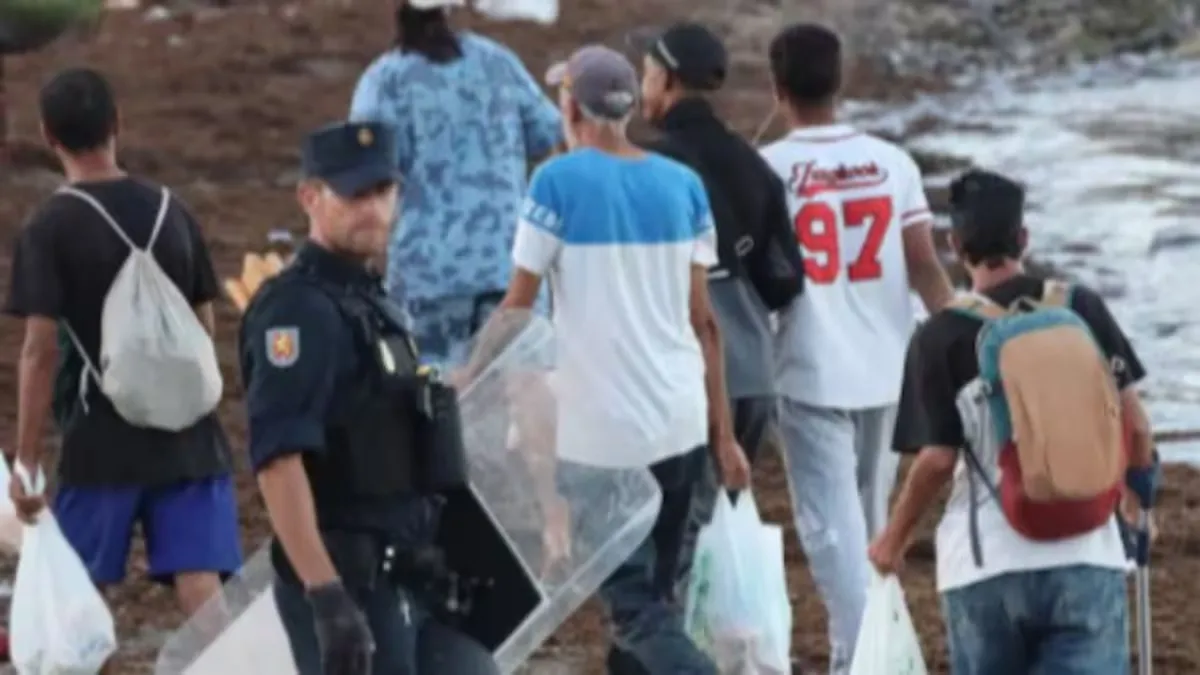
The CENIF report highlights several alarming observations from interviews conducted with migrants. A unanimous sentiment emerged, indicating that police forces were not only passive during attempts to cross the border but were also providing guidance on how to access Spain via the water at the El Tarajal breakwater, rather than through other entry points. This raises serious concerns about the conduct of Moroccan security personnel during this crisis.
Moreover, open-source video footage has revealed uniformed members of Moroccan security forces directing migrants toward specific areas for entry into Spain, alongside individuals not in uniform, who appeared to be managing the flow of people. These individuals seemed to be integrated within the crowds or in proximity to police units, acting as facilitators of the entry process, at times monitoring, while at other times directing the masses toward El Tarajal. The report describes the events in Ceuta as a process with a clear before, during, and after, highlighting the insufficient presence of Moroccan police and military forces on July 30 as only one of several contributing factors to this unprecedented movement of people.
Social media played an instrumental role in amplifying calls for mass migration to Ceuta on July 30, following misinformation suggesting that the Supreme Court's ruling against immediate deportations implied an opening of borders. Messages circulating on the same day included advice from those who had already entered Ceuta, recommending that newcomers hide until tensions subsided. The report argues that the dissemination of these messages was not spontaneous but rather followed a structured pattern aimed at maximizing outreach among young Moroccan nationals.
It is posited that the emergence of such a widespread media campaign is not easily attributed to coincidence alone. Instead, the report suggests that a campaign of this scale would require a predetermined intention, automated tools of considerable complexity, and the involvement of content experts who specialize in creating and distributing such information effectively. As a result, the police believe there is an effort to obscure the authorship behind this mass mobilization.
In conclusion, while the report does not pinpoint specific individuals or entities responsible for orchestrating the influx of migrants, it presents various indicators that could help identify the intellectual and material authors. The communications from high-ranking police officials indicate a lack of evidence linking any government or agency to the events of July 30 and 31, further complicating the narrative surrounding this significant humanitarian crisis.
As reported by cadenaser.com.