
CNI Issues Urgent Warnings Over Social Media Calls to Storm Ceuta
The National Intelligence Center (CNI) has issued a critical alert to both the Spanish government and Moroccan authorities regarding alarming calls on social media platforms that urged individuals to storm the Spanish enclave of Ceuta. This warning, which came on July 29, preempted a significant potential crisis, as it was based on intelligence indicating that groups were coordinating a mass attempt to breach the border during the Throne Day celebrations set for the following day. The situation was exacerbated by the expectation that Moroccan security forces would be preoccupied with the festivities, making it an opportune moment for such actions.
In its intelligence reports, the CNI highlighted the mobilization efforts on various social media platforms, particularly WhatsApp and Facebook, where groups organizing the assault had attracted a substantial following. Notably, one group entitled "Assault on the Ceuta Fence" was among the most prominent, alongside others like "Ceuta Fnideq" and "Hraga Ceuta," which collectively boasted tens of thousands of followers. This organized effort was perceived as a calculated strategy designed to exploit the momentary lapse in security oversight due to the Throne Day celebrations.
Impact of Social Media on Migration Patterns
The role of social media in this crisis cannot be overstated, as it served as a catalyst for promoting and disseminating messages that encouraged illegal crossings into Ceuta. The messaging conveyed a sense of urgency, suggesting that this was a unique opportunity to cross into Spain, with claims that security measures would be relaxed on that day. The CNI's reports indicated that plans for crossing the border were being made via both swimming and climbing over the fence, illustrating a well-coordinated and rapid mobilization effort that ultimately culminated in a migration crisis the likes of which Ceuta had never seen before.
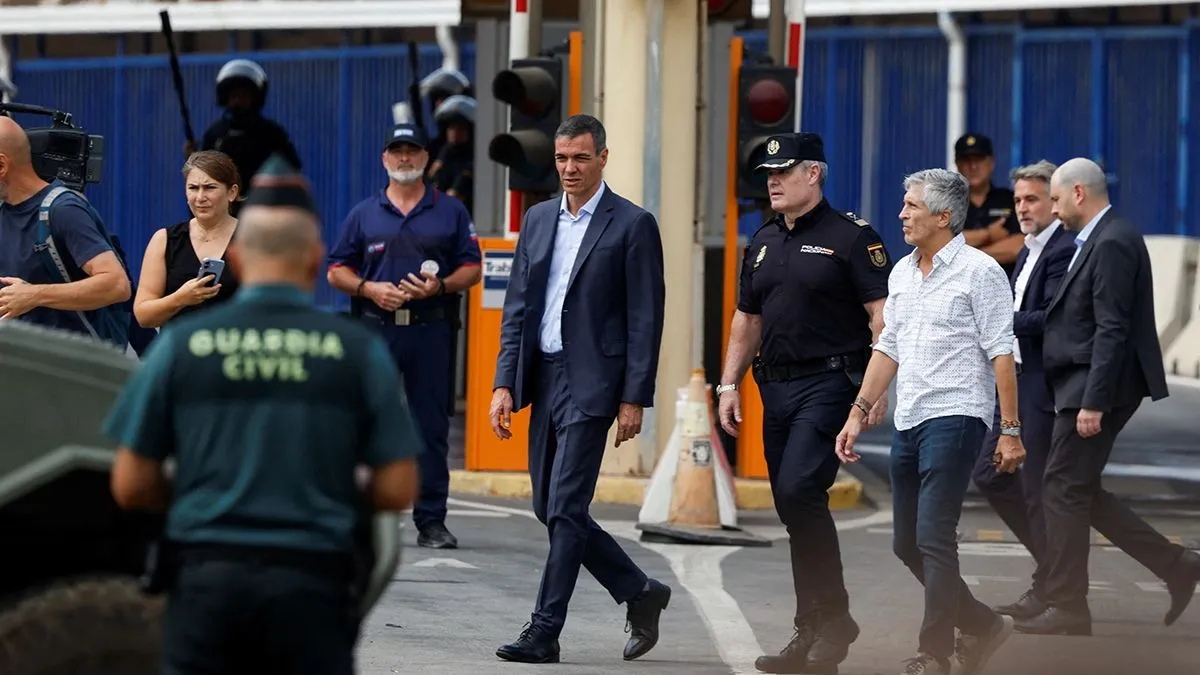
In response to the crisis, Spanish Prime Minister Pedro Sánchez characterized the situation as a "hybrid attack," rejecting any notion of diplomatic coercion and emphasizing the necessity for improved infrastructure and border control measures to handle similar scenarios in the future. The response from the European Union was also swift, expressing solidarity with Spain and pledging financial support to bolster border surveillance and improve the region's infrastructure. The Commission has allocated 114.7 million euros for this purpose, highlighting a collaborative effort involving agencies such as Frontex and Europol aimed at managing the current crisis and preventing future occurrences.
Ultimately, the Ceuta incident has underscored the necessity for intelligence agencies to adapt to the digital landscape where misinformation and rapid mobilization can lead to overwhelming challenges. The Prime Minister has called for an enhancement of anticipatory and preventive measures within the digital realm, recognizing that traditional methods may no longer suffice in the face of such rapidly evolving threats. Continuous updates to surveillance techniques and effective collaboration with neighboring countries, particularly Morocco, will be crucial in navigating the complexities of border management and ensuring security.
As reported by atalayar.com.