
Honoring a Legacy of Unity and National Commitment
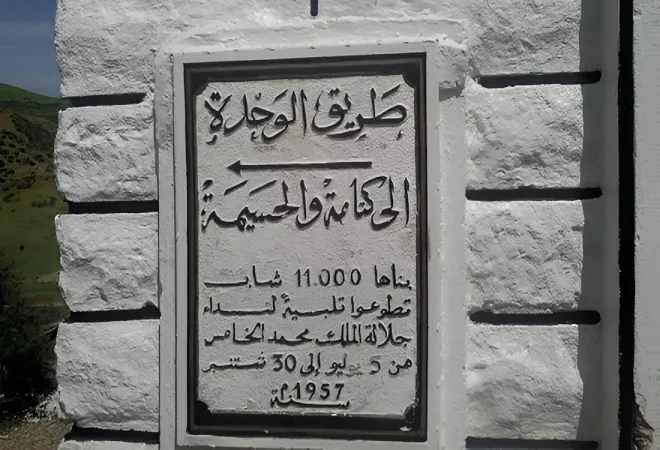
On July 7, 2026, Mustapha El Ktiri, the High Commissioner for Former Resistance Fighters and Members of the Liberation Army, highlighted the significance of commemorating the 69th anniversary of the construction of the Al Wahda Road during a ceremony in Taounate. He emphasized that this event is not only historic but also generational, embodying the collective national mobilization that followed Morocco's independence. El Ktiri articulated that the construction project was initiated in response to the historic call made by the late King Mohammed V from Marrakech, urging Moroccan youth to contribute to the development of an independent Morocco.
Reflecting on the past, El Ktiri noted that approximately 12,000 young individuals from various generations and regions of Morocco answered this call. The construction work, which began in early summer 1956, lasted for more than three months, culminating in the realization of a vision shared by the late King Mohammed V, the late King Hassan II, and the Moroccan people: to connect Taounate and Kétama over a distance of 60 kilometers.
A Testament to National Identity and Volunteerism
During his address, El Ktiri underscored that this achievement symbolizes the spirit of unity and will forever be etched in the collective memory of Moroccans. He urged younger generations to embrace this historical legacy, which carries profound spiritual, national, moral, and human values. Furthermore, he mentioned that the High Commission is dedicated to preserving national memory, celebrating this anniversary each year through a network of 109 historical memory spaces related to the resistance and liberation movement across the nation.
The anniversary also represents a pivotal moment in Morocco's independent history, serving as a model of constructive volunteerism and responsible patriotic engagement. El Ktiri elaborated that the Al Wahda Road project acted as a crucible for cultivating citizens imbued with values of volunteerism, initiative, sacrifice, selflessness, and cohesion among the nation's diverse components, irrespective of their backgrounds or geographic origins.
Throughout the project's execution, it provided an expansive platform for civic education and citizenship training, offering volunteers both theoretical knowledge and practical training in civilian and military skills. This initiative was notably marked by the active involvement of the late King Hassan II, then Crown Prince, who placed significant emphasis on mobilizing youth, motivating them, and enhancing their engagement by personally participating in various stages of the project’s supervision, management, and execution.
El Ktiri concluded by recalling that by October 1, 1957, the road was completed and ready for inauguration, marking a historic date in Morocco's journey. The late King Mohammed V inaugurated the road just three and a half months after construction commenced.
The commemoration program, attended by Taounate's provincial governor, Abdelkrim Ghanami, included tributes to seven former resistance fighters and members of the Liberation Army from the province, as well as financial assistance to several former fighters, their families, and widows. A visit was also made to the memorial monument at the Askar Bridge in the Zrizer territorial commune, commemorating this significant historical event.
As reported by maroc.ma.