
Introduction: Measuring Nations Beyond Surface Glitz
National strength is not merely measured by the gleaming skyscrapers that punctuate city skylines or the grand diplomatic gestures made on the international stage. Instead, the true strength of a nation is tested in the daily lives of its citizens, particularly in how much of their income is consumed by the basic necessities like bread and coffee. In examining two neighboring North African countries, Algeria and Morocco, we are not just analyzing abstract figures from international banking reports; we are witnessing two fundamentally divergent philosophies of governance that significantly affect the daily realities of their respective populations. Algeria prioritizes social security and the dignity of living, while Morocco leans toward a free-market approach, entrusting the livelihoods of its citizens to the whims of global corporations and market dynamics.
Contrasting Economic Philosophies: Social Support vs. Open Market
The stark contrast between Algeria and Morocco can be traced back to their differing social doctrines. Since gaining independence, Algeria has adhered to a historical trajectory that places the vulnerable and middle classes at the core of public policy. This commitment is not merely rhetorical but is manifested in substantial annual budgets allocated for the support of essential goods consumed widely, including bread, milk, sugar, oil, flour, pasta, coffee, medicine, electricity, gas, and fuel. Conversely, Morocco has gradually shifted towards an open-market economy, dismantling its subsidy system and facing pressure from international financial institutions such as the International Monetary Fund and the World Bank to reduce governmental support. This unwarranted liberalization of essential prices has left Moroccan citizens vulnerable to volatile international markets, where rising costs of fuel and electricity consume a significant portion of their limited income, creating a stark divide between reported economic growth and the harsh realities faced by hard-working citizens.
When we shift our focus from broad economic theories to the specifics of daily life, the chasm between living conditions in these two nations becomes glaringly apparent through a comparison of actual prices that citizens encounter each day. For instance, in terms of energy costs, Algeria maintains significantly subsidized prices for fuel, with a liter of gasoline averaging around 47 Algerian dinars, facilitating a flexible and low-cost transit and production sector. In contrast, Morocco's liberation of fuel prices sees the cost of gasoline ranging from 14.90 to 15.24 Moroccan dirhams, equating to over 400 Algerian dinars per liter, which is roughly nine times more than in Algeria. This energy price surge directly translates into inflationary pressures on all goods and services.
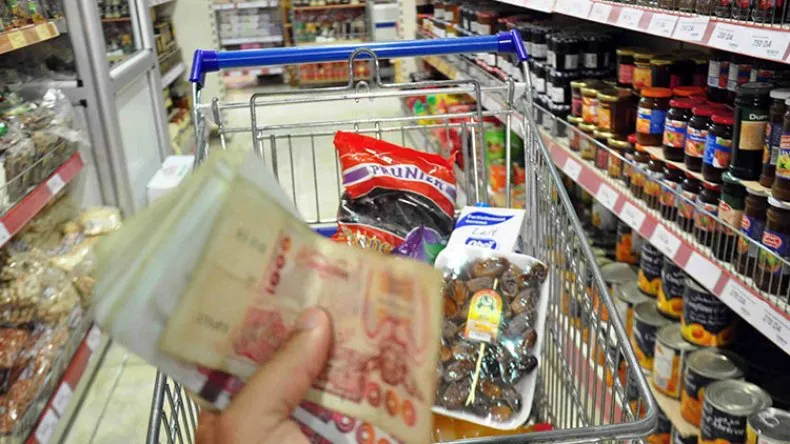
When it comes to the cost of living, even something as simple as a cup of coffee serves as a telling indicator of purchasing power. In Algeria, a cup of coffee in a local café is priced at just 30 Algerian dinars, a figure made possible by stable prices for essential goods and a protective framework for purchasing power. Contrarily, the cheapest cup of coffee in Morocco ranges from 10 to 15 Moroccan dirhams, which translates to approximately 260 to 270 Algerian dinars, indicating a price disparity of over nine times. This disparity is not limited to coffee but extends to sugar, milk, oils, and grain products, as Algeria boasts complete self-sufficiency in pasta and couscous production thanks to a comprehensive national processing system, offering these goods at controlled and subsidized prices. Meanwhile, Moroccan consumers face sharp fluctuations in food prices, largely due to a structural dependency on imported agricultural inputs, including hybrid seeds and fertilizers.
In the realm of public transport and services, Algeria's capital exemplifies the social character of the state through its "Etusa" bus network, which offers tickets at a nominal price of 20 Algerian dinars. Additionally, the subway and tram services are fully subsidized, with ticket prices around 50 dinars. In stark contrast, public transport costs in Morocco's capital, Rabat, with "Alsa" buses, range between 5 to 6 dirhams per ticket, equivalent to about 150 Algerian dinars, imposing additional financial burdens on workers, students, and the lower classes.
Economic Sovereignty and Food Security
The lower cost of living in Algeria is not a mere coincidence; it is the product of a profound strategic choice centered on "national sovereignty" in vital production sectors. Algeria has maintained absolute control over its energy decisions and is making concerted efforts to achieve self-sufficiency and local production in essential commodities such as grains, oils, agricultural seeds, and powdered milk, thereby fortifying its internal front against international disruptions and shocks. In contrast, while Morocco's economic model attempts to project grandiose export-oriented facades, it suffers from structural fragility and a technical dependency on foreign inputs, particularly reliance on seeds and equipment imported from external sources, often leading to detrimental exploitation of water and soil resources in favor of profits for large foreign corporations, leaving the domestic market and ordinary citizens susceptible to inflationary pressures and rising living costs.
Ultimately, it becomes evident to any fair and objective observer that social well-being and economic security cannot be purchased with flashy slogans or tourist facades; they are forged in local production workshops backed by robust social laws designed to protect citizens from the greed of markets. A simple comparison between paying 47 dinars for fuel or 30 dinars for a cup of coffee in Algeria, and the inflated prices faced across the border in Morocco, unveils a glaring truth: Algeria remains a bastion of social and economic stability, capable of safeguarding the dignity and simplicity of its citizens' lives amidst global crises that often disregard the vulnerable. It is clear that true sovereignty begins with ensuring that the essentials of life—bread, milk, and coffee—are accessible to all.
As reported by echoroukonline.com.