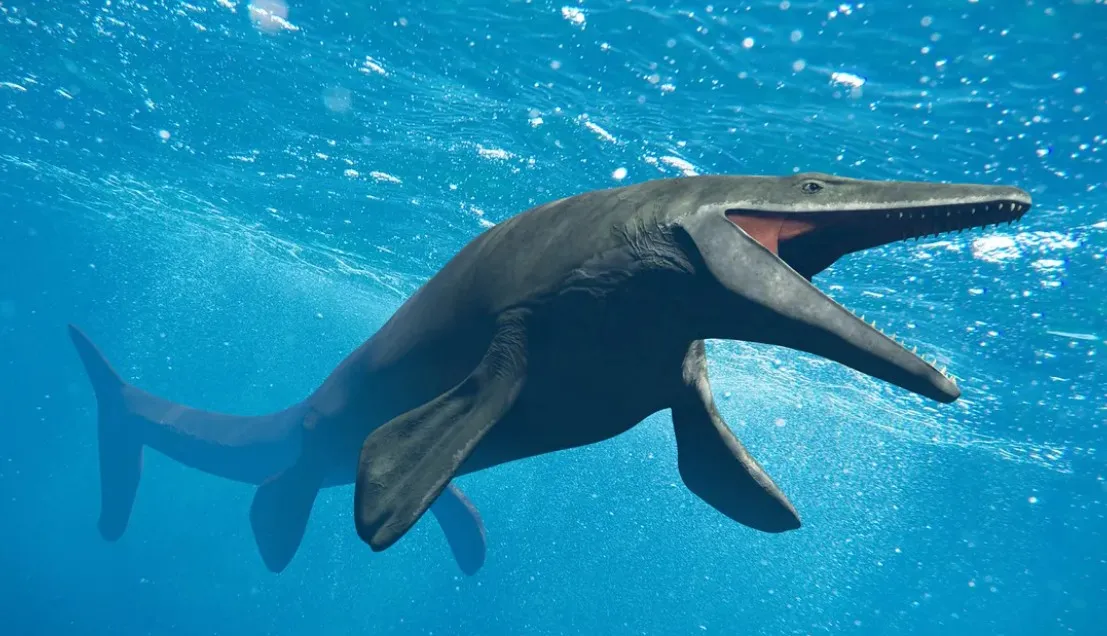
A remarkable discovery in Morocco has unveiled a giant mosasaur fossil, a prehistoric marine reptile that lived approximately 66 million years ago. This finding could provide invaluable insights into the marine biodiversity that existed prior to the mass extinction event that eradicated the dinosaurs, according to researchers involved in the study.
The fossil was unearthed by an international team of researchers in the phosphate deposits of Sidi Chennane, located in the Khouribga province of central Morocco. It has been identified as a new species of giant mosasaur named Pluridens imelaki. Estimates suggest that this specimen may have reached an impressive length of about 9 meters, based on measurements of its skull.
According to the recently published study in the journal Diversity, Pluridens imelaki is among the largest mosasaurs known to date, and its rarity indicates that it could have been a migratory species or a less common inhabitant of its ecosystem. Researchers Nicholas R. Longrich and Nour-Eddine Jalil emphasize that this species is exceedingly rare, as only one specimen has been found amidst the numerous fossils studied in the Sidi Chennane area, which is renowned for its abundance of marine remains from the Cretaceous period.
The discovery of this mosasaur highlights the diversity among marine predators of the time, revealing that some species possessed finer jaws and teeth adapted for consuming smaller prey. This variation is significant, as it precedes the extinction of the dinosaurs and suggests a complex interplay of predatory adaptations in marine ecosystems.
The fossil is currently housed at the Natural History Museum in Marrakech, and researchers are optimistic that further studies will illuminate the evolution of prehistoric marine fauna. This finding not only enriches our understanding of marine life during the Cretaceous but also underscores the importance of continued paleontological exploration in revealing the mysteries of our planet's past. As reported by larepublica.ec.