
The Urgent Need for Improved Border Control in Ceuta
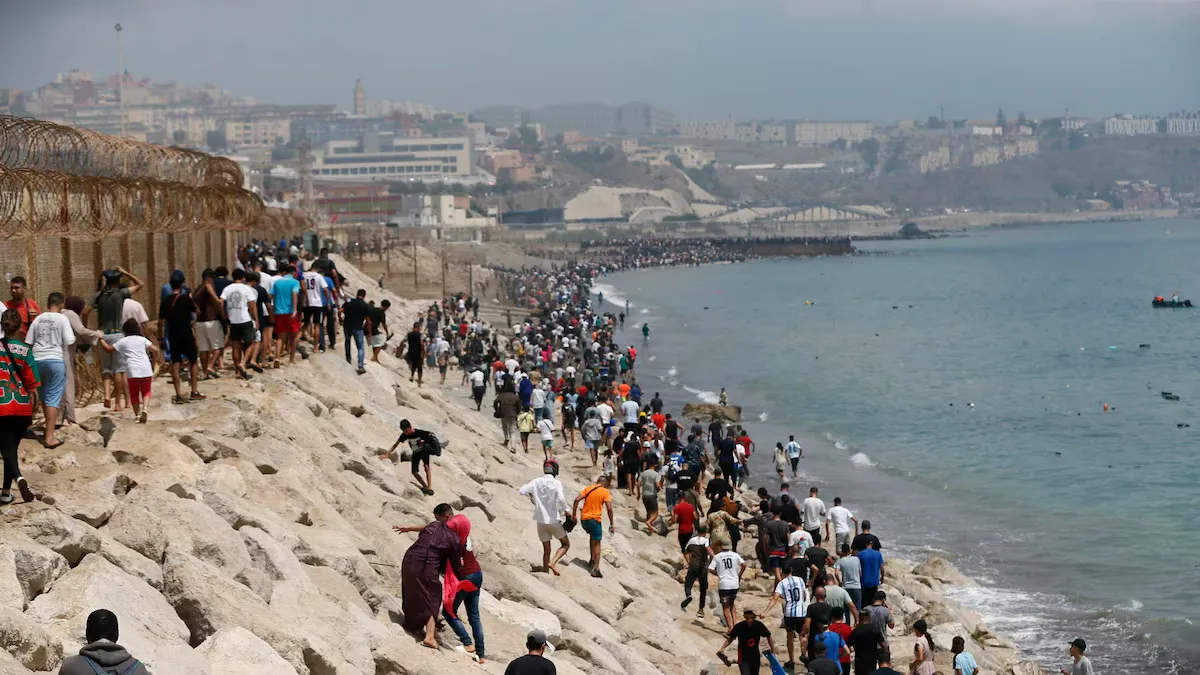
The recent surge of individuals entering Ceuta has starkly highlighted the pressing need for significant improvements along the border with Morocco. In response to this situation, the Spanish government has initiated the installation of a containment barrier that will extend into the sea beyond the existing jetty, aiming to prevent future mass entries via swimming. However, a substantial portion of the necessary border control efforts lies beyond this physical infrastructure and relies heavily on the actions of Moroccan authorities.
EU Financial Support and Strategic Partnerships
Since the year 2000, the European Union (EU) has been collaborating with Morocco as one of its external partners. This partnership was formalized with the implementation of the Association Agreement, which encompasses various sectors, including trade, environmental policies, and migration. With the goal of achieving mutual benefits, the EU has allocated significant financial resources to the North African nation, mirroring its support for other recognized allies. Over the last decade, these funds have surpassed 500 million euros, primarily directed toward migration control efforts.
The EU continues its strategy of supporting Morocco's migration management through the EU Trust Fund for Africa (EUTF). Between 2015 and 2021, the EU committed 234 million euros through both bilateral and regional contracts, as reported by the European Commission. A substantial 77% of these funds, amounting to approximately 179 million euros, has been earmarked for integrated border management and combating smuggling and human trafficking. Additionally, 12% of the budget is allocated to community protection and stabilization projects, while 7% supports labor migration initiatives, and 4% finances governance and voluntary return programs.
The Instrument for Neighbourhood, Development Cooperation and International Cooperation – Global Europe (IVDCI-Global Europe) serves as the EU's tool for promoting its values and principles beyond its borders. This instrument enables a rapid response to global crises and aims to enhance the effectiveness of European foreign policy. It covers a wide geographical scope, including the European Neighbourhood, Sub-Saharan Africa, Asia, the Pacific, the Americas, and the Caribbean. Among its primary objectives is the improvement of relations and border management with Morocco, a critical neighboring country significantly impacting the EU's broader migration strategy.
In the past five years, the financial commitments have once again increased, with the IVDCI projected to allocate 1 billion euros to Morocco between 2021 and 2024. During this period, approximately 193 million euros have been designated for Morocco under the regional migration package, focusing on global governance, voluntary returns, legal migration, border management, and the fight against human trafficking while ensuring the protection of migrants. Furthermore, in 2023, EU Commissioner for Neighbourhood and Enlargement, Olivér Várhelyi, announced a new 152 million euro program aimed at enhancing Morocco's border management capabilities and supporting voluntary return initiatives. Consequently, this brings the total EU financial support to Morocco for migration management efforts to over 500 million euros.
As reported by infobae.com.