Strengthening Climate Transparency in Morocco
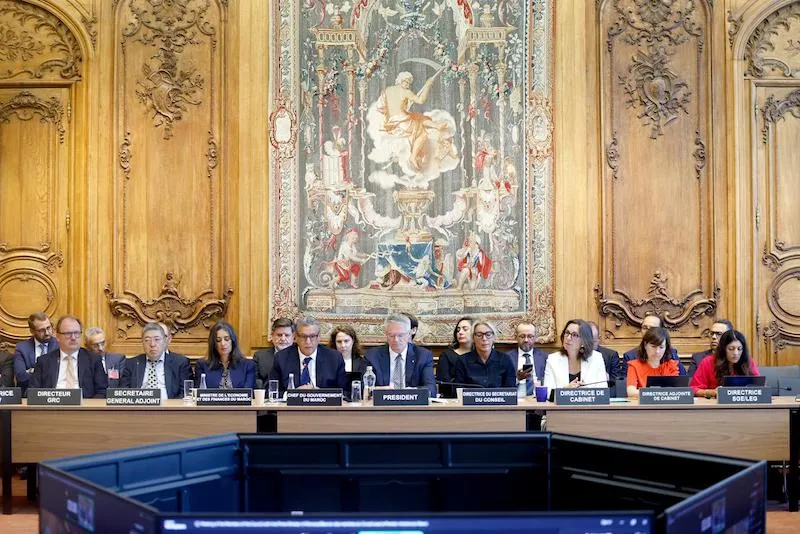
On September 7, 2026, Noëlla Richard delivered a pivotal speech during the launch workshop and the inaugural steering committee meeting for the project aimed at developing Morocco's second Biennial Transparency Report (RBT2) alongside the combined report of the sixth National Communication and the third Biennial Transparency Report (CN6/RBT3). This initiative represents a significant step forward for Morocco in bolstering its climate transparency efforts, essential in the face of escalating global climate challenges.
In her address, Richard expressed her gratitude to the Moroccan Department of Sustainable Development, a long-time partner of the United Nations Development Programme (UNDP), emphasizing the importance of trust, dialogue, and continuous collaboration in support of Morocco's priorities. She acknowledged the essential role of all present institutions and partners, highlighting that climate transparency is a collective endeavor that relies on data, expertise, and commitment from every sector.
Richard underscored the urgent climate context, citing alarming data from the United Nations which revealed that the years 2015 to 2025 have been the hottest on record, with greenhouse gas emissions reaching unprecedented levels. The UN's recent warnings about escalating climate risks serve as a clarion call for action. The message from the UN Secretary-General is straightforward: every fraction of a degree in temperature matters, impacting human lives, livelihoods, inequalities, and ecosystems.
This acknowledgment of the crisis also serves as a rallying cry to accelerate our response. Solutions are available, yet they require enhanced coordination, better funding, and more effective monitoring. This is where climate transparency plays a crucial role. Transparency is not merely about producing a report; it involves having the right information necessary to understand, make informed decisions, and take effective action. This includes tracking emissions, measuring progress, identifying needs, and directing policies and investments to achieve the greatest impact.
The UNDP is dedicated to supporting Morocco in this journey by not only assisting with the requisite reports under the UNFCCC and the Paris Agreement but also by sustainably strengthening the capacities, systems, and mechanisms that will enable the country to navigate its climate actions with robust and useful data for decision-making. This is the unique value proposition of the UNDP: to stand alongside institutions, provide technical expertise, and facilitate the necessary frameworks to bolster Morocco's climate resilience.
As reported by undp.org.