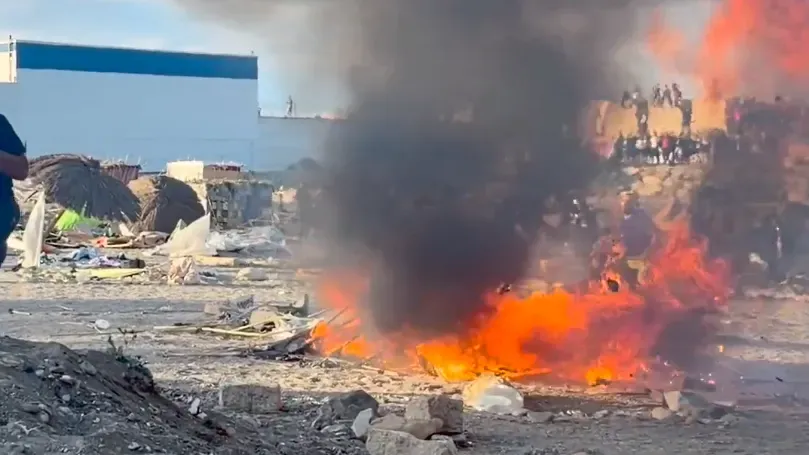

Protests and Police Clashes in Ceuta
Disturbing scenes have unfolded in Ceuta, a Spanish exclave in North Africa, where tensions between local residents, migrants, and law enforcement have reached a boiling point. Demonstrators attempted to block humanitarian aid shipments to a migrant camp, ultimately resorting to setting fires as the situation escalated. As anger among locals continues to mount, the police have been forced to intervene to separate protesters from migrants seeking refuge.
Television footage has captured the chaos at Benítez Beach, where migrants have been camping for weeks. Demonstrators were seen repeatedly throwing objects into the flames, while police worked to keep the groups apart. Video evidence also shows officers clashing with protesters who had breached the makeshift sleeping quarters of the migrants. In these confrontations, personal belongings of the migrants were ignited, adding to the already heightened tensions.
Community Outrage and Political Pressure
Prior to the fires, protesters had also attempted to halt Red Cross vehicles delivering food and water to the migrants. A group of citizens engaged in a sit-in to obstruct aid workers, chanting slogans such as "They should go!" and "Out with the Red Cross!" On Wednesday evening, police used tear gas to disperse angry locals and migrants, while video evidence suggested that rubber bullets were also employed against the demonstrators.
In retaliation, migrants threw stones and other objects at a Spanish military vehicle, resulting in minor injuries to a soldier. Following this incident, twelve individuals, all Moroccan citizens, were arrested. The growing frustration among the local populace is palpable, especially after an influx of up to 80,000 migrants from Morocco in late July, which tragically resulted in at least 96 confirmed deaths. While many migrants returned home shortly after, several thousand remain in the enclave, leading to increased littering and unrest resembling civil war conditions.
Local officials express feelings of abandonment, as highlighted by Kissy Chandiramani, the finance chief of Ceuta, who stated that while residents have the right to protest, hatred will not resolve the ongoing crisis. Many locals attribute their security and hygiene concerns to the presence of the migrants. The conservative opposition in Spain is calling for the immediate deportation of these individuals, although international laws and Spanish court rulings prohibit collective expulsions, mandating individual assessments instead. Notably, unaccompanied minors are afforded special protection, with around 1,500 children and adolescents identified, of which 500, particularly vulnerable girls, are expected to be relocated to mainland Spain.
Prime Minister Pedro Sánchez's left-wing government is facing immense pressure amid this crisis, with opposition parties accusing it of failing to support the residents of Ceuta. Conflicting statements from government officials regarding whether there was prior warning about the mass influx have only fueled the discontent. While Defense Minister Margarita Robles asserted that the intelligence agency (CNI) had alerted authorities a day before the surge, Interior Minister Fernando Grande-Marlaska and others insisted no such warning was issued. Sánchez is set to address the parliament regarding the crisis on September 3.
As reported by welt.de.