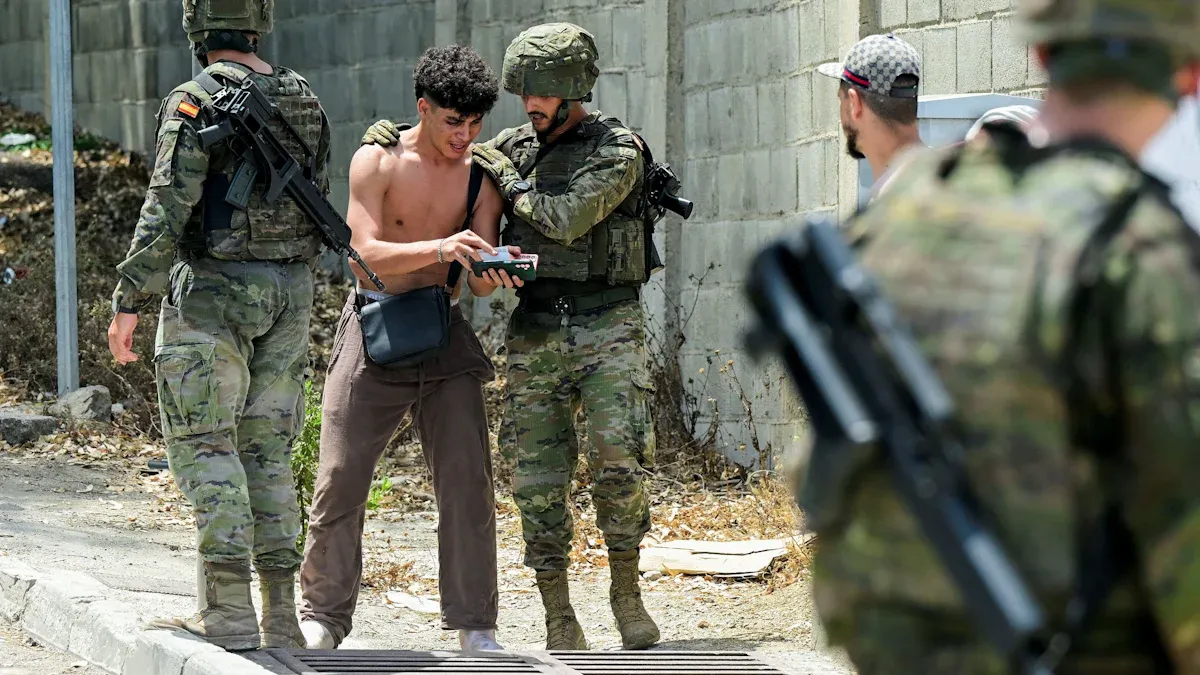

Intensified Migrant Influx Sparks EU Response
Last week, an alarming surge of at least 50,000 individuals crossed from Morocco into the Spanish exclave of Ceuta, igniting significant unrest and prompting immediate action from the European Union. In response to this unprecedented migration wave, 22 EU heads of state and government have called for a coordinated effort to strengthen the protection of the external borders. This situation has escalated to the point where an emergency meeting among the interior ministers of the 27 EU member states is scheduled for Tuesday to address the pressing circumstances surrounding Ceuta.
The meeting, overseen by Irish Interior Minister Jim O’Callaghan, is essential as Ireland currently holds the EU Council presidency, giving it a crucial role in coordinating member state cooperation. Prime Minister Micheál Martin of Ireland has expressed that the situation is under close observation, emphasizing the importance of solidarity among EU nations. Although many of the migrants have returned to Morocco, pressure on Spanish Prime Minister Pedro Sánchez is intensifying, with critics asserting that Spain is not doing enough to secure its external borders.
Political Ramifications and Reactions Across Europe
The criticism directed at Sánchez is further complicated by the political landscape within Europe. The Spanish Socialist leader finds himself isolated in his approach to migration amidst a sea of conservative and Christian Democratic leaders advocating for stricter asylum policies. Notably, even left-leaning leaders like Denmark's Mette Frederiksen and the Netherlands' Rob Jetten have signed the letter urging stronger border protections, underscoring a collective concern regarding the management of migration flows.
The signatories to the letter acknowledge that the crisis in Ceuta may stem from extraordinary circumstances. Still, they stress the obligation of member states to protect their external borders at all times and avoid measures that could attract migrants as a 'pull factor,' such as the legalization of a significant number of irregular migrants. This critique specifically targets a recent initiative by the Sánchez government, which aims to provide residency rights to approximately one million undocumented individuals currently residing in Spain.
Italy's Prime Minister Giorgia Meloni has emerged as one of the most vocal opponents of irregular migration, labeling the scenes from Spain as "shocking." Her government has suspended the Schengen Agreement with Spain and reinstated border controls for air and sea traffic, primarily affecting non-EU citizens. Similar considerations are being discussed in Denmark and Finland, highlighting a potential domino effect among EU nations concerned about migration management.
In Germany, the political discourse surrounding the images from Ceuta has intensified, especially with upcoming elections in Saxony-Anhalt and Mecklenburg-Vorpommern where migration is a key issue. Federal officials have reacted sharply, with Friedrich Merz from the CDU urging the Spanish government to regain control of the situation swiftly. He emphasized that protecting the EU's external borders is crucial in combating illegal migration. Meanwhile, Interior Minister Alexander Dobrindt (CSU), known for advocating stringent measures, has announced extensions to internal border controls beyond September, aiming to sustain and enhance the current successes in curbing illegal migration.
In defense of Sánchez, Vice Chancellor Lars Klingbeil emphasized that the majority of migrants returned to Morocco in a short timeframe, calling for respect and solidarity towards Spain during such crises. He suggested that migrants have been manipulated in attempts to create divisions within Europe, hinting at potential strategic loosening of Morocco's border controls to exert pressure on Spain amidst the West Sahara conflict.
As reported by sueddeutsche.de.