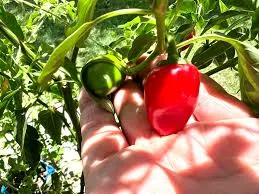

Understanding the Effects of Ethyl Methanesulfonate on Paprika
Ethyl methanesulfonate (EMS) is a prominent chemical mutagen widely utilized in plant breeding to induce point mutations. Its effectiveness, however, varies significantly based on factors such as genotype, concentration, and exposure duration. A recent study aimed to assess the influence of various EMS concentrations and exposure times on the germination and initial seedling characteristics of paprika (_Capsicum annuum_ L.). Specifically, the research focused on two local Moroccan paprika genotypes, 'Lukus' and 'Beldia', subjected to seven different EMS concentrations ranging from 0% to 0.50% (v/v) across five exposure durations (0.5, 1, 4, 24, and 48 hours), alongside a control group.
The study meticulously measured several parameters including germination percentage, mean germination time, time to achieve 50% germination, germination speed index, and radicle length. The findings revealed a clear dependency of germination traits on both the concentration of EMS and the exposure time. Notably, higher EMS concentrations (T5 and T6) led to a substantial decrease in germination percentage and speed, with reductions exceeding 70% observed in both genotypes. This decline was coupled with an extended average time necessary for germination and a slower rate of reaching the 50% germination mark. When examining the genotypes, 'Beldia' demonstrated a higher tolerance to EMS-induced stress relative to 'Lukus'. Through multivariate analysis, the first two principal components accounted for over 79% of the total variability in the data. The hierarchical clustering analysis categorized the EMS treatments into three distinct groups, corresponding to low, intermediate, and high-stress conditions. The integration of germination kinetics and multivariate analyses was pivotal in identifying EMS treatment ranges associated with moderate physiological stress while maintaining acceptable germination performance. This study offers valuable preliminary insights into the dose-response behavior of EMS in Moroccan paprika genotypes, establishing a foundational basis for future mutation-breeding efforts that will require validation in subsequent generations.
As reported by nature.com.