
Current Fuel Prices in Casablanca
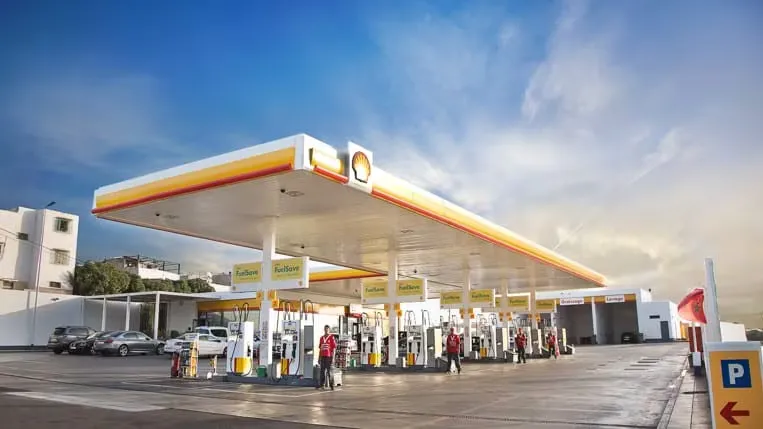
As of this Friday morning, a survey conducted by _Le360_ in various gas stations across central Casablanca reveals a notable increase in fuel prices. Shell and Petromin are selling diesel at 16.18 MAD per liter, while gasoline is priced at 15.63 MAD per liter. Winxo follows closely, with diesel priced at 16.15 MAD and gasoline at 15.62 MAD. Afriquia stations report diesel at 16.10 MAD and gasoline at 15.59 MAD. These prices come into effect after a significant upward revision that took place on October 1st, marking an increase of 0.80 MAD per liter for diesel and 0.39 MAD for unleaded gasoline.
This latest surge in diesel prices approaches the historical peak recorded in Casablanca back in 2022, where a liter reached 16.57 MAD on July 5th, just 0.39 MAD higher than the current prices at Shell and Petromin. Meanwhile, the gasoline record stands even higher at 17.78 MAD per liter, noted in Casablanca on June 15, 2022. This recent escalation follows a series of successive price increases since mid-July, with diesel witnessing rises of 0.69 MAD in mid-July, 1 MAD at the beginning of August, 0.65 MAD in mid-August, 0.06 MAD at the start of September, and an additional 0.34 MAD on September 16th. With the latest hike of 0.80 MAD, the cumulative increase has now reached approximately 3.54 MAD per liter since mid-July.
Market Dynamics and Future Implications
Currently, diesel is priced higher than gasoline, with the gap widening after the latest adjustment, now approximately 0.55 MAD per liter between the two fuel types in Casablanca. This price surge occurs against a backdrop of ongoing pressure in the international refined petroleum markets. Houcine El Yamani, Secretary General of the National Syndicate of Oil and Gas Industries affiliated with the CDT, and President of the National Front for the Preservation of the Samir Refinery, has indicated that the international price of diesel has surpassed 1,400 dollars per ton, a stark contrast to around 700 dollars prior to the onset of recent conflicts in the Middle East.
El Yamani attributes this situation to a decline in the global supply of refined products, disruptions affecting certain refining capacities, and difficulties along various supply routes. He emphasizes that the market is experiencing a pronounced decoupling between crude oil and refined products due to a fuel supply deficit. Currently, diesel is trading at a premium of nearly 6 MAD per liter compared to crude oil, indicating the significant profitability of refining in the current climate. In Morocco, El Yamani estimates that the annual cost associated with diesel imports exceeds 40 billion MAD, not accounting for other refined petroleum products such as gasoline, aviation fuel, industrial fuel, or asphalt.
He links this dependency to the operational halt of the Samir refinery in Mohammedia. According to him, had the state taken over the refinery following its judicial liquidation in 2016, it could have played a crucial role in securing a portion of national supply and alleviating pressure on pump prices. El Yamani recalls that the National Syndicate of Oil and Gas Industries had advocated for the state to acquire Samir's assets through compensation with public claims, a proposal that was ultimately rejected by the outgoing governmental majority during parliamentary discussions. Furthermore, he warns of the repercussions of prolonged conflicts in the Middle East and the ongoing war between Ukraine and Russia, suggesting that these tensions could exacerbate supply difficulties on the international market and pose additional risks to energy prices. In light of this, El Yamani is calling for a swift revival of refining activities in Mohammedia, arguing that the facility should not be limited to merely storing petroleum products. He also advocates for a reduction in fuel taxes, estimating that this should be around 4 MAD per liter for diesel and 5 MAD for gasoline, pending a decline in international prices.
As reported by fr.le360.ma.