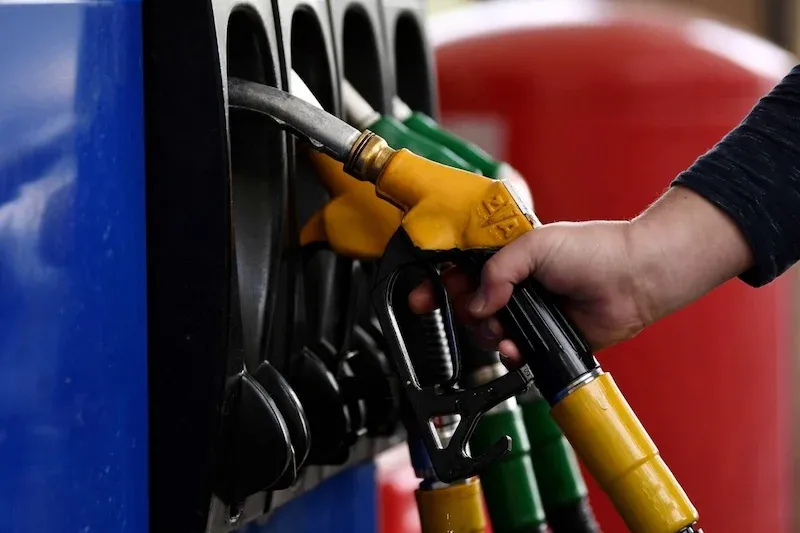

The spotlight is on the anticipated effects of rising global oil prices on fuel costs in Morocco, especially in light of ongoing attacks on oil tankers in the Strait of Hormuz. Recently, oil prices surged once again, with Brent crude nearing the $110 per barrel mark, fueled by persistent concerns regarding global oil supply shortages. Economic data has indicated that fluctuations in oil prices and inflation rates in the United States have intensified worries regarding the Federal Reserve's future decisions.
According to the latest figures, Brent crude has surpassed $100 per barrel, while markets are closely monitoring developments in crude supply. Economic expert Mohamed Jadri expressed his concerns to Hespress, stating, “Unfortunately, we have returned to the initial stage we faced at the end of February and early March. After experiencing a brief respite at the beginning of summer, when fuel prices in Morocco dropped and global oil prices fell below $75, we had hoped for a return to normalcy.”
Jadri noted that the price of a barrel of oil has now exceeded $104, which implies that Moroccans currently purchasing a liter of diesel for more than 15 dirhams may soon find it priced at 17 dirhams, reminiscent of the peak inflation wave in April 2022. He further elaborated that this increase could have significant repercussions, as transport companies may struggle to absorb the costs of diesel priced at 16, 17, or even 18 dirhams. This may necessitate exceptional financial support from the national treasury. He warned, “If this increase continues for consecutive weeks, we could enter a new inflationary wave starting from fuel and transportation costs, eventually affecting basic food items.”
Moreover, Jadri emphasized the need to consider the high cost of oil when drafting the finance bill, particularly concerning the trade deficit and public investments. He asserted that it is essential to reassess several factors that could mitigate the sharp rise in prices. He concluded by expressing hope for global stability, which has been elusive since the pandemic in 2020, wishing for an end to wars that would allow prices to drop below $75, enabling the achievement of economic goals and safeguarding the purchasing power of citizens, particularly the middle class, which is at risk of falling behind.
On the other hand, economic researcher Youssef Krawi Filali, president of the Moroccan Center for Governance and Management, stated, “We are currently facing real pressures related to the price of oil barrels in the external market. Morocco imports refined gasoline due to a lack of a refinery capable of storing large quantities of crude oil. This global pressure drives prices up, forcing fuel companies to import shipments at elevated prices, which immediately reflects on the prices at distribution stations.”
Filali continued, “The major issue lies in the fact that after liberalizing prices, we did not establish mechanisms to regulate them, such as price caps or continued support through the compensation fund. Meanwhile, the internal consumption tax remains high and fixed despite rising crude prices, leaving citizens to bear the burden of increased costs at distribution points.” He added, “Regarding the repercussions, we observe that when prices rise, they are adjusted immediately, but reductions are not applied automatically, necessitating increased monitoring by the relevant ministry. It is unacceptable to raise prices while older stock, purchased at lower rates, is still available; we must first regulate domestic consumption and exhaust that stock before implementing price increases.”
He further elaborated that the issue is compounded in large station tanks, where gasoline purchased at lower prices is mixed with new, more expensive shipments, resulting in an average price. Filali stressed the urgent need for a coordinated mechanism with the concerned ministry and rigorous monitoring to ensure that older stock is not sold at inflated prices, thereby protecting consumers at fuel stations. He also mentioned that rising oil prices directly impact the finance law, as the barrel price is one of its fundamental assumptions, in addition to being a crucial commodity for businesses and the National Office of Electricity and Potable Water. He concluded by noting that despite the removal of subsidies from the compensation fund, the indirect effects on the national economy and public budget remain significant.
As reported by hespress.com.