Intensified Iranian Activities at Mount Faas
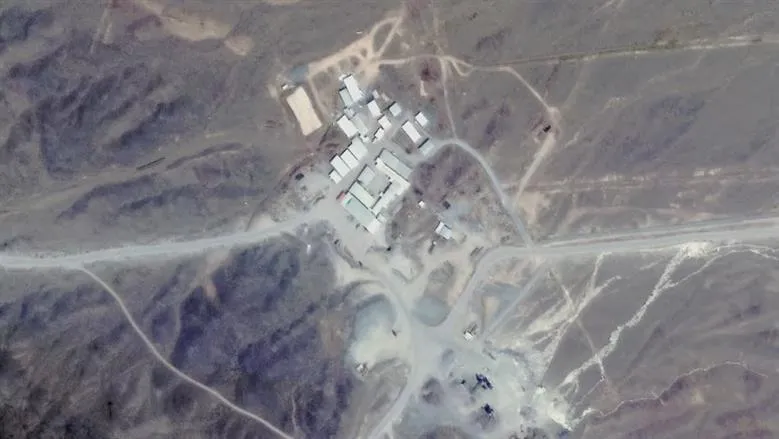
Recent satellite imagery has unveiled a significant uptick in activities at what is suspected to be an underground nuclear site located in Mount Faas, Iran. This revelation has been highlighted in a report by CNN, which underscores an escalating concern regarding Iran's nuclear ambitions. The Iranian site, believed to be strategically buried beneath granite, has been the focus of U.S. scrutiny as it potentially serves to shield Iran's nuclear program from international oversight and military strikes. Mount Faas is situated approximately 140 miles south of Tehran, near the Natanz nuclear facility, which the U.S. views as a critical point in Iran's efforts to advance its nuclear capabilities.
The analysis provided by the Center for Strategic and International Studies (CSIS) suggests that the construction activities at Mount Faas have progressed from mere excavation to what appears to be substantial internal construction and ongoing external reinforcements. The satellite images over the past six years indicate unprecedented levels of road activity and infrastructure enhancements, including the fortification of tunnel entrances, paving of internal roads, and the clearing of soil excavated during tunneling operations. Such developments intensify fears that the site could serve a pivotal role in Iran's nuclear operations.
U.S. Military Experiments Ahead of Potential Strikes
In response to the challenges posed by deeply buried Iranian nuclear facilities, the U.S. is reportedly conducting experiments aimed at refining its military capabilities to effectively target such installations. CNN reported that a defense agency, often overlooked yet crucial in combating weapons of mass destruction, has recently awarded a $1.2 million emergency contract just days prior to the onset of tensions with Iran. This contract entails the refurbishment of a unique underground testing facility at White Sands Missile Range in New Mexico. The goal is to conduct live-fire tests designed to validate covert capabilities to counter rapidly emerging threats.
Sources familiar with the matter indicate that the initiation of this testing program is directly linked to the necessity for the U.S. military to develop mechanisms capable of targeting Iran's deeply entrenched nuclear sites, akin to the characteristics presented at Mount Faas. The U.S. military is in the process of developing a next-generation bunker-buster bomb to succeed the current Massive Ordnance Penetrator (MOP), aimed at penetrating even deeper targets. Contracts have been awarded to initiate prototype development as of September 2025, with the Air Force soliciting proposals from defense contractors as early as June.
Furthermore, satellite images captured between February 16 and 18 indicated excavation activities at a remote site within White Sands, specifically designated for testing the effects of munitions on deeply buried targets. This work continued until mid-March, showing a gradual increase in excavated debris, after which activities appeared to stall. The characteristics of this U.S. testing site bear resemblance to those observed at Mount Faas, according to environmental assessments. Recent planning sessions within the U.S. Department of Defense have indicated a focused effort to strategize potential strikes on the Mount Faas facility, reflecting the heightened military readiness in the face of Iran's advancing nuclear capabilities.
As reported by aajeg.com.