
Unveiling Iran's Strategic Deception
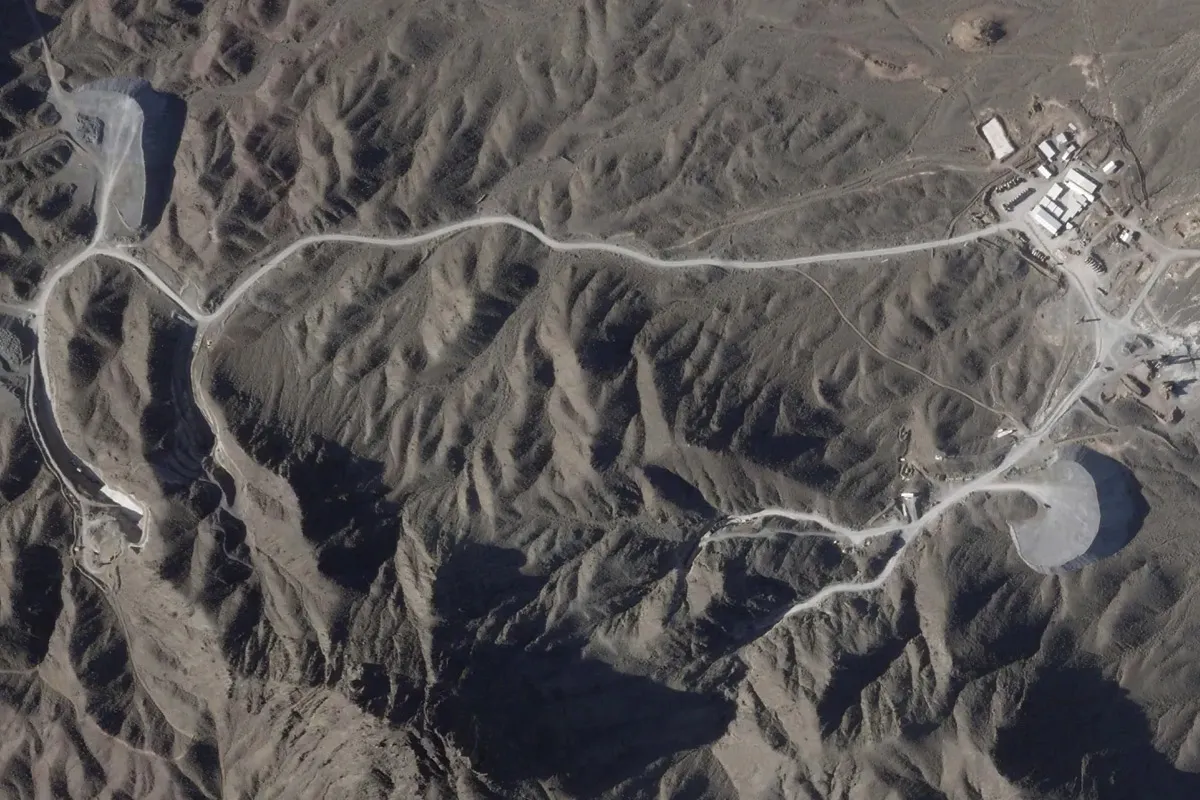
According to a source within Iran's Supreme National Security Council, intelligence agencies have acquired information suggesting that the United States has uncovered an elaborate ruse orchestrated by Tehran. This deception involved the dissemination of false information and strategic posturing to create the illusion that the Jabal al-Fas facility holds significant value for nuclear activities. The source claims that Iranian officials had previously evacuated the heavily fortified Jabal al-Fas facility of all its equipment, only to ramp up their activities there to divert attention away from another location where they had relocated its contents, all with the intent of drawing the eyes of American and Israeli intelligence.
The report indicates that Iranian operatives deliberately leaked information to Mossad agents, who were identified but not apprehended, with the aim of enticing the United States into depleting its stockpile of deep-penetration bombs before they could locate the actual sites of Iran's nuclear activities. The source alleged that Iran had previously employed a similar strategy when it leaked information about high-enriched uranium in Isfahan. This tactic led to a significant U.S. ground operation, ostensibly under the guise of rescuing a downed American pilot, which was met with ambushes and fierce clashes resulting in the destruction of several aircraft during the initial weeks of the ongoing conflict.
Exploiting Misdirection and International Support
The source further explained that Iran has utilized this same method to disseminate false information regarding the locations of weaponry, missiles, drones, and missile cities, aiming to provoke the United States into launching attacks against these decoys. Allegations surfaced that Iran received assistance from China and Russia to create counterfeit platforms and missile launch systems, embedding electronic components that emit signals to American and Israeli radars, thus convincing adversaries of their authenticity. This approach was designed to lure enemy aircraft into targeting these decoys, leading to exhaustion of their missile reserves. Notably, it was claimed that Beijing provided Tehran with the technology necessary to produce these components, which can send misleading signals suggesting they are radar systems, with the cost of targeting such a system by missile reaching up to $4 million, while its actual production costs merely $200.
The Iranian strategy appears to focus on exhausting the enemy's missile systems and draining their defensive and offensive capabilities before leveraging their own aerial capabilities, which reportedly include 35 Sukhoi aircraft and over 140 fighter jets transferred from Saddam Hussein to Tehran during the U.S. invasion of Iraq, albeit lacking adequate air defense coverage. The source indicated that Tehran aims to prolong the conflict until the upcoming U.S. midterm elections in November, hoping for a Republican defeat that would constrain President Donald Trump's actions. Prior to that, the source argued that reaching any agreement with Washington would be impossible, accusing the U.S. of failing to honor commitments, suggesting that even if Tehran were to capitulate, it would not satisfy the White House.
Furthermore, the Iranian regime appears to believe that its interests currently lie in the continuation of warfare to maintain popular support while avoiding an end to hostilities, which would expose it to the real danger of failing to meet substantial internal expectations.
As reported by aljarida.com.