
Mali's Diplomatic Shift: Support for Moroccan Autonomy Plan
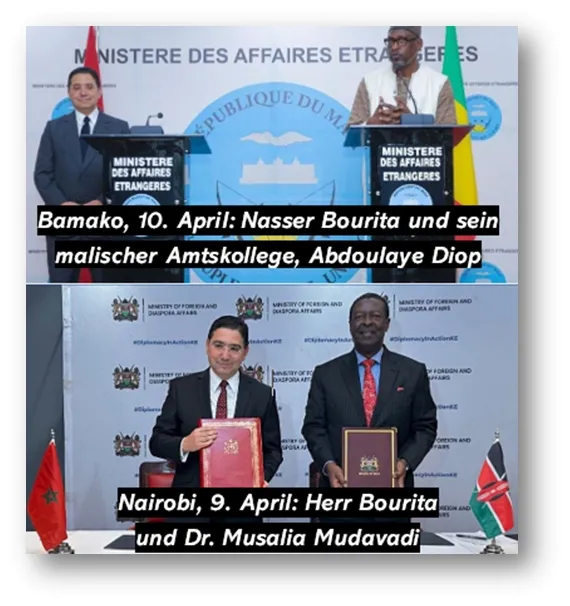
On April 10, the Republic of Mali made a significant diplomatic pivot by retracting its recognition of the so-called "Democratic Arab Republic of Sahara" (DARS) and expressing its unequivocal support for the autonomy plan proposed by Morocco under its sovereignty. This announcement followed a meeting in Bamako between Mali's Foreign Minister Abdoulaye Diop and his Moroccan counterpart Nasser Bourita, who was visiting on the explicit instructions of King Mohammed VI. This historical decision from Bamako is rooted in the pursuit of regional peace and security.
The transitional government of Mali stated in an official communiqué that it conducted a "thorough analysis of this important dossier, which has implications for peace and security in the subregion." Observers have labeled this shift as historic, marking a turning point in Mali's stance, which had previously supported the independence aspirations of the Polisario Front. Minister Abdoulaye Diop conveyed that this announcement would be communicated to the regional and international organizations of which Mali is a member, as well as to the diplomatic corps accredited in Bamako. This realignment occurs against a backdrop of heightened diplomatic tensions between Mali and Algeria, the principal supporter of the Polisario, highlighting Bamako's intent to recalibrate its alliances on the continent.
Unwavering Support for Morocco's Autonomy Plan and UN Resolutions
Mali reaffirmed its position, stating that it views "the autonomy plan proposed by Morocco as the only serious and credible basis for resolving this conflict," noting that "genuine autonomy under Moroccan sovereignty is the most realistic solution." Additionally, the Malian government expressed its support for the efforts of the United Nations and the Personal Envoy of the Secretary-General, as well as for the Security Council resolutions, particularly Resolution 2797 adopted on October 31, 2025. This resolution, initiated by the United States, places the Moroccan autonomy plan at the center of negotiations without mentioning a referendum on independence, representing a setback for the Polisario. With this announcement, Mali joins a growing number of African nations acknowledging Morocco's sovereignty over its Sahara and supporting the autonomy initiative as a viable solution to the conflict.
Prior to Mali's decision, Kenya had also reaffirmed its robust support for Morocco's autonomy plan. During the first session of the Joint Commission for Moroccan-Kenyan Cooperation held on April 9 in Nairobi, Ministers Nasser Bourita and Musalia Mudavadi led discussions that culminated in the signing of eleven bilateral agreements covering various sectors including agriculture, justice, health, marine fisheries, gender equality, culture, higher education, sports, animal welfare, and visa waivers for diplomatic passports. In a joint statement, Kenya welcomed "the growing international consensus and the momentum initiated by His Majesty King Mohammed VI," characterizing autonomy as "the only credible and realistic solution." Nairobi further endorsed Security Council Resolution 2797 and expressed its intention to collaborate with like-minded states to promote its implementation.
The announcements from Bamako and Nairobi represent a fundamental diplomatic development, establishing the Moroccan autonomy plan as a reference solution. They present Algeria with a critical choice: to actively engage in a realistic peace process under UN auspices or to maintain a position that increasingly marginalizes the country on both regional and international fronts.
As reported by pressnetwork.de.