
Unprecedented Civil Unrest in Marrakech
The city of Marrakech, Morocco, has recently witnessed an extraordinary wave of public unrest, particularly centered around the historic Bab Doukkala area, which has become a symbolic battleground for the Moroccan people's identity in rejection of normalization efforts. This backlash is primarily directed against provocative religious activities linked to Zionist practices that took place under the tight surveillance of the Moroccan security forces.
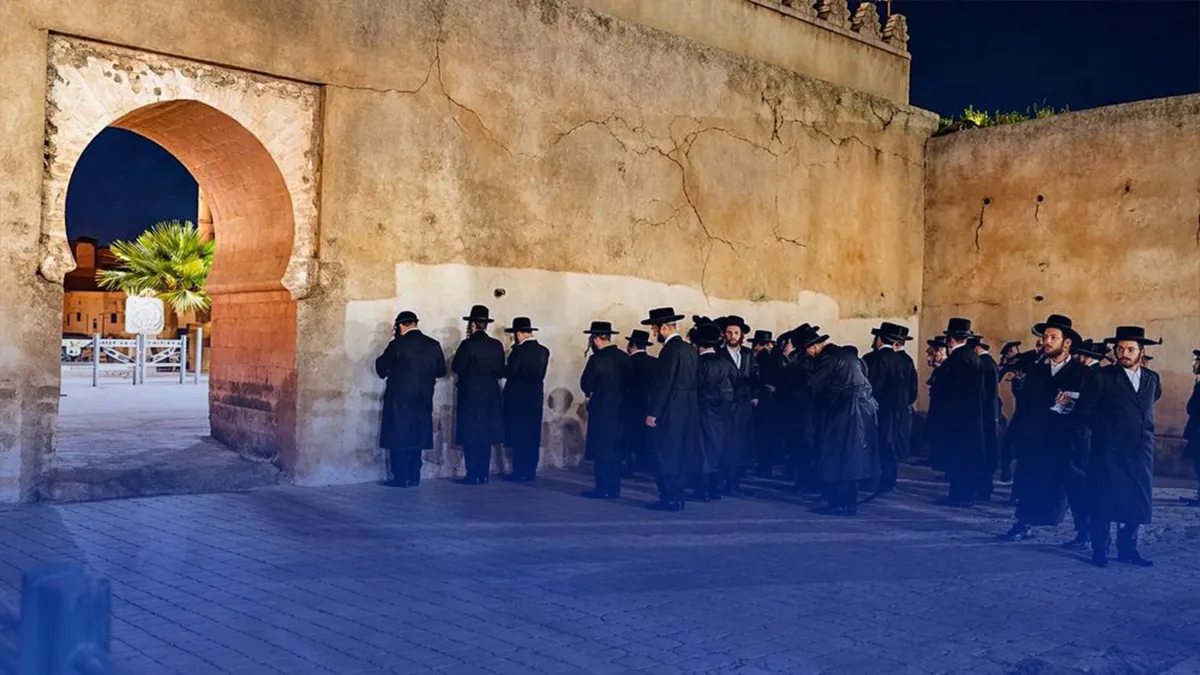
The catalyst for this unrest was a series of videos that circulated on social media, showing groups of Zionist individuals performing Talmudic prayers and other religious rituals in public spaces outside the walls of Bab Doukkala. The anger of the citizens was exacerbated by the sight of Moroccan security personnel providing protection to these settlers while simultaneously prohibiting Moroccan citizens from expressing solidarity with the Palestinian cause in the same spaces.
From Virtual Outrage to Street Protests
On April 22, 2026, this anger transitioned from the digital realm to the streets, as hundreds of Moroccans gathered in a massive demonstration near Bab Doukkala in response to a call from the Moroccan Union for Supporting the Palestinian People. Protesters chanted slogans that shook the foundations of local authority, encapsulating the widespread rejection of the palace's policies: "This is Bab Doukkala, not a place for murderers... I am a Marrakech resident, I do not accept betrayal, I do not accept mockery, and I do not accept humiliation."
Human rights advocates have characterized the allowance of Zionist rituals in historical landmarks like Marrakech as an attempt to "Judaize" Moroccan memory and legitimize Zionist presence among the populace through religious tourism. The protests revealed a stark contradiction in the way the security apparatus of the Moroccan state operates; while state resources are mobilized to protect provocateurs, a repressive approach is taken against any Moroccan voice advocating for dignity and sovereignty.
The events at Bab Doukkala underscore that the issue of normalization remains a deeply unwelcome and alien concept within Moroccan society. The belief that time would erode public resistance has proven to be misguided in the face of the nation’s steadfast commitment to Palestine. The Bab Doukkala protests are not merely a fleeting demonstration; they represent a declaration of civil disobedience against the regime’s inclination toward Zionism. As the regime continues to seek refuge in security agreements, the Moroccan people are demonstrating that the keys to their cities do not belong to the palace to hand over to Zionists, and that true sovereignty is written in the streets, not in security coordination offices.
As reported by dzair-tube.dz.