
Celebrating Global Creativity at the Marrakech Film Festival
The Marrakech Film Festival has garnered significant international attention, receiving over 400 short films from more than 90 countries across all five continents, as confirmed by the festival's organizers. This impressive turnout not only highlights the festival's growing international presence but also its ambition to transform Marrakech into a vibrant hub for the exchange of ideas, artistic expressions, and talents. The sixth edition of the festival places a particular focus on cultural diplomacy, leveraging cinema and short films as bridges to enhance communication between nations and foster cultural dialogue. Moreover, it aims to bring together artists, institutions, and professionals, all unified by the language of creativity.
The festival's events will take place in various venues, including the historic Palais Badi, the lush gardens of Cyber Park, The Folk, the French Institute in Marrakech, Meydene, and the World Storytelling Café. This diverse selection of locations is designed to provide international guests, local professionals, and the Moroccan audience with ample opportunities for networking and interaction. The national competition remains a focal point of the festival, spotlighting a new generation of Moroccan filmmakers and talents, while providing them with a platform to showcase their works and connect with professionals from various countries.
A Showcase of Talent and Cultural Exchange
This year's Belarj Prize features a selection of films such as "Fading Candle" by Ismail Ait Lahcen, "Aicha" by Thanaa Alaoui, "Two Ways" by Yassine Egnifer, "Mesk Ellil" by Rami Adnan, and "Behind the Curtain’s Edge" by Qassem Skali. The Nakhil Prize will see competition from films including "Aicha" by Thanaa Alaoui, "Two Ways" by Yassine Egnifer, and "Paradise Garden" by Sonia Al-Turab. Additionally, the Behja Prize includes works from Aziz Hatab with "Phone Breaker," Sundia Tajeddine with "Les Liens Invisibles," Khadija Salamadina with "Paradise Garden," and Mohamed Ben Saltana with "65 Days." Outside of competition, the national selection showcases four films: "Quo Vadis Meryem" by Amin Zriouh, "With the Wind" by Inas Lahyer, "Investigation" by Marwan Shaqir, and "Crawling Birds" by Karim Taj.
On the international level, the competition includes films and filmmakers from countries such as Italy, Iraq, China, Portugal, Australia, Albania, Lebanon, Kazakhstan, Egypt, Spain, the UK, South Korea, and Japan. Some of the selected works include "The Bridge" by Giacomo Bendotti, "Where The Balloon Led Me" by Yasmin Walid, "The Wind in Ash" by Kon Sun, "Dog Alone" by Marta Reis Andrade, "Trading Cards" by Radhia Zhang, "Majonézé" by Giulia Grandinetti, "What If They Bomb Here Tonight" by Samir Sryani, and "The Experiment" by Maxim Akbarov. Additionally, the list features "My Brother, My Brother" by Saad Denwar and Abdul Rahman Denwar, "Ciao!" by Ivan Milghizo Martin, "Dessert Is Served" by Leila Hatabi, "A Scream on the Roof" by Leon Cordon, and "A Very Straight Neck" by Niu Sora.
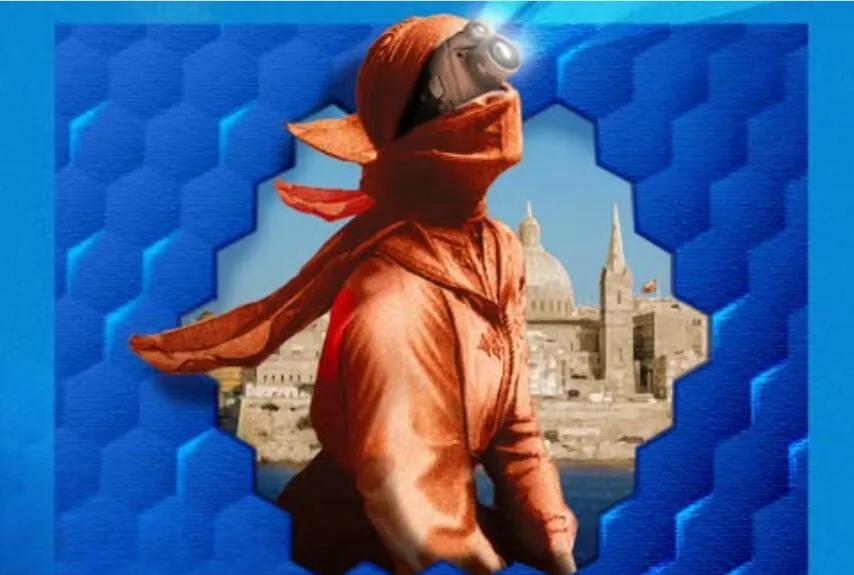
Moreover, the international programming outside of the competition includes works from Cambodia, France, Saudi Arabia, and Spain, reinforcing the festival's vision of short films as tools for cross-cultural dialogue and bridging diverse cinematic experiences. Cultural diplomacy is particularly emphasized with Malta being the guest country for the 2026 edition, aiming to strengthen cultural ties between Morocco and the Republic of Malta while utilizing cinema as a space for understanding, dialogue, and collaboration. Malta's participation includes nine short films that blend fiction, animation, and documentary genres, showcasing the creative and cultural diversity of the archipelago to the Moroccan audience.
The Consul General of the Republic of Malta expressed his honor at having Malta as the festival's guest of honor, emphasizing the desire to develop stronger cultural links and mutual understanding between Malta and Morocco. He noted that culture serves as a foundation for rapprochement between the two nations, while cinema provides Malta with a platform to highlight its position at the crossroads of Europe and Africa. The Maltese selection includes works in both Maltese and English, spanning drama, animation, and documentary, exploring various aspects of the archipelago's culture, traditions, heritage, and environment. This participation is supported by numerous partners and stakeholders in Malta, alongside collaboration with the Malta Arts Council and the Centre for the Maltese Language.
Through scheduled screenings and meetings in various venues across the city, the festival aims to bring short films closer to the audience and create opportunities for connectivity between Moroccan artists and international guests. The new edition's framework is centered around three main pillars: supporting new cinematic creativity, promoting short films as a medium for dialogue, and enhancing cultural diplomacy between Morocco and the world.
As reported by ar.le360.ma.