Middle East Tensions Cause Delays in Fighter Jet Transfer
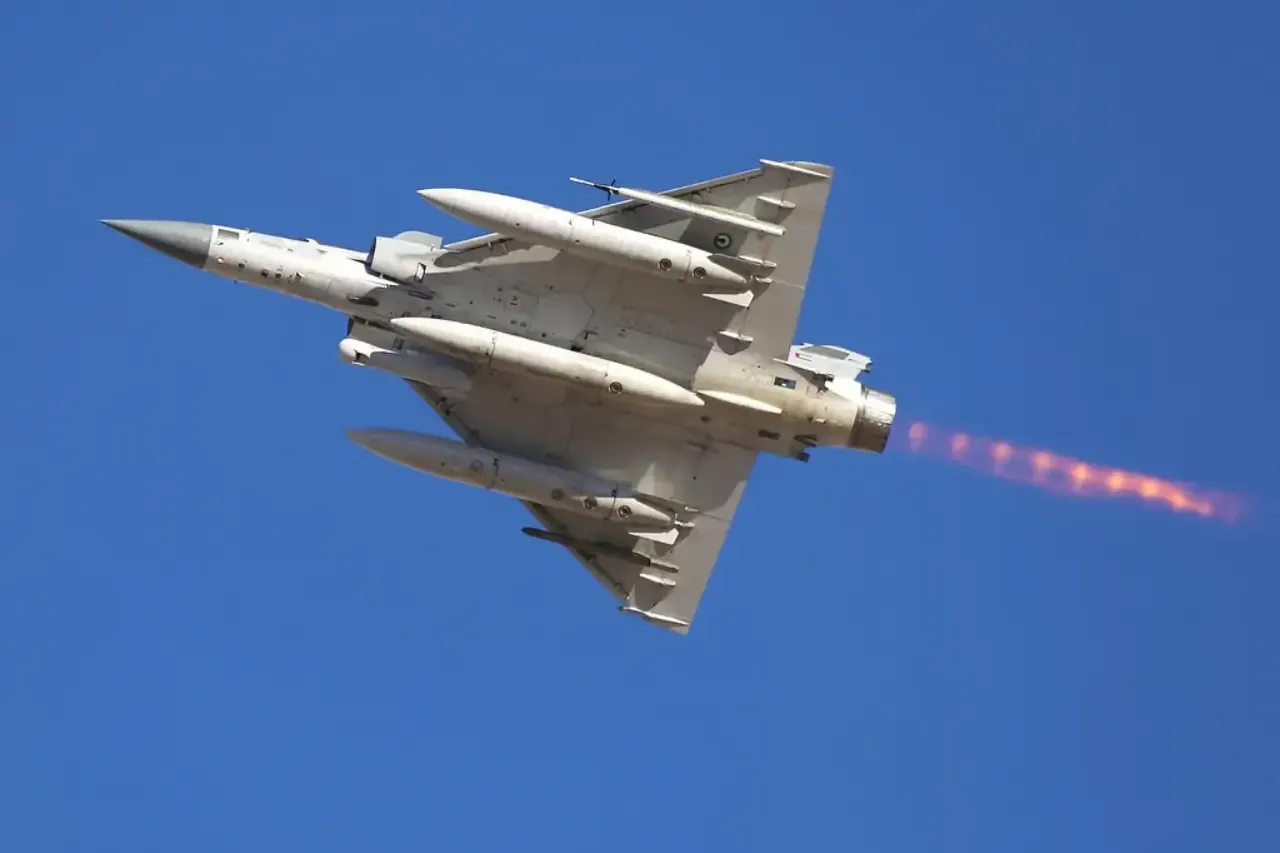
As reported on April 15, 2026, by various Spanish media outlets, including 'La Razón' and 'Africa Intelligence', the transfer of 30 Mirage 2000-9 fighter jets from the United Arab Emirates (UAE) to Morocco has encountered new delays due to escalating military tensions in the Middle East. These tensions, particularly the ongoing conflict with Iran, have prompted the UAE to reassess the timing of this aircraft delivery in a bid to maintain the highest levels of operational readiness for its air fleet during this critical period.
The UAE prefers to retain its current air capabilities until it begins receiving the French Rafale F4 jets that it previously contracted, thereby avoiding any potential gaps in its defensive capabilities during the transition between these two aircraft systems. Reports indicate that the delivery schedule for the 80 Rafale aircraft, expected to start arriving in 2026, will play a crucial role in determining the new timeline for the transfer of the Mirage 2000-9 jets to Morocco.
Additionally, the technical arrangements related to the maintenance of these aircraft's engines may further extend the transfer timeline, potentially pushing the actual transfer to as late as 2027. Despite this delay, current data suggests that the relations between Rabat and Abu Dhabi remain strong, with ongoing coordination and cooperation between the two parties across various sectors.
Capabilities of the Mirage 2000-9 Fighter Jet
The Mirage 2000-9 is recognized as one of the most advanced variants in the Mirage 2000 family, having undergone extensive upgrades, particularly in its Emirati version. This aircraft has evolved into a multi-role platform capable of executing both air superiority and ground attack missions simultaneously. It is powered by the Snecma M53-P2 engine, allowing it to reach a maximum speed of approximately 2.2 Mach at high altitudes, while still providing good maneuverability despite its classic design compared to more modern fighters.
In terms of operational range, the Mirage 2000-9 has a combat radius of around 1,500 kilometers without external fuel tanks, which can be extended to about 3,300 kilometers when utilizing external fuel tanks for transit or transport missions. However, its effective combat range for interception and attack missions typically falls between 700 and 900 kilometers, depending on payload and mission profile. These capabilities make it suitable for regional air defense operations and rapid deployment, though it is less optimized for long-range strikes without aerial refueling support.
Regarding its sensing and surveillance capabilities, the Mirage 2000-9 is equipped with the RDY-2 multi-role radar, a pulse Doppler radar capable of tracking multiple airborne targets simultaneously and engaging several of them concurrently. The radar has undergone enhancements for detecting low-altitude and maritime targets, making it a significant improvement over older versions. It allows the aircraft to operate effectively in relatively complex electronic warfare environments.
In terms of aerial armament, the Mirage 2000-9 can carry medium-range air-to-air missiles such as the MICA in both radar and infrared variants, with ranges of approximately 60 to 80 kilometers depending on the version and engagement conditions, granting it the ability to engage beyond visual range. It can also utilize Magic II missiles for close combat scenarios, further enhancing its operational versatility.
As reported by defense-arabic.com.