
Ouzin Critiques Spanish Officials' Dual Standards
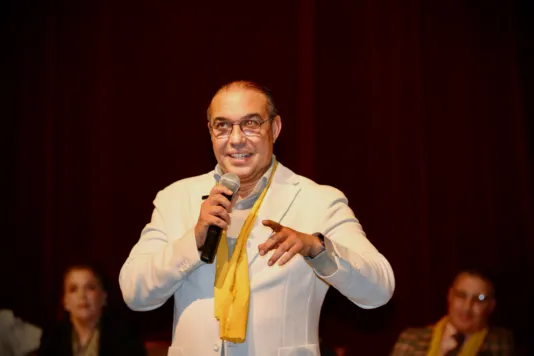
On Saturday in Salé, Mohamed Ouzin, the Secretary-General of the Popular Movement Party, expressed his discontent with Spanish officials who exhibit a dual standard in their political stance. He questioned how certain factions within Spain can openly support the Palestinian people's right to freedom and self-determination while simultaneously accepting the continued occupation of Moroccan territories in Ceuta, Melilla, and other occupied enclaves and islands. During a press conference aimed at presenting the party's contractual program in light of the upcoming legislative elections scheduled for September 23, 2026, Ouzin demanded an official apology from the Spanish government regarding derogatory comments made within the Spanish Parliament. He highlighted the decline in political and moral discourse from certain Spanish entities and called for respect towards Morocco's symbols and sacred values, particularly in light of recent protests that led to the tearing of the Moroccan national flag.
Advocating for National Dialogue and Unity
In parallel, Ouzin urged the wise leaders of the Spanish kingdom to embrace dialogue and wisdom, emphasizing the importance of strategic neighborly relations between the two nations, which share a common history and destiny. He proposed the establishment of a national commission that would include various political parties, civil rights organizations, and national competencies to facilitate a serious and calm national discussion regarding Ceuta, Melilla, and other occupied Moroccan territories. This initiative aims to foster a long-term vision rooted in international law, history, and Morocco's national memory, advocating for diplomatic, political, and civilizational efforts. Ouzin clarified that this is not a proposal for confrontation but rather a call for reflection, advocacy, and national planning, asserting that significant issues should not be subject to transient political circumstances or reactions.
Moreover, he reiterated that just as the Moroccan Sahara issue is a matter of both the King and the people, the completion of the kingdom's territorial integrity should also remain a unifying national project. This endeavor requires the convergence of intentions and the collaboration of institutions, political parties, and civil society. Ouzin emphasized that this is not a fleeting issue or an electoral card; it is a deeply ingrained national concern that will persist in the Moroccan collective memory and political agenda. He firmly stated: "The future of Ceuta, Melilla, and other occupied Moroccan enclaves and islands lies with Morocco and within Morocco."
Ouzin remarked that this sentiment transcends being merely the position of a single party or group; it is a conviction shared by the wise, deriving its legitimacy from history, national memory, and established Moroccan rights. He further clarified that they are not proponents of war or confrontation but advocates of justice and peace. He believes that legitimate rights can be reclaimed through wisdom, patience, diplomatic and political efforts, and the civility that characterizes Morocco's handling of its national issues. He concluded by stating that just as Morocco successfully asserted its rights in the Sahara through wisdom, national will, and the peaceful Green March, the restoration of its other historical rights can be achieved with the same approach, relying on wisdom instead of rashness, calm strength rather than provocation, diplomacy over confrontation, and the unwavering will of a King and people who do not relinquish their rights nor seek conflict.
As reported by alharaka.ma.